
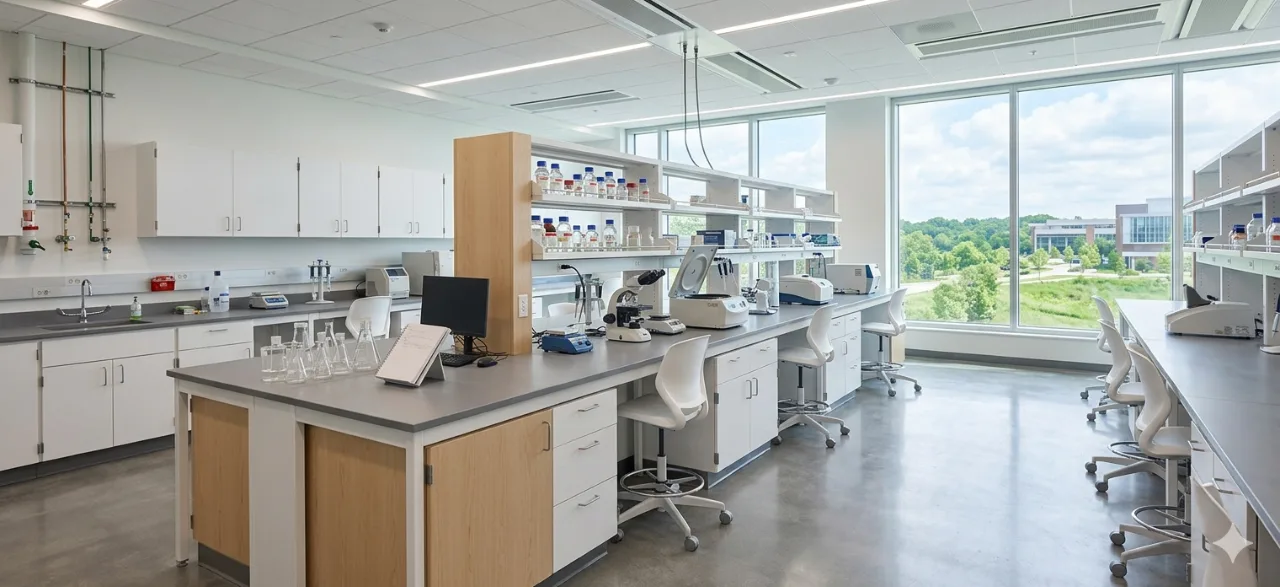
Innovation in laboratories doesn’t disappear overnight. It thins out. It gets interrupted and starts asking for more effort than it should. People still work hard, still care about outcomes, but the pace feels heavier. Something keeps pulling attention away from the work itself.
In many labs, that “something” isn’t obvious. It’s not funding or capability. It’s the physical setup. Lab furniture, in particular, shapes how work unfolds minute by minute. Most of the time, it does this quietly. When it’s working well, nobody talks about it. When it isn’t, people adjust their behaviour instead of questioning the space.
Innovation Slows Down When the Lab Works Against You
Researchers adapt quickly. That’s part of the job. The problem is how often they adapt to things they shouldn’t have to.
A bench that’s always just a bit too crowded. Storage that technically exists, but never where you need it. A layout that once made sense, but hasn’t been questioned since the lab was set up. None of this causes a crisis. It causes friction.
People start clearing space before they can start real work. They walk around obstacles without noticing they’re doing it. Over time, these adjustments become normal. Innovation doesn’t stop, but it gets fragmented.
The work still happens. It just takes more energy than it should.
Why Innovation in Labs Is a Design Problem
When innovation slows, the instinct is often to look at people. Skills. Motivation. Process.
What gets overlooked is how much effort the space itself demands. Inefficient layouts don’t announce themselves as problems. They show up as extra steps. Extra movement. Extra mental load.
You see it when a team hesitates before changing a setup, not because the idea is risky, but because rearranging the space feels like work. You see it when experiments get simplified to fit the furniture, rather than the other way around.
Innovation depends on iteration. Design either supports that rhythm or quietly disrupts it. When labs feel resistant to change, it’s rarely about the people inside them.
The Hidden Ways Lab Furniture Shapes Daily Research Work
Furniture dictates behaviour long before anyone reflects on it. Where something is stored determines whether it gets used easily or avoided. Bench dimensions affect posture, accuracy, and how long someone can stay focused. Fixed layouts influence whether collaboration feels natural or forced.
Poorly planned Laboratory furniture doesn’t usually fail outright. It just introduces small inefficiencies that compound. Temporary fixes stay in place. Workarounds become habits.
Well-designed furniture has a different presence. It doesn’t demand attention. People move less, adjust less, and think more. Over time, the lab feels calmer, even if nothing looks dramatically different.
Flexibility as the Foundation of Innovation-Friendly Labs
Research doesn’t follow neat timelines. Equipment changes unexpectedly. Priorities shift mid-project. Teams expand or reconfigure.
Fixed furniture assumes stability. Flexible furniture accepts uncertainty.
When benches can move, storage can shift, and workstations can adapt, labs respond without drama. Teams don’t need to pause work to rethink the space. They adjust it as part of the process.
That changes how willing people are to try new approaches. When the environment can move with the work, experimentation feels less disruptive. That matters more than it sounds.
How Custom Lab Furniture Reduces Friction in Real Labs
Standard furniture assumes there’s a standard way to work. Anyone who’s spent time in a lab knows that isn’t true.
Custom lab furniture starts from what actually happens. Which tools are used most. Where bottlenecks appear. How many people share a space at once. Storage and surfaces are planned around real sequences, not ideal ones.
The benefit isn’t dramatic. It’s cumulative. Fewer adjustments. Less rearranging. Less time spent making the space cooperate. Customisation removes friction so quietly that people often forget it was ever there.
Collaboration vs Chaos: Furniture’s Role in Shared Lab Spaces
Shared labs are where ideas move quickly, and where disorder spreads just as fast.
Too much openness leads to clutter. Too much separation limits exchange. Furniture plays a larger role here than most teams expect.
When shared benches are planned properly, collaboration feels easy. When zones are defined without being rigid, people know where they belong without being isolated. Storage either supports order or guarantees mess.
Good lab furniture doesn’t force collaboration. It gives it boundaries. That balance is what keeps shared spaces productive instead of exhausting.
Safety, Focus, and Cleanliness as Innovation Enablers
Safety is often discussed in terms of compliance. In daily work, it shows up as confidence.
Cluttered spaces make people cautious. Not in obvious ways, but in small hesitations. Attention shifts from the task to managing risk. Focus fractures.
Furniture that supports clean workflows changes the feel of a lab. Surfaces stay usable. Materials stay where they belong. Movement feels predictable.
Why Manufacturer Experience Matters for Innovation
Not all suppliers think beyond installation day. Experienced laboratory furniture manufacturers look at how labs age. How workflows shift. How furniture gets reused, modified, or pushed beyond its original intent.
They ask questions about change, not just specifications. That mindset matters. Innovation-friendly labs don’t come from isolated purchasing decisions. They come from conversations between people who understand how labs really operate.
How Santech Labs Fits Into Innovation-Focused Labs
At Santech Labs, design starts with observation. How people move. Where they hesitate. What they adapt to without questioning.
The focus stays practical. Furniture is expected to support change, not dictate behaviour. Longevity matters because labs don’t get rebuilt often. Flexibility matters because work never stays the same.
This approach doesn’t try to force innovation. It removes resistance and lets it happen naturally.
The Bottom Line
Innovation doesn’t need dramatic spaces or bold statements. It needs support.
When lab furniture reduces friction, work moves forward without feeling rushed. When layouts adapt easily, ideas evolve without interruption. When the environment stays quiet, attention stays where it should.
The most innovative labs rarely look impressive at first glance. They feel easy to work in. And that ease, over time, makes all the difference.