

Modern lab design in 2026 focuses on flexibility, efficient workflows, integrated storage, safety and long-term adaptability. As research methods evolve and laboratory equipment becomes more specialised, laboratories need layouts that support current operations while accommodating future changes.
From modular lab furniture to smarter storage and sustainable planning, these trends help laboratory owners, architects and facility managers make informed design decisions. Whether you are developing a pharmaceutical facility, a research centre or an educational science laboratory, understanding modern laboratory design can help improve space utilisation and support efficient operations.
What Are the Key Modern Lab Design Trends in 2026?
The major modern lab design trends in 2026 include modular furniture, workflow-based layouts, integrated storage, flexible utility planning, digital integration, sustainable design and safety-focused infrastructure. The right combination depends on the laboratory’s purpose, equipment and operational requirements.
Modern Lab Design Trends in 2026: Quick Comparison
| Design Trend | Main Benefit | Key Consideration |
|---|---|---|
| Modular Lab Furniture | Flexible workstation configurations | Equipment loads and future modifications |
| Workflow-Based Layouts | Reduces unnecessary movement | Sample flow and circulation |
| Integrated Storage | Organised supplies and clear work surfaces | Chemical compatibility and storage capacity |
| Flexible Utility Planning | Supports equipment integration | Power, plumbing and ventilation |
| Digital Integration | Supports monitoring and automation | Data connections and maintenance |
| Sustainable Design | Potential lifecycle cost savings | Energy, water and material durability |
| Safety-Focused Design | Supports safer working practices | Emergency access and hazard controls |
| Future-Ready Planning | Simplifies planned laboratory expansion | Future growth and infrastructure capacity |
1. Why Is Modular Lab Furniture Becoming Essential?
Modular lab furniture allows workstations and storage systems to be configured around specific laboratory requirements. Suitable modular systems can accommodate certain changes without extensive structural modifications.
Key benefits include:
- Flexible workstation arrangements for different activities.
- Easier expansion when additional workstations are required.
- Better use of available laboratory space.
- Simpler modifications when equipment requirements change.
For example, a growing research facility may need additional work surfaces or new equipment configurations as its projects expand. Modular systems can provide flexibility when the furniture and utility infrastructure are designed to support those changes.
Santech Labs offers different laboratory workbench configurations, including C-Frame systems, D-Frame systems and Plinth systems.
2. How Does Workflow-Based Laboratory Design Improve Efficiency?
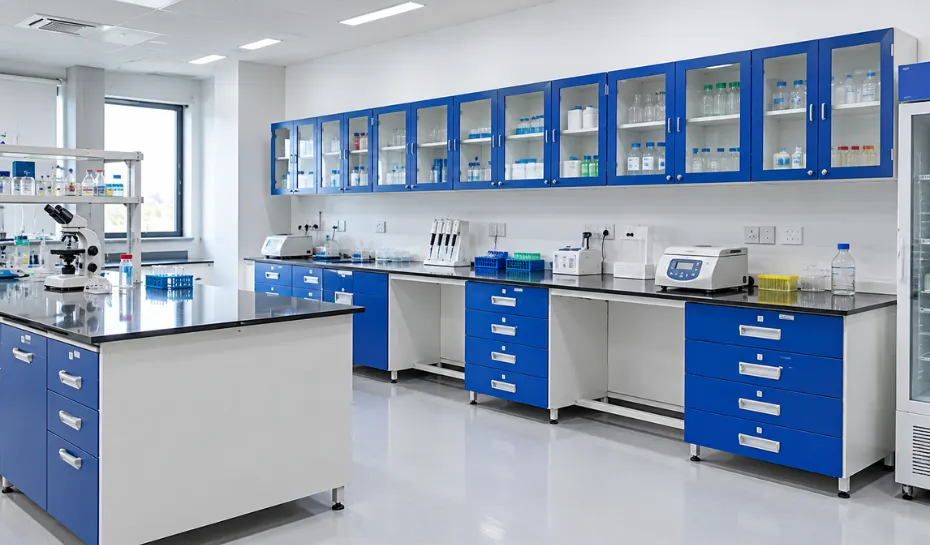
Workflow-based laboratory design considers how people, samples, materials and equipment move through a facility. This approach helps identify unnecessary movement, congestion points and activities that require separation.
Important considerations include mapping sample movement, positioning frequently used equipment near relevant workstations, maintaining suitable circulation routes and separating activities where safety or contamination control requires it.
For instance, a school science laboratory may prioritise student movement and teacher supervision, while a pharmaceutical laboratory may require carefully planned material flows and designated work zones.
Read our guide to laboratory safety tips for additional considerations when planning a functional laboratory environment.
3. Why Is Integrated Laboratory Storage Important?
Laboratory storage should be planned around daily activities rather than treated as an afterthought. Poorly positioned or insufficient storage can lead to crowded benches, unnecessary handling and disorganised work areas.
Effective storage planning includes:
- Point-of-use storage for frequently used supplies.
- Appropriate segregation of chemicals and incompatible materials.
- Dedicated locations for glassware, consumables and instruments.
- Cabinet materials suitable for the intended substances.
- Sufficient capacity for future inventory requirements.
4. How Can Smart Space Planning Improve Laboratory Performance?
Space optimisation is essential when laboratories must accommodate workstations, large instruments, storage units and circulation routes within a limited floor area.
The objective is not to fit the maximum number of benches into a room. It is to create enough functional space for the intended activities without compromising accessibility or safety.
Practical strategies include selecting bench dimensions according to equipment requirements, using accessible vertical storage where appropriate, keeping emergency routes unobstructed and positioning shared instruments to reduce congestion.
For educational facilities, our guide to optimising space and budget in an integrated science lab provides further planning ideas.
5. Why Is Flexible Utility Planning Important?
Laboratories depend on services such as electrical power, water, drainage, ventilation and, where necessary, specialised gases. Poor coordination between utilities, furniture and equipment can make future modifications expensive and disruptive.
Before finalising a layout, project teams should identify equipment utility requirements, coordinate service points with workstation positions, provide maintenance access and consider potential future expansion.
Modular furniture alone does not make a laboratory future-ready. Building services and infrastructure must also support the intended activities.
For projects involving multiple systems and suppliers, explore our guide to choosing turnkey laboratory solutions in India.
6. How Is Digital Technology Influencing Laboratory Design?
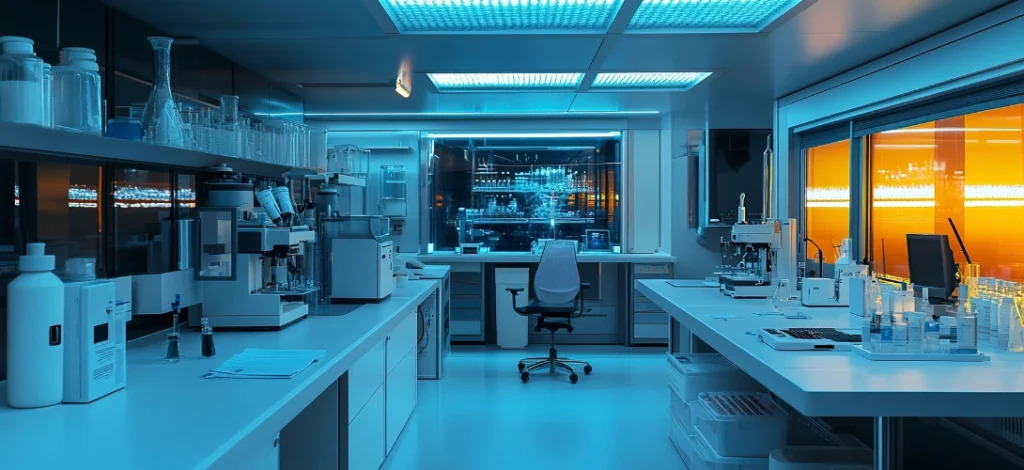
Digital technology can support laboratory operations through instrument monitoring, data management, environmental monitoring and maintenance planning.
Before installing digital systems, consider suitable power and data connections, space for automated equipment, access for maintenance and coordination with laboratory operations.
For example, a laboratory introducing automated analytical instruments may need a different workstation arrangement from one that primarily conducts manual testing.
Digital integration should be based on genuine operational requirements rather than adopting technology simply because it is a current trend.
7. Why Is Safety Being Integrated Into Laboratory Furniture Design?
Safety is a fundamental part of modern laboratory design. The placement of workstations, cabinets, instruments and services can influence how safely personnel perform routine activities.
A safety-focused layout considers suitable circulation space, appropriate chemical storage, compatible work surfaces, clear access to emergency equipment and suitable ventilation where required.
Furniture should be selected according to relevant factors such as load capacity, chemical resistance, corrosion resistance and cleanability.
However, laboratory furniture alone does not establish regulatory compliance or biosafety certification. The complete facility must meet its applicable requirements.
8. How Can Laboratory Design Support Future Expansion?
Laboratories often change as organisations introduce new instruments, research programmes and testing procedures. Planning only for current requirements can create limitations later.
Future-ready design considers anticipated equipment additions, adaptable workstation configurations, utility capacity, maintenance access and changing storage requirements.
Standardised furniture components may help organisations maintain consistent planning principles across multiple facilities while accommodating differences in building layouts and operational needs.
For more planning guidance, read our guide to designing a successful laboratory.
How Should You Choose a Laboratory Furniture Manufacturer in 2026?
Choosing an experienced laboratory furniture manufacturer is an important step in developing a functional laboratory. Beyond comparing prices, evaluate whether the supplier understands your equipment, workflow, material and installation requirements.
Use this checklist when comparing suppliers:
| Selection Factor | What to Evaluate |
|---|---|
| Project Requirements | Suitability for the intended workflow and equipment |
| Material Selection | Compatibility with chemicals and cleaning procedures |
| Configuration | Fit with the proposed layout and available space |
| Installation | Coordination with utilities and other project teams |
| Durability | Load capacity, maintenance and expected service life |
| Flexibility | Scope for future modifications where feasible |
Conclusion
The most important modern lab design trends in 2026 focus on modular furniture, workflow optimisation, integrated storage, digital integration, sustainability and safety-focused planning. A successful laboratory requires more than modern-looking interiors; its furniture, equipment, utilities and storage must work together to support its intended activities.
Choosing suitable modular lab furniture, planning laboratory storage cabinets carefully and coordinating infrastructure early can help organisations create adaptable workspaces.
Santech Labs supports laboratory projects with furniture solutions designed around practical requirements. If you are developing a new facility or upgrading an existing workspace, experienced lab furniture manufacturers can help you evaluate appropriate workstation configurations, materials and storage options.