
You can usually tell who has a bad chair in an office without asking. They keep shifting. They sit on one leg. They lean forward like the chair is trying to push them off. Around 3 pm, they’re standing while answering emails because sitting has started to feel annoying.
The strange part is that most people don’t blame the chair. They blame long hours, stress or age. But a lot of that daily discomfort starts with seating that doesn’t match how the body actually sits for work.
That’s why office furniture manufacturers take chairs seriously. A revolving chair isn’t a decorative item. It’s a tool you use for hours, and if it’s wrong, it quietly steals attention all day. Not in a dramatic way. In a constant, irritating way.
How a Revolving Chair Affects Daily Productivity
A bad chair doesn’t stop you from working. It just makes your work more tiring than it should be.
Here’s what usually happens. You start the day fine. After an hour or two, you lean forward because the backrest doesn’t support you properly. Your shoulders creep up. Your lower back starts doing extra work. You get up more often, not because you need water, but because you need relief.
Productivity takes a hit in small bites:
- You lose focus because you’re adjusting yourself
- You take more micro-breaks than you notice
- You finish the day more drained than the work actually deserves
Core Features That Define a Good Ergonomic Chair
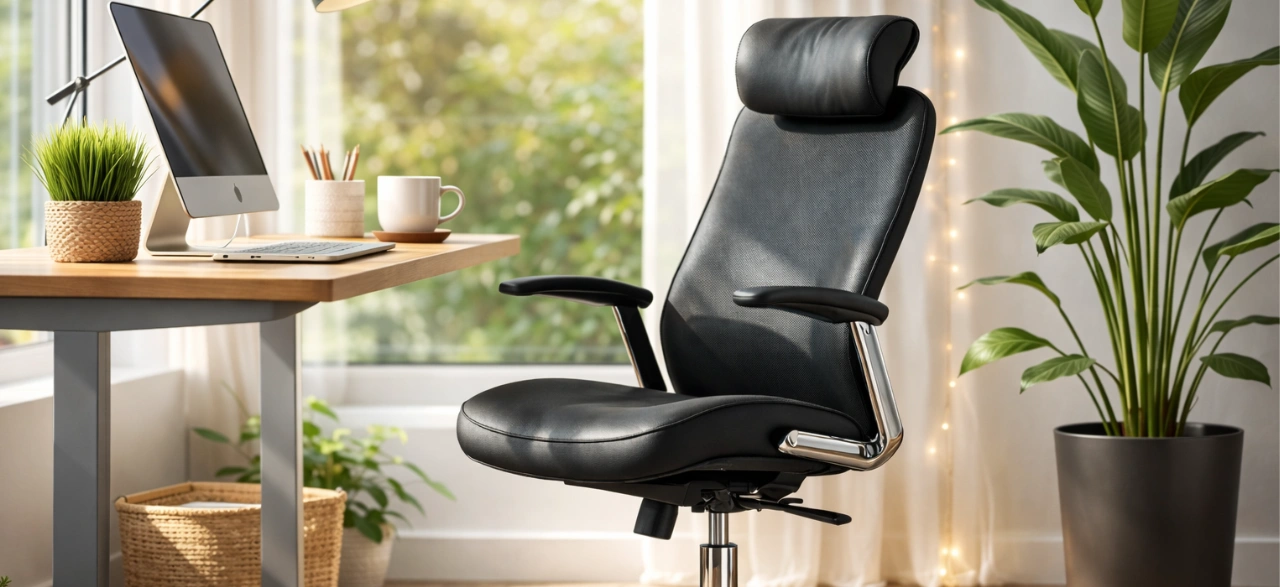
People hear Ergonomic Chair and imagine a chair with ten levers and a scary-looking backrest. Ergonomics is simpler than that. It’s just a chair that supports your body in a natural position, and lets you change posture without fighting the chair.
Look for these, and don’t overcomplicate it:
- Lumbar support that meets your lower back where it actually curves
- Seat height adjustment so your feet don’t hang or tuck awkwardly
- Seat depth that supports your thighs without pressing behind the knees
- Backrest tilt that you can lean into without feeling like you’re falling
- Armrests that help your arms rest, not push your shoulders up
If you sit down and immediately feel like you have to “find a position”, that’s a sign. A good chair feels natural quickly.
Material Quality and Build: What Lasts and What Doesn’t
Most chairs look great on day one. The problem shows up later, when you realise the cushion has flattened and the chair has started making little sounds every time you move.
A trustworthy chair manufacturer usually gets a few basics right:
- The frame stays firm and doesn’t develop play in the joints
- The seat doesn’t collapse into a dip after a few months
- The fabric or mesh doesn’t trap heat like a winter jacket
- The base feels steady when you lean or swivel
Low-quality chairs often do this thing where they “age fast”. They’re okay in the beginning, then suddenly they’re not. And once a chair loses support, you can’t fix it with cushions. You end up replacing it.
Adjustability: One Chair, Multiple Body Types
This is where most offices get it wrong: they buy one chair model and expect it to suit everyone.
It won’t.
People have different heights, different desk setups, different posture habits. Even the same person sits differently on different days. That’s why adjustability matters, especially for revolving chairs.
At minimum, you should be able to adjust:
- Seat height without effort
- Tilt tension so it doesn’t feel too stiff or too loose
- Armrest position so your elbows can rest naturally
If it’s a shared workspace, adjustability is non-negotiable. Otherwise, the chair becomes good for one person and annoying for everyone else.
Matching the Chair to the Nature of Work
Some people sit for long, quiet stretches. Others are in and out of their chair all day. Some work on a laptop. Some use dual screens. The chair should match that reality.
A revolving chair for long desk hours needs stronger posture support and better cushioning. A chair for a managerial cabin might prioritise comfort and smooth mobility. A chair for a design team might need more freedom of movement and a backrest that supports shifting positions.
Safety, Stability, and Compliance Considerations
Stability is one of those things you only notice when it’s missing.
If an ergonomic chair wobbles even slightly, people sit cautiously. If the base feels weak, people lean less, swivel less, and end up sitting stiffly. That defeats the whole point of a revolving chair.
Look for:
- A base that feels solid, not light and flimsy
- Casters that suit your floor (tiles, carpet, laminate)
- Smooth swivel without jerks
- Weight capacity and build that match real usage
Established office furniture manufacturers usually test chairs for long-term stability because a chair isn’t used gently in real offices. It’s used every day, by different people, in different ways.
Role of Office Furniture Manufacturers in Chair Quality
There’s a difference between a chair that photographs well and a chair that still feels good after a year.
The better office furniture manufacturers design chairs with actual use in mind. They pay attention to pressure points, posture, material fatigue, and long-term comfort. That’s why some chairs feel “right” immediately, and some feel okay for ten minutes and annoying later.
You also tend to get better support:
- Better warranties
- Spare parts availability
- Service that doesn’t vanish after purchase
If you’re buying chairs for a team, this matters. One broken part shouldn’t mean the whole chair becomes unusable.
Common Mistakes to Avoid When Buying a Revolving Chair
Most bad chair buys happen for predictable reasons. Not because people are careless, but because they’re rushed or distracted by what looks good.
Common mistakes include:
- Buying based on looks and ignoring sitting time
- Skipping adjustability because “we won’t use it”
- Choosing weak cushioning that flattens quickly
- Not checking service and warranty
- Buying one model for everyone without thinking about body types
A Simple Checklist Before Making the Final Choice
Before you buy an ergonomic chair, sit and check basics. This takes two minutes and saves months of discomfort.
- Feet flat on the floor, knees comfortable
- Lower back supported without forcing posture
- Seat feels supportive, not soft and sinking
- Armrests don’t push shoulders up
- Chair feels stable when you lean and swivel
- Adjustments are easy, not confusing
Closing Thought: Comfort as a Long-Term Investment
A revolving chair is one of the few things at work your body deals with for hours every day. If it’s wrong, you feel it constantly. If it’s right, you stop noticing it, and that’s exactly what you want.
Buying well isn’t about buying expensive. It’s about buying smart, ideally from office furniture manufacturers who understand long-use seating and stand behind their products. A good ergonomic chair won’t make you love your job. But it will make your workday feel lighter, and that’s a real win.