


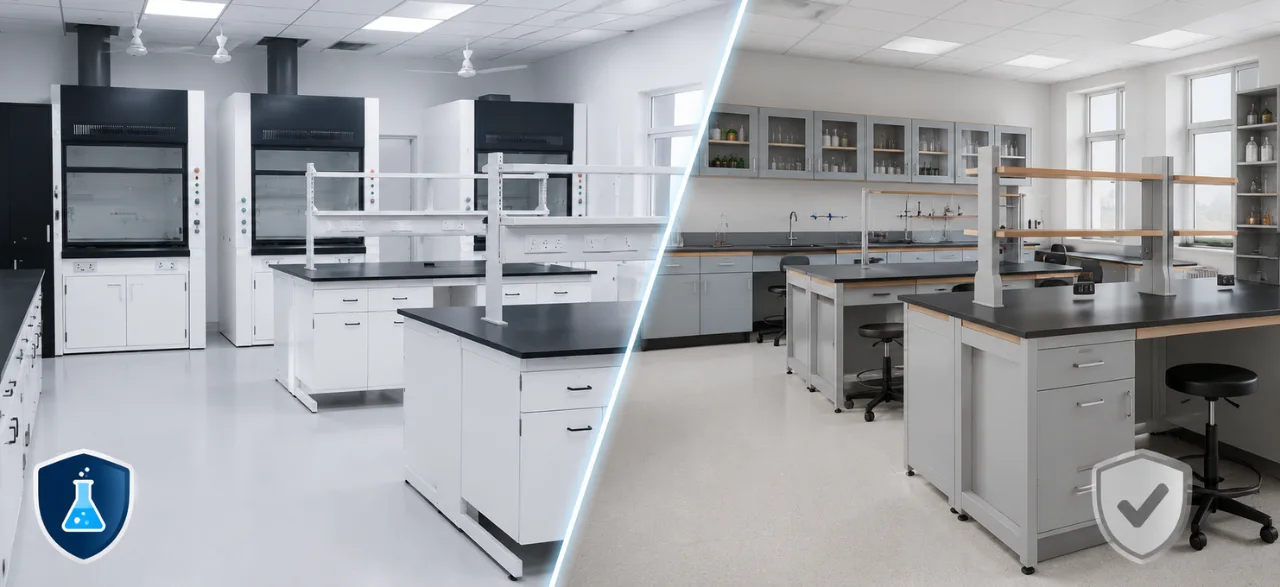
A lab renovation usually starts with big conversations. New instruments, better layouts, upgraded ventilation. However, there is something that usually falls by the wayside somewhere along the line: the furniture. Everything looks perfect when it is new, but after a few months, you will notice that surfaces get stained, the material wears out much faster than anticipated, and cleaning begins to become a chore.
This is where the distinction between chemical-resistant lab furniture and regular lab furniture cannot be overlooked anymore. While both can provide excellent quality, the former is specifically engineered for exposure, cleaning, and intensive use, while the latter can be great for easier tasks but may lack the durability for lab purposes.
What Regular Lab Furniture is Designed to Do
Regular lab furniture works well in spaces with light to moderate use, where harsh chemicals are not part of everyday activity. It is a sensible choice for classrooms, basic testing rooms, research support spaces, and labs that deal more with general handling than aggressive chemical work.
This type of furniture usually supports:
- Routine experiments
- Sample preparation
- Storage of non-corrosive materials
- General workstation activity
- Day-to-day cleaning and maintenance
For many settings, that is enough. It is practical, flexible, and often easier on the budget. But once strong acids, solvents, moisture, or repeated chemical exposure come into the picture, standard furniture can start to struggle.
What Chemical-resistant Lab Furniture is Built for
Chemical-resistant lab furniture is made for tougher environments where contact with reactive substances is part of normal work. Think of pharmaceutical labs, chemical testing areas, advanced R&D spaces, and processing environments where spills are not unusual.
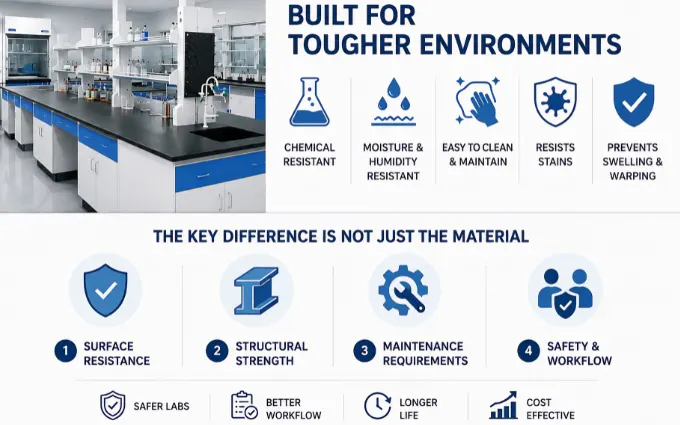
The aim is simple. The furniture should resist damage from:
- Corrosive chemicals
- Moisture and humidity
- Repeated wiping and cleaning
- Surface staining
- Swelling, warping, or finish breakdown
This is where material selection makes a real difference. Chemical-resistant surfaces and components help the furniture stay stable for longer, even when the environment is demanding. In a busy lab, that kind of stability supports safety, consistency, and fewer interruptions.
The Key Difference is Not Just the Material
Many people assume the gap between regular and chemical-resistant lab furniture is only about a tougher surface. That is part of it, but not the whole picture. The bigger difference lies in how the furniture is designed and what it is expected to handle.
1. Surface resistance
Ordinary furniture will endure some dust, light cleaners, and daily use. Chemical resistant furniture is designed for tougher interaction, hence it is preferred in laboratories where spillage is common.
2. Structural strength
The furniture’s frame, edge, joint, and supporting structure also have their roles to play. The surface might look okay, but when the structure below gets compromised, the whole piece of furniture loses its durability. Chemical resistant furniture is designed to withstand long-term use without losing its stability.
3. Maintenance requirements
It will require more rigorous maintenance procedures for ordinary furniture to last long. On the other hand, chemical resistant furniture will be easier to maintain even after constant usage. This will help avoid unnecessary replacement costs and help teams focus on their work.
4. Safety and workflow
In a lab, furniture is part of the workflow. A damaged bench, swollen cabinet, or worn worktop can slow people down and create avoidable risk. Selecting the appropriate option ensures easier mobility, cleaner workplaces, and increased reliability.
Which Labs Need the Chemical Resistant Furniture?
Not all labs have the same requirements, and this is why proper planning is required. Generally, we advise using chemical reisitant furniture in areas where chemicals, materials, or samples pose risks to surfaces.
The use of such furniture is particularly helpful in cases when there are:
- Pharmaceutical labs
- Chemical labs
- Industrial testing labs
- Food processing labs
- Advanced research labs
- Any institutions conducting wet labs or highly reactive experiments.
In case of a classroom laboratory or a light testing area, normal furniture can do the job. But once the environment becomes more demanding, the safer choice often proves to be the smarter one.
How to Choose Between Different Lab Furniture Types
The right choice is not only about chemical resistance. It also depends on layout, load handling, accessibility, and how people move through the room. That is why comparing lab furniture types matters so much during planning.
A few questions help narrow things down:
- What substances will be used daily?
- How often do spills happen?
- How much storage is needed?
- Will the room need reconfiguration later?
- Is the space used for teaching, testing, or research?
These are simple questions, but they lead to better decisions. A well-chosen setup should almost disappear into the background. It should support the work without getting in the way.
C Frame System lab furniture
C Frame System lab furniture is often chosen for spaces that need strength, openness, and easier cleaning access. The frame design gives it a clean look and helps it perform well in busy working conditions. It is a useful option when teams want solid performance with some flexibility in layout.
This system is especially useful in labs where access under the worktop matters. It can help create a more open working environment, which many users appreciate once the lab is in daily use.
Sleek System laboratory furniture
Sleek System laboratory furniture suits projects that need a neat finish along with reliable function. It is often preferred in modern labs where appearance, order, and practical storage all matter together.
This type of setup works well when the client wants a refined look without losing durability. It is a thoughtful choice for institutions, R&D spaces, and professional labs that want the room to feel organised and modern.
Why the Right Furniture Choice Matters Over Time
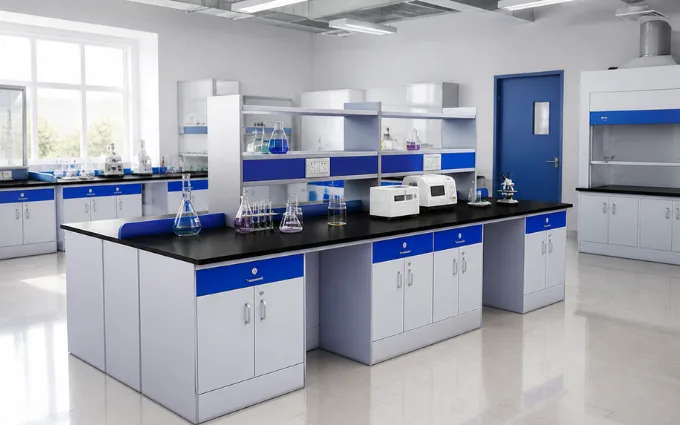
A lab is never really static. It changes. Teams grow, research shifts, and equipment gets updated. Furniture needs to keep pace without creating extra problems.
That is why choosing between regular and chemical-resistant furniture should never be a guess. The right decision can help you:
- Reduce wear and tear
- Improve day-to-day safety
- Support better hygiene
- Lower replacement frequency
- Create a more efficient working environment
We also find that the right furniture gives the whole space a stronger sense of purpose. When benches, cabinets, and storage systems are matched to the actual work, the lab feels more capable. People notice that, even if they do not say it out loud.
Bottom Line
Regular lab furniture has its place, and in many settings it performs well. But when the work involves chemicals, moisture, or heavy use, chemical-resistant furniture is usually the more dependable option. It is not about choosing the most expensive solution. It is about choosing the one that fits the job properly. At Santech Labs, we design laboratory furniture solutions that balance durability, safety, and long-term performance for modern lab environments.


