
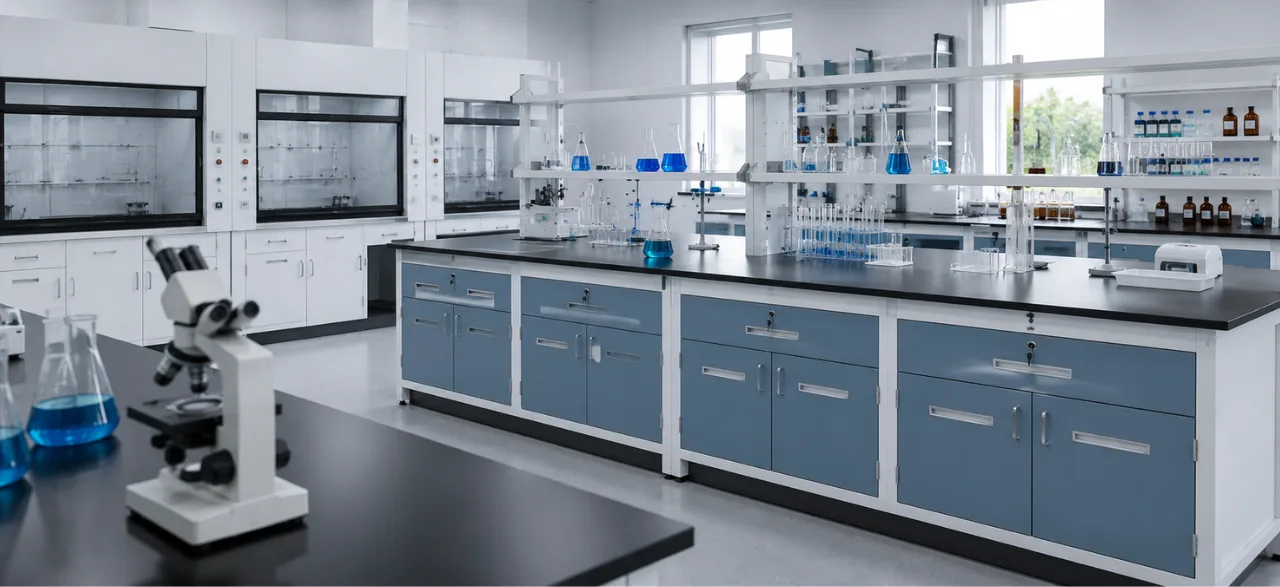
Walk into a lab early in the morning, before the rush starts, and everything looks in place. Benches are clear, bottles are lined up, and the room feels ready. Come back a few hours later and you start noticing the small things. Someone is searching for a reagent, a bench feels cramped, a tool is not where it should be. That gap between how a lab looks and how it actually works usually comes down to the basics.
A practical lab equipment list is not about filling the room with more items. It is about choosing the right ones so the space works without constant adjustment. The essentials are often the least flashy pieces, but they are the ones that shape how the day flows.
1. Modular Lab Benches
Most work in a lab somehow circles back to the bench. It becomes the default space for everything, from setting up experiments to quickly placing down equipment that has nowhere else to go.
That is why fixed, rigid benches tend to cause problems over time. What worked six months ago may not work today. Projects change, equipment changes, and suddenly the layout feels restrictive.
Modular lab benches feel different. They give you a bit of breathing room. If something needs to move, it can. If the workflow changes, the space can adapt without turning into a full renovation project. This flexibility is one of the key advantages of modern modular lab furniture, which is designed to support changing laboratory layouts, equipment requirements, and future expansion.
A good bench does not try too hard. It simply:
- Gives enough space to work without feeling boxed in
- Stays easy to clean, even after a long day
- Fits naturally into the room instead of dominating it
- Works quietly with the rest of the lab furniture design
It sounds simple, but when a bench is right, people stop noticing it. And that is usually a good sign.
2. Fume Hoods
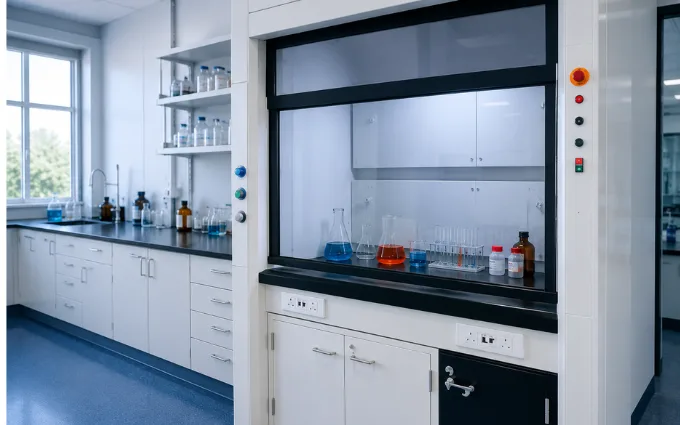
There is always that moment in a lab when someone pauses before working with chemicals. Not out of fear, but out of habit. That pause matters, and a good fume hood makes it shorter and more confident.
Fume hoods create a controlled zone where fumes and vapours are managed properly. Without one, even routine tasks can feel slightly uncomfortable. With one, the work feels contained and predictable.
They are especially important in labs where chemicals are handled regularly. Heating, mixing, and transferring all of it become safer when the airflow is doing its job in the background.
What people usually look for is fairly straightforward:
- A steady airflow that does not fluctuate
- Materials that can handle chemical exposure without wearing out
- Enough working space to avoid awkward movements
- A setup that does not feel disconnected from the rest of the room
A fume hood does not change how the lab looks dramatically. It changes how people feel while working, and that is where its real value shows up.
3. Lab Storage Cabinets
If there is one thing that quietly disrupts a lab, it is poor storage. Not in a dramatic way, just in small, constant interruptions. A missing bottle here, a cluttered surface there, a few extra seconds spent looking for something.
Over time, that adds up.
Lab cabinets solve more than just storage. They bring a sense of order that makes everything else easier. When items have a fixed place, the room feels more predictable. People know where to reach without thinking twice.
Good storage helps with:
- Keeping materials in one clear place
- Freeing up working surfaces
- Avoiding unnecessary handling of sensitive items
- Making daily routines feel smoother
It is one of those things that does not get much attention until it is missing. And once it is done well, it quietly keeps everything else in place.
4. Anti-Vibration Tables
Some parts of lab work need a level of stillness that is easy to underestimate. You might not notice vibrations while walking around, but sensitive instruments often do.
This is where anti-vibration tables come in. They provide a steady surface that shields delicate measurements from small disturbances, whether it is someone moving nearby or equipment running in the background.
Often, labs only realise they need one after results start looking slightly off. Nothing dramatic, just enough variation to raise questions.
These tables help by:
- Giving instruments a more stable base
- Reducing the effect of nearby movement
- Improving consistency in readings
- Creating a more controlled working spot
For certain types of work, they quietly remove a problem you did not even realise was there.
5. Biosafety Cabinets
Working with biological material comes with its own share of duties. It is not just about completing tasks; it is about ensuring that the task is completed with care and caution.
The biosafety cabinet provides a safe zone for carrying out tasks with assurance. The biosafety cabinet plays a vital role in protecting the person working as well as the biological material being handled.
They are commonly used in:
- Microbiology labs
- Life science research spaces
- Facilities handling biological samples
- Areas that require controlled handling zones
A biosafety cabinet tends to define a part of the lab. It creates a clear boundary where certain types of work are done with extra care.
Why Lab Furniture Design Matters So Much
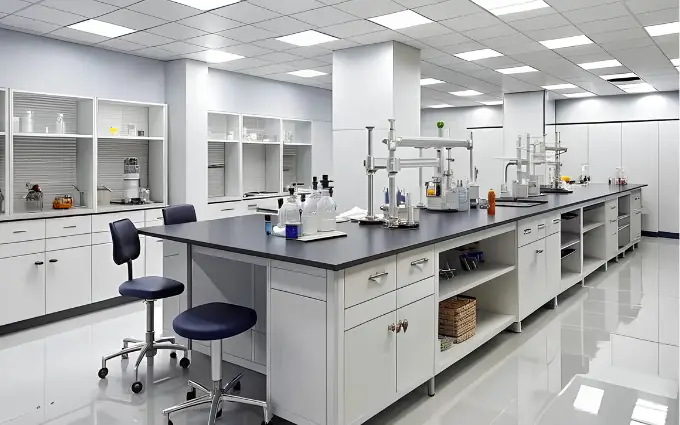
It is easy to think of equipment as separate pieces. A bench here, a cabinet there, a hood somewhere in between. But in reality, none of it works in isolation.
Lab furniture design is what ties everything together. When the layout makes sense, the room feels easier to move through. Cleaning becomes less of a task. Even small routines start to feel smoother.
When the layout does not work, people compensate. They adjust, shift things around, find workarounds. That is when the space starts working against them.
A well-designed lab does the opposite. It fades into the background and lets the work take centre stage.
A Smarter Lab Starts With The Right Essentials
There is always a temptation to add more to a lab—more equipment, more storage, more everything. But the real difference often comes from getting the basics right.
A thoughtful lab equipment list focuses on what the space actually needs to function well every day. Modular lab benches, fume hoods, lab cabinets, anti-vibration tables, and biosafety cabinets form a solid foundation from a reliable lab furniture manufacturer in India.
Once those are in place, the rest of the lab tends to fall into line. The room feels easier to manage, easier to maintain, and easier to work in. And at the end of the day, that is what most labs are really aiming for.