

Most of us have seen it in real offices. Someone rolls their shoulders between calls. Another person sits on the edge of the seat because the backrest never feels right. A team member drags a meeting chair to their desk just for today, and then it stays there for weeks. None of this is dramatic, but it is telling.
That’s why ergonomic furniture matters. It is not a luxury feature or a design trend. It is a practical response to the way modern work happens, which is often long hours, lots of screens, and very little movement unless we build movement into the day. When furniture supports the body properly, work feels less tiring. People settle in faster and stop adjusting every ten minutes.
As office furniture manufacturers, we have learnt that comfort is not soft. It is operational. It affects how people work, how they feel by 4 pm, and whether the workspace supports them or quietly drains them.
Why Ergonomics Matters More Than Ever
Work has become more intense in a physical sense, even when it looks “easy” from the outside. Sitting all day doesn’t feel like hard labour, but the strain is steady. Neck forward. Shoulders raised. Wrists angled. Lower back unsupported. Repeat that for months and you don’t need a medical report to know what happens next.
Ergonomics matters because it reduces that daily load. When posture is supported and movement is possible, people don’t spend half the day fighting discomfort. They focus for longer, and they recover faster between tasks.
Most credible ergonomics guidance points to the same takeaway: better workstation support helps reduce musculoskeletal discomfort and improves wellbeing over time. The exact benefits vary by role, but the principle stays consistent. If the setup is kinder to the body, the workday becomes more sustainable.
What Ergonomic Furniture Actually Means in Practice
Ergonomics gets marketed like a list of features. Adjustable this, curved that. But in practice, the question is simpler: does the furniture behave well after hours of use, day after day?
Good ergonomic furniture tends to do the following:
- It supports the spine without forcing people into a rigid posture
- It allows small posture shifts, because no one sits the same way for eight hours
- It avoids pressure points that cause numb legs or a stiff neck
- It suits different users without needing constant fiddling
If the furniture is doing its job, people stop talking about it. That’s usually the best compliment.
The Central Role of Chairs in Workplace Ergonomics
Chairs are where comfort either holds up or falls apart. A desk can be decent, but if the chair is wrong, the person using it will feel it within the first hour.
When we talk about manufacturing chairs for modern workspaces, we’re talking about real-world use, not a short showroom sit. People lean forward during focused work. They recline slightly during calls. They shift side-to-side. They move between desk work and quick discussions. A chair has to support all of that.
Key elements we focus on when designing and manufacturing chairs include:
- Lumbar support that actually meets the lower back, not just a decorative curve
- Seat depth that supports thighs without pressing behind the knees
- Backrest movement that feels controlled, not stiff and not loose
- A stable base, because wobble creates tension even if people don’t mention it
A good ergonomic chair doesn’t “fix” posture like a strict teacher. It supports better posture as the natural default.
Ergonomic Furniture and Employee Wellbeing
Wellbeing at work is sometimes discussed like a policy topic. In reality, it shows up in small daily signals. People get tired earlier. They take more micro-breaks. They become less patient in the second half of the day. These things don’t always get labelled as “furniture issues”, but they often have a furniture component.
In workplaces that take ergonomic furniture seriously, we often see:
- Fewer repeat complaints about back or neck discomfort
- Better concentration during longer desk-based tasks
- Less “end of day heaviness”, especially in roles that involve constant screen work
It’s not magic. It’s fewer distractions from discomfort, and that alone changes the day.
How Office Furniture Manufacturers Shape Work Environments
As office furniture manufacturers, we shape more than interiors. We shape how the workspace behaves. A chair that sinks, squeaks, or tilts oddly changes how someone works. A desk that is too shallow forces screens too close. Storage that is poorly placed creates clutter, and clutter changes how people feel about their workspace.
Offices also have mixed work styles now. Some teams collaborate constantly. Others need long, quiet focus. Furniture needs to support both without making the space feel confused.
From a manufacturing point of view, the priorities are practical:
- Durability that holds up under repetitive daily use
- Adjustability that people can understand and actually use
- Designs that work across different roles, not just one “ideal user”
When furniture is made well, it becomes reliable. Reliability matters more than people realise until they don’t have it.
Ergonomics Beyond Chairs and Desks
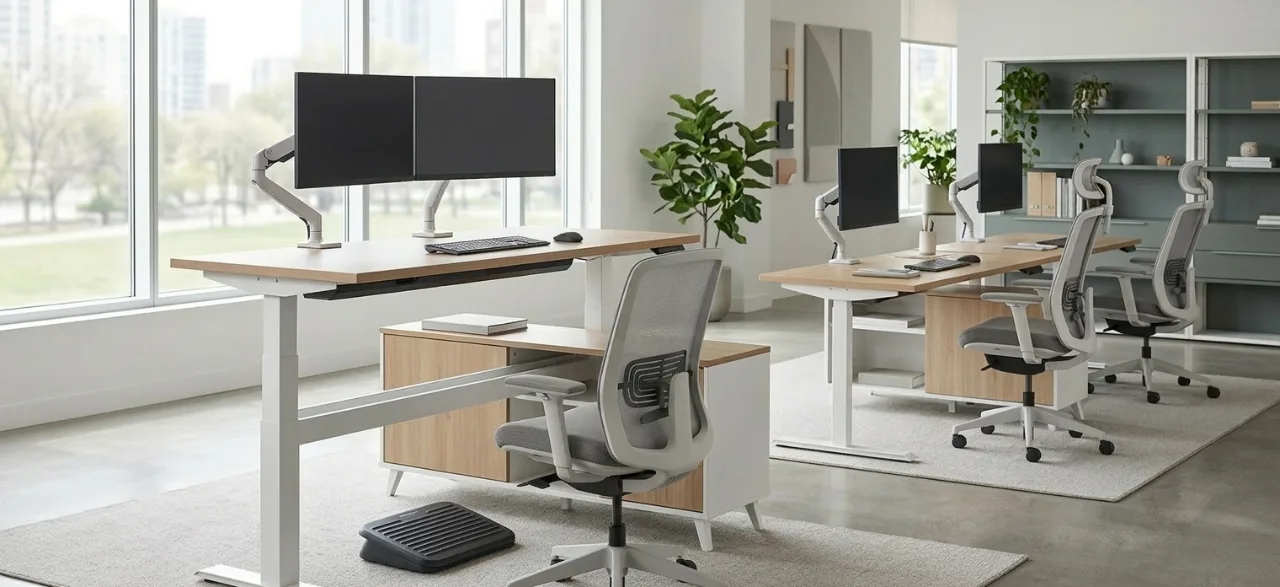
We often see offices invest in decent chairs, then lose the benefit because the rest of the setup undermines it. Monitor height is wrong. Desk clearance is tight. People twist repeatedly to reach storage. The chair can’t compensate for everything.
Ergonomics beyond chairs includes:
- Desk heights that keep shoulders relaxed instead of lifted
- Enough legroom so people don’t sit at awkward angles
- Storage within easy reach to avoid repeated twisting
- Layouts that reduce unnecessary movement and collisions
Ergonomic Furniture in Indian and Global Workspaces
In India, many offices are upgrading quickly. Space is often tighter, teams scale fast, and expectations have changed. Employees notice comfort now, and they expect the workplace to support long working hours without a constant physical toll.
Globally, the focus on ergonomics has grown as work patterns changed. Hybrid work didn’t reduce the need for ergonomic setups, it just made organisations think more carefully about what “good workplace experience” really means.
Across projects in India and outside, one point keeps coming up. Ergonomics works best when it’s planned early, not introduced later as a reaction to complaints.
Choosing the Right Ergonomic Furniture Partner
Choosing ergonomic office furniture is not only about product specs. It’s about working with a partner who understands how real offices operate. The best conversations are not about finishes first. They’re about users, working hours, task types, and what the workspace needs to support.
The right partner:
- Designs for long-term daily use
- Understands different workplace environments
- Builds furniture that stays comfortable over time
As office furniture manufacturers, we focus on furniture that supports people properly, because when comfort is handled well, performance tends to follow without drama.
Final Thoughts
Ergonomic furniture isn’t a trend item. It’s a practical foundation for modern workspaces where people spend long hours seated, switching tasks, and working on screens.
When organisations work with reliable office furniture manufacturers and treat manufacturing chairs as a performance decision, not a styling decision, the workspace becomes easier to use. People feel better, work feels less draining, and the setup holds up under real daily pressure.
Good furniture doesn’t demand attention. It supports the day, quietly.