
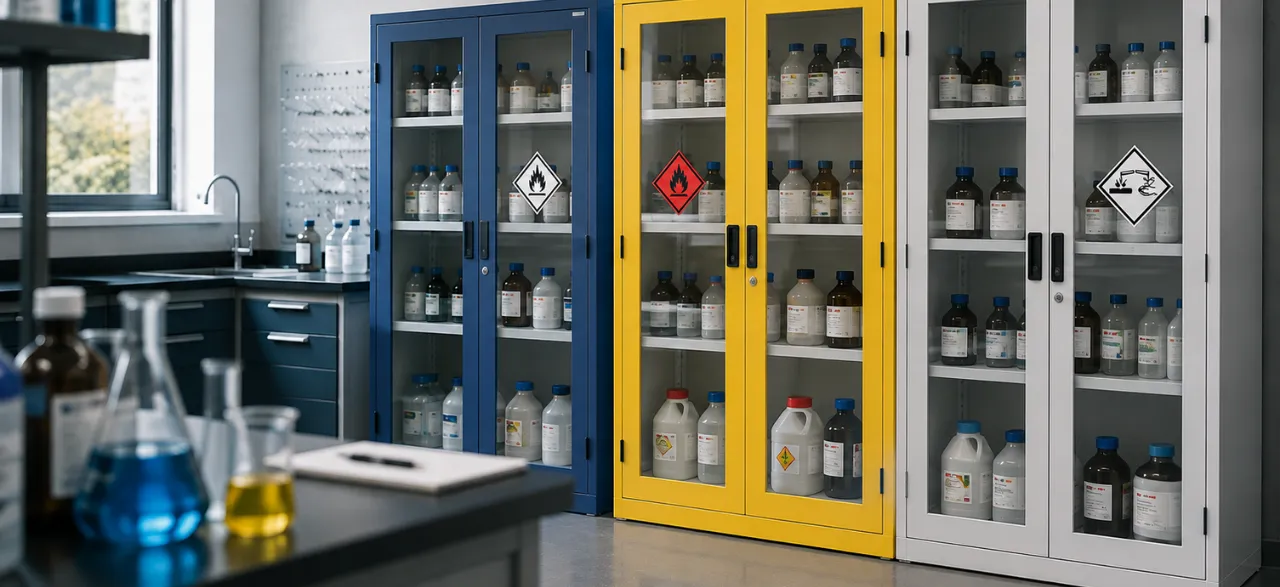
Choosing the right safety cabinet for chemical storage is essential for keeping chemicals organised, reducing exposure risks, and maintaining a safer laboratory environment. Different chemicals require different storage conditions based on their properties, hazards, compatibility, and quantity, so selecting a suitable chemical storage cabinet should be based on more than size or appearance.
A safety cabinet for chemical storage provides a controlled and secure space for storing laboratory chemicals while supporting safe handling and better workplace organisation. When choosing a chemical storage cabinet, factors such as cabinet material, chemical resistance, ventilation requirements, storage capacity, spill containment, and the type of chemicals being stored should be carefully considered.
In this guide, we explain how to choose a safety cabinet for chemical storage, the key features to look for, common types of chemical storage cabinets, and important safety considerations. If you need a chemical storage solution designed around your laboratory requirements, contact Santech Labs for customised laboratory furniture and storage solutions.
What Is a Safety Cabinet for Chemical Storage?
A safety cabinet for chemical storage is a specialised storage unit designed to safely store laboratory chemicals while reducing the risk of spills, leaks, chemical exposure, and accidental contact between incompatible substances. A suitable chemical storage cabinet provides a secure, organised space for chemicals and helps maintain a safer laboratory environment.
The right cabinet depends on the type and quantity of chemicals being stored. Factors such as chemical compatibility, cabinet construction, corrosion resistance, storage capacity, spill containment, ventilation requirements, and applicable safety guidelines should be considered before selecting a cabinet.
For laboratories handling hazardous, corrosive, flammable, or reactive chemicals, proper storage is an important part of overall laboratory safety and chemical management.
Why Is a Chemical Storage Cabinet Important?
A chemical storage cabinet helps laboratories store chemicals safely, maintain better organisation, and reduce risks associated with spills, incompatibility, and improper handling. Its benefits extend beyond storage, supporting laboratory safety, workflow efficiency, and better chemical management.
| Benefit | How It Helps |
|---|---|
| 1. Improved Safety | Helps contain chemicals securely and reduces the risk of spills, leaks, accidental exposure, and improper handling. |
| 2. Chemical Segregation | Allows chemicals to be organised according to their compatibility, reducing the risk of dangerous reactions between incompatible substances. |
| 3. Better Organisation | Provides designated storage areas, making chemicals easier to identify, access, and manage during laboratory activities. |
| 4. Chemical Protection | Suitable storage helps protect chemicals from environmental conditions and improper handling that could affect their quality or stability. |
| 5. Reduced Waste & Costs | Proper storage can help minimise losses caused by spills, contamination, damaged containers, and poor inventory management. |
| 6. Improved Laboratory Efficiency | Organised chemical storage allows laboratory personnel to locate and retrieve materials more efficiently, supporting smoother workflows. |
What Types of Chemicals Need Special Storage?
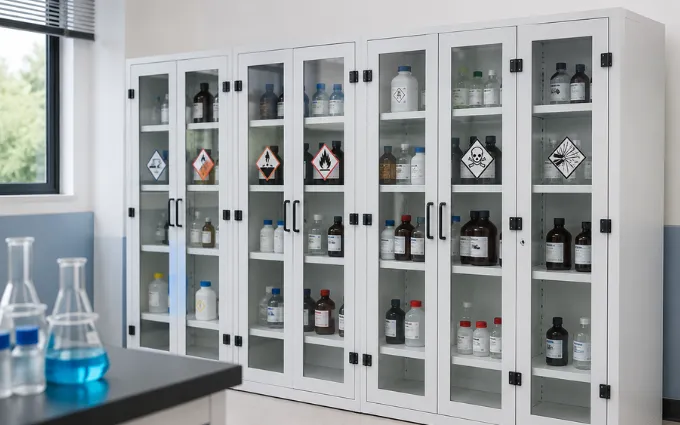
Not all laboratory chemicals require the same storage conditions. Their chemical properties, hazard classification, compatibility, and specific storage requirements determine the appropriate safety cabinet for chemical storage. Proper chemical classification and segregation help reduce the risk of accidental reactions, spills, exposure, and fire while supporting a safer and more organised laboratory environment. As experienced modular lab furniture manufacturers, Santech Labs can provide laboratory storage solutions designed to support different laboratory layouts, workflows, and chemical storage requirements. Choosing the right chemical storage cabinet based on the chemicals being handled is therefore an important part of effective laboratory safety management.
Common chemical categories that may require specific storage arrangements include:
- Flammable chemicals: Require appropriate storage designed to reduce fire risks and keep flammable materials away from ignition sources.
- Corrosive chemicals: Acids and bases should be stored in compatible, corrosion-resistant cabinets and separated according to their compatibility.
- Oxidising chemicals: Should be kept away from flammable, combustible, and incompatible materials to reduce the risk of fire or hazardous reactions.
- Toxic chemicals: Require secure and controlled storage to help prevent accidental exposure, misuse, or unauthorised access.
- Reactive chemicals: Chemicals that can react with water, heat, air, or other substances may require specialised storage conditions and strict segregation.
- Volatile chemicals: May require appropriate ventilation and controlled storage depending on their properties and applicable laboratory safety requirements.
Before selecting a chemical storage cabinet, always check the chemical’s Safety Data Sheet (SDS) and follow the storage instructions provided by the manufacturer and applicable safety requirements.
How Should Chemicals Be Organised in a Chemical Storage Cabinet?
Proper organisation is essential for maintaining a safe and efficient laboratory. A chemical storage cabinet should not simply be used to place chemicals together; materials should be arranged according to their chemical compatibility and storage requirements.
Follow these practices when organising chemicals:
| Chemical Storage Practice | Recommended Approach |
|---|---|
| 1. Separate Incompatible Chemicals | Keep substances that could react dangerously with one another in separate storage areas. |
| 2. Use Appropriate Secondary Containment | Place compatible containers in suitable trays or containment systems where required to help manage leaks and spills. |
| 3. Keep Labels Visible | Store containers with labels facing outward so chemical names, hazards, and other important information can be identified easily. |
| 4. Avoid Overcrowding | Leave sufficient space around containers and avoid overloading shelves beyond their rated capacity. |
| 5. Store Containers Securely | Position bottles and containers so they are stable and unlikely to fall, tip, or break during routine laboratory activities. |
| 6. Maintain an Inventory | Keep an updated record of stored chemicals and regularly remove expired, damaged, or unnecessary materials according to your laboratory’s disposal procedures. |
| 7. Follow SDS Recommendations | Always use the Safety Data Sheet to confirm specific storage conditions, incompatibilities, temperature requirements, and other precautions. |
Common Mistakes to Avoid When Storing Chemicals
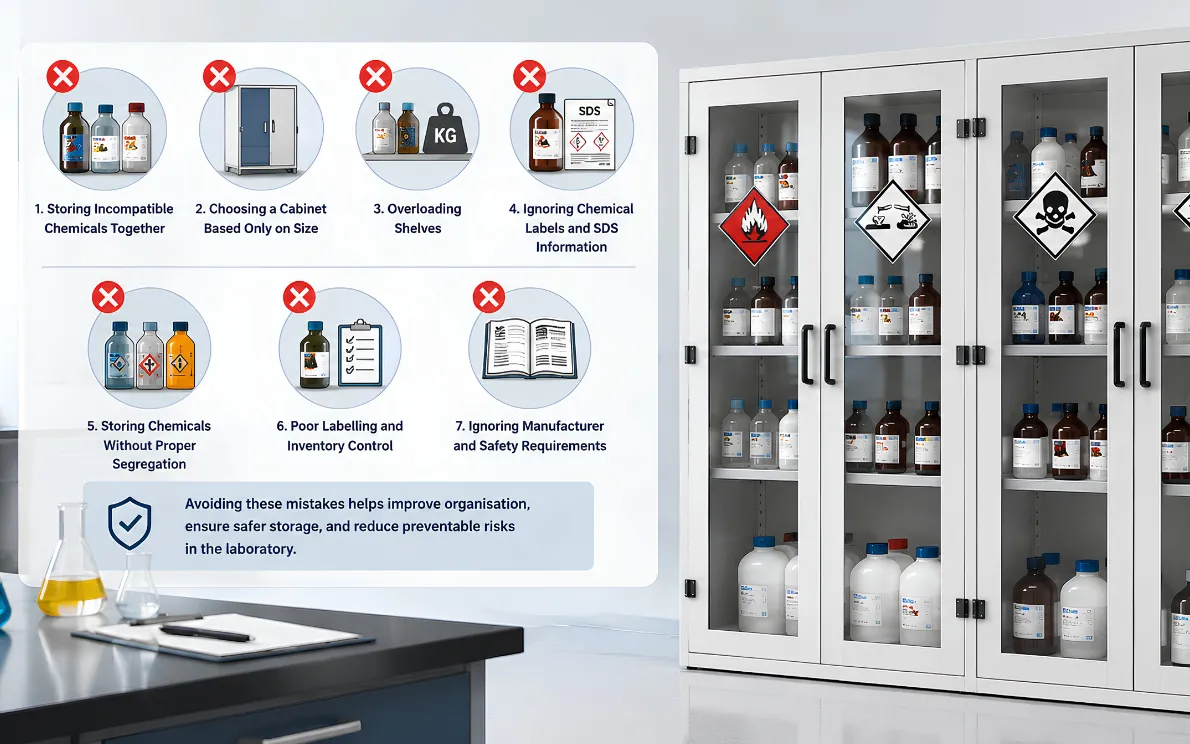
Even a well-designed safety cabinet for chemical storage cannot compensate for poor storage practices. Avoiding common mistakes is essential for maintaining a safer laboratory environment.
1. Storing Incompatible Chemicals Together
Do not store chemicals together simply because they fit inside the same cabinet. Check compatibility and segregate substances that could react with each other.
2. Choosing a Cabinet Based Only on Size
A larger cabinet is not necessarily the right cabinet. Consider chemical compatibility, construction materials, storage capacity, safety features, and the specific chemicals being stored.
3. Overloading Shelves
Overloaded shelves can increase the risk of containers falling or breaking. Always follow the cabinet manufacturer’s recommended load capacity.
4. Ignoring Chemical Labels and SDS Information
Labels and Safety Data Sheets provide important information about hazards and storage conditions. Do not rely on assumptions when deciding where a chemical should be stored.
5. Storing Chemicals Without Proper Segregation
Different hazard classes may require separate storage arrangements. Keep incompatible substances appropriately separated rather than grouping them by convenience.
6. Poor Labelling and Inventory Control
Missing, damaged, or unclear labels can make chemical identification difficult. Maintain clear labels and regularly review your chemical inventory.
7. Ignoring Manufacturer and Safety Requirements
Storage practices should follow the cabinet manufacturer’s instructions, chemical SDS recommendations, and applicable laboratory safety requirements.
By avoiding these mistakes, laboratories can make better use of their chemical storage cabinets, improve organisation, and reduce preventable storage-related risks.
Conclusion
Choosing the right safety cabinet for chemical storage is essential for maintaining a safe, organised, and efficient laboratory. The correct cabinet helps store chemicals according to their properties, compatibility, and handling requirements while reducing the risk of spills, exposure, and accidental reactions. Factors such as cabinet material, storage capacity, chemical resistance, segregation, and applicable safety requirements should be considered before making a decision.
As experienced laboratory furniture suppliers, Santech Labs provides customised laboratory furniture and chemical storage solutions designed for different laboratory environments. Whether you are setting up a new laboratory or upgrading an existing workspace, selecting the right chemical storage cabinet can improve organisation, support safer workflows, and make better use of available space.
In this guide, we explain how to choose a safety cabinet for chemical storage, what features to consider, how different chemicals should be organised, and common storage mistakes to avoid. Contact Santech Labs to discuss laboratory furniture and chemical storage solutions tailored to your specific requirements.