
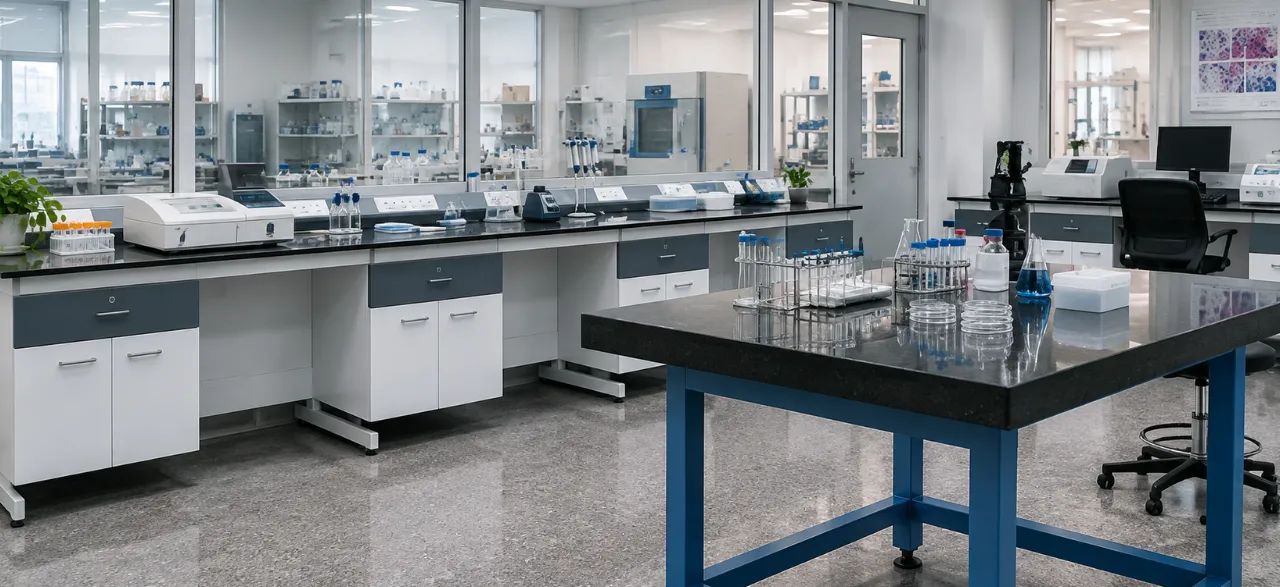
Choosing the right medical research laboratory furniture depends on your laboratory’s workflow, equipment, available space, storage requirements, safety needs and future expansion plans. The right furniture should provide durable work surfaces, efficient laboratory storage, comfortable working conditions and easy access to equipment.
Medical research laboratory furniture can include laboratory workstations, research benches, storage cabinets, fume hoods and customised furniture designed around specific laboratory requirements. As an experienced laboratory furniture manufacturer, Santech Labs designs and manufactures solutions that support practical, organised and efficient medical and research laboratory environments.
Why Is Medical Research Laboratory Furniture Important?
Medical research laboratory furniture plays an important role in supporting laboratory workflow, equipment use, storage and day-to-day research activities. Unlike ordinary furniture, laboratory furniture must be selected according to the work being performed, the equipment being used and the environmental requirements of the laboratory.
Researchers may spend several hours at a laboratory workstation conducting experiments, analysing samples, recording results and operating equipment. A well-planned furniture layout can help improve organisation, accessibility and movement throughout the laboratory.
A well-planned furniture layout can help with:
| Challenge | How Better Furniture Planning Helps |
|---|---|
| Limited workspace | Creates dedicated areas for different activities |
| Difficult equipment access | Allows proper placement and maintenance clearance |
| Poor organisation | Provides structured storage solutions |
| Unnecessary movement | Improves workflow between work areas |
The goal is not to fill the laboratory with furniture. It is to create a workspace where every element has a purpose.
Understanding the Requirements Before Choosing Medical Research Laboratory Furniture
The right furniture selection process begins long before any material, colour, or cabinet selection takes place. It begins with an understanding of how the laboratory is supposed to be used. A well-planned laboratory layout should consider workflow, equipment placement, storage, safety and future requirements. For more guidance, see our detailed guide on how to design a successful laboratory.
In the case of a medical research laboratory, there may be several functions performed within one space, such as preparation, analysis, storage, recording of results, and use of equipment.
1. Consider the Type of Research
The requirements for medical research lab furniture can vary depending on the type of research performed. Molecular biology, pharmaceutical research and clinical research may require different work surfaces, storage arrangements, equipment support and workflow layouts.
For example, a laboratory handling sensitive samples may prioritise organised storage and controlled workflow, while a research environment using large instruments may require dedicated equipment-support areas and additional service access.
2. Think About the Equipment Requirements
The need for large pieces of equipment influences the furniture choices in many cases.
When making a decision, consider:
- Size and weight of the equipment
- Energy requirements
- Connections
- Ease of maintenance
- Heating requirements
- Equipment dimensions and weight
- Power and utility connections
- Ventilation requirements where applicable
- Operator access
- Maintenance and service clearance
- Heat or moisture exposure
- Future equipment requirements
This is important because furniture selection should follow equipment planning, not the other way around.
Plan the Laboratory Workflow
A laboratory should follow the natural movement of the people using it.
Ask the following questions:
- Where are samples received?
- Where are they processed?
- Which equipment is used frequently?
- Which materials need immediate access?
- Which items require controlled storage?
The answers help determine the position of each laboratory workstation, storage unit and equipment-support area so that frequently performed tasks require less unnecessary movement. For more detailed guidance on planning space, workflow and equipment placement, see our guide to medical research laboratory design.
What Furniture Does a Medical Research Laboratory Need?
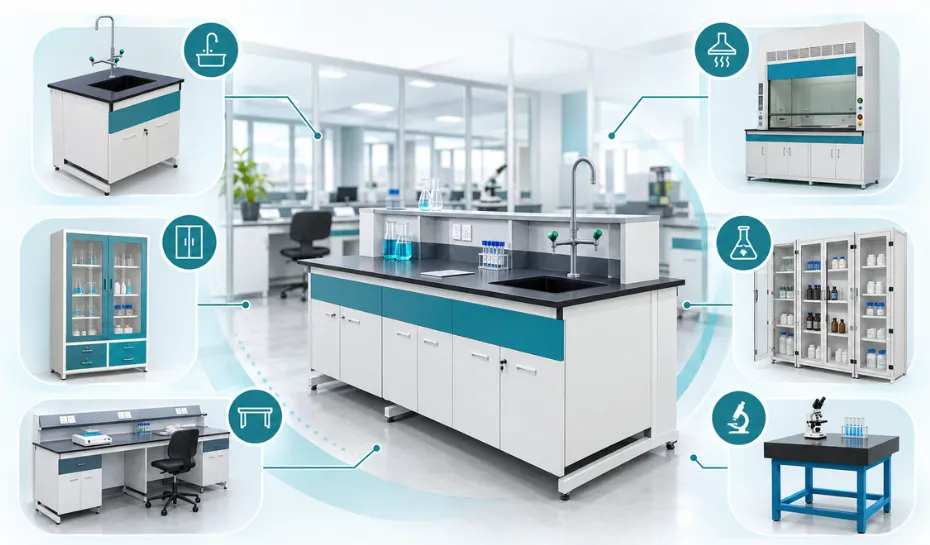
A medical research laboratory may require different furniture systems depending on its research activities, equipment and available space. Common research laboratory furniture includes:
- Laboratory workstations: Fixed, mobile, island and wall-mounted work areas for routine laboratory activities.
- Laboratory storage cabinets: Organised storage for equipment, consumables, glassware and other laboratory materials.
- Chemical storage cabinets: Dedicated storage solutions where chemical segregation and safe organisation are required.
- Fume hoods: Ventilated work areas for applications that require localised containment.
- Equipment-support furniture: Structures designed to accommodate laboratory instruments while allowing appropriate access and maintenance.
- Custom laboratory furniture: Furniture designed around specialised equipment, unusual room dimensions or specific workflow requirements.
The right combination depends on the laboratory’s application, workflow, equipment, storage requirements and available space.
Key Factors to Consider When Selecting Medical Research Laboratory Furniture
1. Material and Durability
Medical research laboratories often deal with frequent cleaning, moisture, chemicals, and continuous usage. The furniture material must be selected according to the environment it will be used.
Material selection should consider chemical exposure, cleaning frequency, moisture, heat, durability and the type of work performed on the surface. A general research workstation may have different material requirements from a workstation used for applications involving frequent chemical handling.
Common material considerations include:
| Material | Suitable For |
|---|---|
| Stainless steel | Clean environments and areas requiring corrosion resistance |
| Epoxy resin worktops | Heavy-duty laboratory applications |
| Compact laminate | General laboratory work areas |
| Powder-coated metal | Durable storage and workstation structures |
Choosing the appropriate material will be guided by the intended purpose of use. A general research workstation and a workstation for handling chemicals could have entirely different requirements.
2. Choose the Right Laboratory Workstation
A laboratory workstation should be selected according to the tasks performed, equipment used, available space and ergonomic requirements. The workstation should provide sufficient working area while allowing convenient access to equipment, materials and utilities. For a detailed comparison of workstation types, materials and selection considerations, see our laboratory workbench guide.
The ideal workstation should offer:
- Suitable working height
- Sufficient surface space
- Cable management
- Easy access to frequently used materials
- Provision for future equipment
- Adequate clearance for cleaning and maintenance
There are various types of laboratory workstations:
| Workstation Type | Suitable Application |
|---|---|
| Fixed workstation | Permanent research areas |
| Mobile workstation | Flexible laboratory layouts |
| Island workstation | Shared research activities |
| Wall-mounted workstation | Space optimisation |
A workstation should not only fit the room. It should fit the process happening inside the room.
3. Plan Laboratory Storage Properly
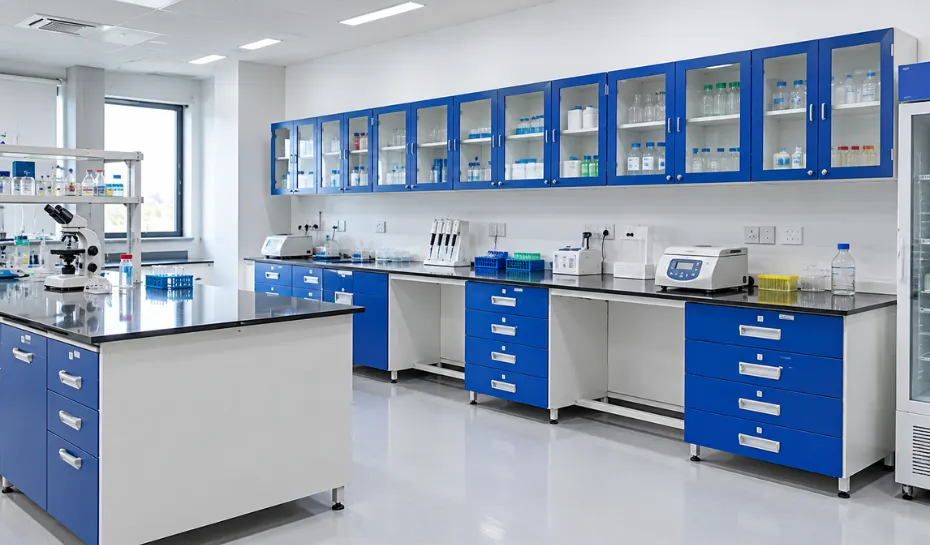
Storage is often underestimated during laboratory planning. However, poor storage decisions can quickly affect workflow.
A lack of organised laboratory storage can result in crowded worktops, misplaced materials, and inefficient movement.
Storage planning should consider:
- Chemicals
- Samples
- Glassware
- Consumables
- Documentation
- Equipment accessories
Good storage systems should provide:
- Easy identification of materials
- Safe segregation where required
- Sufficient capacity
- Room for future requirements
At Santech Labs, we design laboratory storage solutions based on workflow and operational needs, including laboratory storage cabinets designed for organised laboratory environments. When deciding between different storage approaches, understanding the differences between custom vs standard laboratory storage cabinets can help you select a solution that matches your space, workflow and storage requirements.
How to Choose Medical Research Laboratory Furniture: 10 Steps
- Identify the laboratory activities – Understand the research processes and daily tasks performed in the space.
- Map the equipment – Record equipment dimensions, weight, utilities, access and maintenance requirements.
- Plan the workflow – Arrange workstations and storage around the movement of samples, materials and users.
- Determine storage requirements – Identify the quantity and type of chemicals, samples, consumables, glassware and equipment accessories that need storage.
- Select suitable materials – Consider chemical exposure, cleaning, moisture, heat and durability before choosing worktop materials.
- Consider ergonomics – Select appropriate workstation heights and provide comfortable access to equipment and materials.
- Plan utilities – Account for electrical, water, drainage, gas or data connections where applicable.
- Allow for future expansion – Consider additional equipment, users and potential changes to laboratory workflows.
- Choose standard or custom furniture – Select the appropriate approach based on space, equipment, workflow and technical requirements.
- Confirm installation requirements – Check access routes, service clearances, floor and wall conditions and maintenance requirements before installation.
How Should Safety and Efficiency Influence Laboratory Furniture Selection?
Safety and efficiency are the most important things that need to be considered when selecting furniture for the research laboratory.
The furniture should:
Offer Chemical Resistance: The choice of the work surfaces will depend on the nature of chemicals and cleaning involved in the research.
Ensure Ergonomic Working: Research involves doing delicate work for extended durations. This means there is a need for workstations of appropriate heights.
Facilitate Easy Movement: There is a need for easy movement between stations for researchers.
Custom vs Standard Research Laboratory Furniture: Which Is Better?
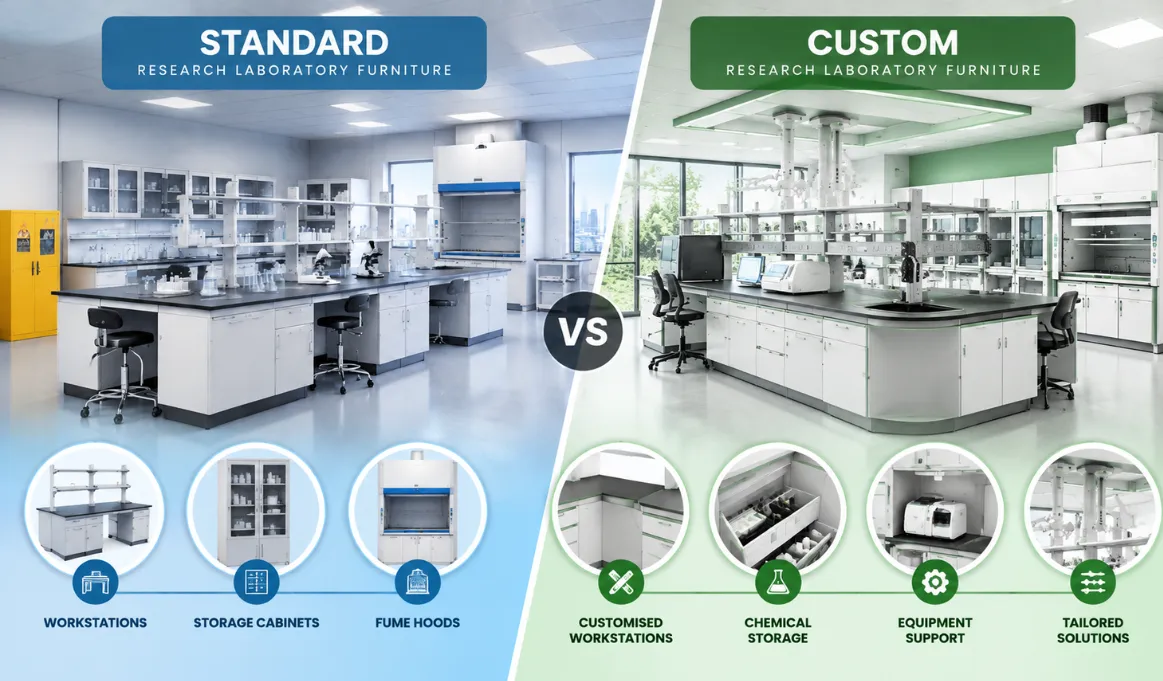
Choosing between custom laboratory furniture and standard laboratory furniture depends on the laboratory’s available space, workflow, equipment, storage needs, and technical requirements. There is no single solution for every research laboratory.
Standard laboratory furniture is suitable when the layout is predictable, workstations follow common configurations, and faster procurement is a priority. Custom laboratory furniture can be more appropriate when a laboratory has unusual dimensions, specialised equipment, or specific workflow and storage requirements.
For many research laboratories, a combination of standard and customised laboratory furniture can provide a practical balance between flexibility, functionality, and project requirements. Working with experienced laboratory furniture suppliers can also help ensure that furniture selection matches the laboratory’s operational needs.
Common Errors in Selecting Laboratory Furniture
Selecting laboratory furniture based only on appearance or initial price can create problems with durability, workflow, storage, and future expansion. Avoid these common mistakes when planning a research laboratory:
1. Choosing Furniture Solely on Cost: The lowest-priced option may not provide the durability, quality, or flexibility required for long-term laboratory use.
2. Ignoring Future Laboratory Growth: Research laboratories can expand, add equipment, or change workflows over time. Consider future requirements when selecting laboratory furniture.
3. Selecting Furniture Before Laboratory Equipment: Equipment dimensions, weight, utilities, access requirements, and maintenance clearances should be considered before finalising workstation and storage layouts.
4. Underestimating Storage Requirements: Insufficient storage can lead to clutter, inefficient workflows, and poor organisation. Plan adequate laboratory storage for chemicals, samples, equipment, and frequently used materials.
5. Overlooking Installation Requirements: Proper installation is essential for ensuring that laboratory workstations, cabinets, and other furniture components are stable, functional, and correctly integrated into the laboratory layout.
6. Ignoring Cleaning and Maintenance Access: Furniture layouts should provide sufficient access around workstations, cabinets and equipment for routine cleaning, inspection and maintenance.
Choosing Research Laboratory Furniture with Santech Labs
Choosing research laboratory furniture is ultimately about creating a workspace that supports people, equipment and laboratory processes.
At Santech Labs, we design and manufacture laboratory furniture solutions based on workflow, equipment requirements, available space, storage needs and operational objectives. Our solutions are developed for medical and research laboratory environments where functionality, durability and efficient space utilisation are important.
Our laboratory furniture range includes laboratory workstations, storage cabinets, fume hoods and customised laboratory furniture to support different laboratory layouts and applications.
As experienced laboratory furniture manufacturers and suppliers, Santech Labs can support laboratory projects from furniture selection through to complete workspace planning.
Conclusion
Choosing the right medical research laboratory furniture requires more than selecting workstations and storage based on appearance or price. Laboratory workflow, equipment requirements, materials, ergonomics, laboratory storage, safety and future expansion should all be considered before finalising a furniture solution.
As experienced lab furniture manufacturers, Santech Labs designs and manufactures laboratory workstations, storage cabinets, fume hoods and customised laboratory furniture solutions for medical and research laboratory environments. Our approach focuses on matching furniture with the laboratory’s space, workflow, equipment and operational requirements.
If you are planning, upgrading or expanding a medical research laboratory, talk to Santech Labs for laboratory furniture solutions designed around your specific project requirements.