

Choosing the right plinth system is not a small detail. It shapes how your lab feels to work in, how much storage you have, how easy it is to keep things organised, and how smoothly daily tasks run. In a space where precision and practicality matter, the furniture has to do more than look neat.
That is why it is worth slowing down before you buy. A well-planned laboratory furniture setup can make the room easier to use for years. A poorly chosen one can create friction from day one. If you are planning to buy laboratory plinth system furniture for a new lab or an upgrade, the points below will help you make a better decision.
What Is a Laboratory Plinth System?
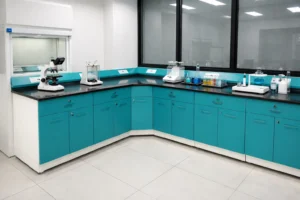
A laboratory plinth system is a fixed bench setup supported by a solid base, usually with storage built in underneath. The system usually has storage space incorporated underneath it. A laboratory plinth system provides a worktop with a firm foundation.
In a laboratory setting, a plinth system is usually selected for a worktop when strength, storage space, and permanence are considered essential. A laboratory plinth system is a good choice for a work environment that demands a dependable worktop.
Think of it as the backbone of the lab. It holds everything together and creates a base that supports daily use without constant adjustment.
Why the Right Plinth System Matters
Lab furniture affects more than just appearance. It influences movement, storage, safety, and access. When the setup is right, the whole workspace feels easier to manage. When it is wrong, even simple tasks can become inconvenient.
The right laboratory furniture helps you:
- Keep essential items close at hand
- Reduce clutter
- Support better workflow
- Make cleaning and maintenance easier
- Improve access to services and equipment
That is why buying a plinth system should never be treated as a last-minute choice. It is part of how the lab functions every day.
Consider Your Lab’s Workflow and Space Layout
Before you decide on any benching system, take a proper look at how the room is used. Every lab has its own rhythm. Some spaces need wide movement areas. Others need tightly organised work zones. The furniture should support that flow, not interrupt it.
Ask yourself a few simple questions:
- Where do people move most often?
- Which areas need to stay clear?
- What equipment needs to stay fixed in place?
- How much bench access is required?
A plinth system works best when the layout is fairly stable and the lab has a clear structure. It is especially useful where the room has already been planned around specific work zones. If the space is awkward or likely to change often, the layout needs even more careful thought before installation begins.
Assess Storage Needs Before You Decide

Storage is one of the biggest reasons people choose a plinth-based setup. A lab can look organised on paper and still feel cramped in practice if there is nowhere to keep everyday items.
The space under the bench can be used as storage cabinets, drawers, and other storage solutions that keep tools and materials close without cluttering the work surface. That makes a real difference in busy environments.
Think about what your lab actually stores on a daily basis:
- Glassware
- Consumables
- Instruments
- Sample containers
- Cleaning items
- Tools and accessories
If your team reaches for those items often, then storage design matters a lot. Good laboratory furniture should make work easier, not force people to keep moving things around.
Check Utility Access and Service Requirements
Before you choose a plinth system, look at how the services will be routed and how easy they will be to reach later. But service access is just as important as looks. If maintenance becomes a problem, the furniture could cause difficulties even if it looks good initially.
You should also consider the following factors:
- Service voids
- Back panel access
- Sink positioning
- Access for repair work
- Future changes to utilities
If done well, the setup will ensure that the lab is functional and minimises future frustrations.
Evaluate Strength, Load Capacity, and Long-Term Durability
The lab is a place of work, which means the furniture has to be strong enough to keep up with its users. The benches are used day in and day out, the cabinets open and close with regularity, and the tops get repeatedly cleaned.
The plinth system is often selected for its strength. And that is important since you are using it for everything.
But do not just look at the initial impression. Consider how it will stand the test of time.
- Will it remain steady?
- Can it handle regular use?
- Will the fittings remain reliable?
- Is the finish likely to stay intact?
These details matter because a lab bench is not something you replace lightly. Durability should be part of the value calculation from the start.
Think About Flexibility and Future Expansion
No lab stays exactly the same forever. Teams grow, equipment changes, and the way the space is used can shift over time. That is why flexibility deserves attention, even when you are buying fixed laboratory furniture.
A plinth system is more permanent than some other options. That can be a strength when you want structure and stability. But if the lab may change later, you need to think ahead.
Consider whether:
- The room may be expanded
- New equipment may be added
- The layout could change
- The lab might serve a different purpose later
A fixed system can still be the right answer. It just needs to match the future as well as the present.
Prioritise Safety and Cleanability
Cleanliness and safety are part of everyday lab life, not optional extras. The furniture should make both easier to maintain.
A well-planned plinth system should support a tidy, uncluttered workspace. Smooth surfaces, sensible storage, and clear access to services all help reduce mess and make routine cleaning more manageable.
Look for features that support:
- Easy wipe-down cleaning
- Organised storage
- Safe routing of utilities
- Clear working zones
- Low-clutter bench areas
When the furniture helps people keep the space under control, the whole lab runs more smoothly.
Questions to Ask Before You Buy
Before making the final call, it helps to slow down and ask the right questions:
- What kind of work will the lab carry out?
- How much storage is really needed?
- What services must be built into the bench?
- Which materials are most suitable?
- Is the layout likely to change later?
- Does the supplier offer support from planning to installation?
Takeaway
The plinth system is a good option for laboratories that need stable and fixed furniture layout. It works well in spaces where everyday use is consistent and where practical support matters more than constant rearrangement.
If you are planning to buy laboratory plinth system furniture for a new lab or an upgrade, the smartest approach is to think through layout, storage, materials, utilities, and future needs before placing the order. That is what turns a basic benching choice into a setup that genuinely supports the work being done.
A good lab does not just look organised. It works well, day after day.