
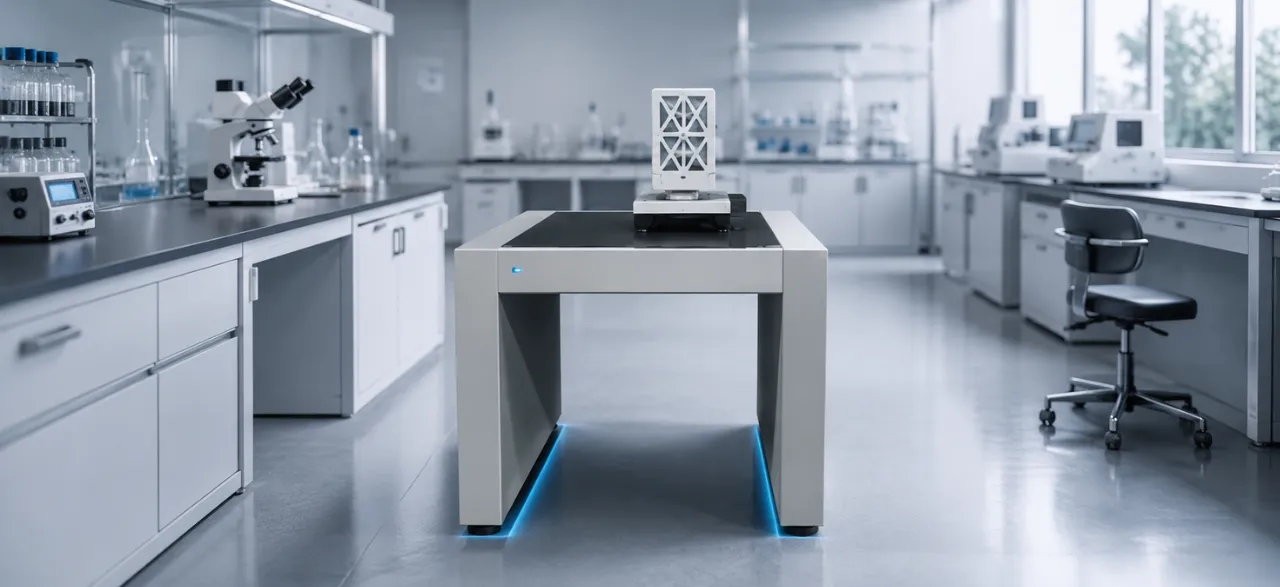
Modern laboratories rely on highly sensitive instruments where even the smallest vibration can affect measurement accuracy, experiment consistency, and equipment performance. An anti vibration table for laboratory environments provides a stable platform that helps minimise vibrations, ensuring precise results for applications such as microscopy, analytical weighing, spectroscopy, and pharmaceutical research. As laboratories continue to adopt advanced technologies, investing in the right laboratory anti vibration table is no longer optional—it is essential for achieving reliable outcomes and protecting valuable equipment. In this guide, you’ll discover why anti-vibration tables matter, their key applications, the features to look for, and how to choose the right solution from a trusted anti vibration table manufacturer for your laboratory.
Why is Vibration Control Necessary for Laboratories?
Laboratories require accurate and repeatable measurements. If vibrations reach sensitive instruments, they can cause measurement discrepancies that are difficult to detect but significant enough to affect results. This is why many lab furniture manufacturers recommend anti-vibration tables as an essential part of precision laboratory setups, ensuring reliable performance and consistent experimental accuracy.
Vibration control can be useful for laboratories because it:
- Increases the accuracy of measurements
- Ensures repeatable experiments
- Gives more equipment stability
- Minimises unnecessary variations in measurements
- Makes sensitive instruments operate stably
- Contributes to increased equipment life span
With the further development of laboratory technology, modern instruments have become highly sensitive to any environmental factors. A stable surface will help laboratory staff to concentrate on their work rather than having it interrupted by unnecessary movements.
Vibration Sources in the Laboratory
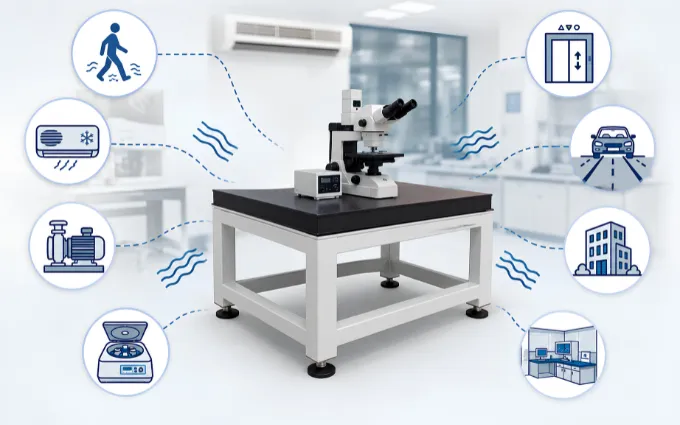
Most people associate vibrations with heavy industrial machinery, but they are also common in laboratories. These vibrations are usually much smaller and often go unnoticed, yet they can still affect the performance of sensitive instruments. That’s why using an anti vibration table for laboratory environments is essential it helps reduce unwanted vibrations and ensures accurate, reliable, and consistent results.
Some of the most typical sources of vibrations include:
- People walking in the laboratory hallway
- Air conditioners and HVAC systems
- Pumps and compressors
- Nearby centrifuges
- Elevators in the building
- Traffic on the road
- Building vibrations
- Equipment running in the next laboratory
Though each vibration may not amount to much individually, collectively they can cause a disturbance sufficient to affect laboratory equipment.
Applications of Laboratory Anti Vibration Tables
The anti vibration table applications have been on the rise due to the increasing demand for research and analysis equipment in laboratories.
| Laboratory Type | How Anti-Vibration Tables Help |
|---|---|
| Pharmaceutical Laboratories | Anti-vibration tables provide a stable platform for drug formulation, quality control, and pharmaceutical research. They minimise unwanted movement, helping laboratories achieve accurate measurements and comply with strict industry standards. |
| Research & Development (R&D) Laboratories | R&D laboratories use precision instruments for microscopy, nanotechnology, biotechnology, and material science. A vibration-free platform improves experiment consistency and delivers more reliable research results. |
| Analytical Laboratories | Sensitive equipment such as HPLC systems, Gas Chromatography (GC), spectrometers, and precision balances performs more accurately when supported by anti-vibration tables that reduce environmental disturbances. |
| Calibration Laboratories | Calibration laboratories require highly stable workstations to achieve accurate measurements. Anti-vibration tables minimise external movement and help maintain dependable calibration results. |
| Educational & University Laboratories | Universities and research institutions use anti-vibration tables to create stable workspaces for students and researchers, improving experiment accuracy while protecting valuable laboratory equipment. |
| Quality Control Laboratories | Quality control laboratories use anti-vibration tables to ensure precise testing of raw materials and finished products, reducing measurement errors and improving product consistency. |
| Biotechnology Laboratories | Biotechnology laboratories handling DNA analysis, cell cultures, and molecular research benefit from vibration-free workstations that improve precision and protect delicate samples. |
| Industrial & Manufacturing Laboratories | Industrial laboratories use anti-vibration tables during product testing, material analysis, and inspection processes to improve testing accuracy, equipment performance, and operational efficiency. |
Features of a Quality Laboratory Anti-Vibration Table
Before making a purchase, it’s important to understand how to choose the right anti-vibration table for laboratory use based on your laboratory’s specific requirements rather than selecting a standard product.
Stability
Structural rigidity is the key to any good vibration management system. It ensures that unwanted vibrations are minimised and that the laboratory equipment has a stable structure.
Durable Structure
A durable structure makes the table sturdy and enables it to carry heavy equipment without affecting the performance of the table.
Vibration Isolation System
Vibration isolation system is the hallmark of any anti-vibration table. The specific isolation system depends on the application of the table.
Resistance to Chemicals
Any laboratory equipment must be able to withstand chemical exposure. Resistance to chemicals increases durability and ease of maintenance of the equipment.
Large Weight Capacity
Each device has its own specifications regarding weight. It is important that a good anti-vibration laboratory table be able to easily carry its intended device while remaining stable.
Adjustable Leveling
Labs are not always flat. An adjustable leveling foot will ensure stability of your working platform despite any slight unevenness of the floor.
Durability
Lab furniture is an investment for the long term. It makes sense to purchase durable construction and avoid additional repairs.
How to Choose the Right Anti-Vibration Table for Laboratory Use
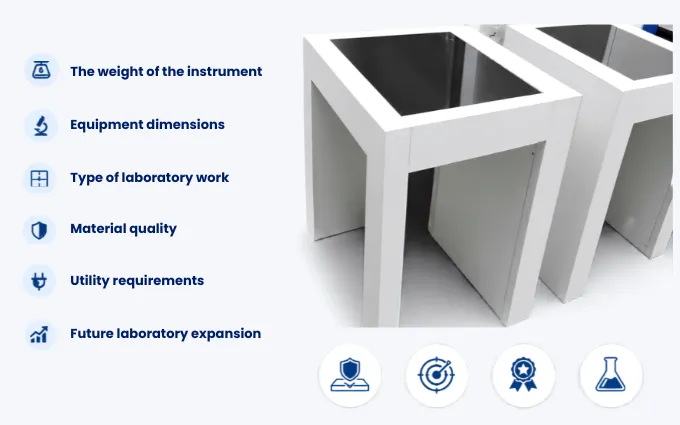
Choosing the right anti-vibration table begins with understanding the laboratory’s specific requirements rather than selecting a standard product.
Consider factors such as:
- The weight of the instrument
- Equipment dimensions
- Type of laboratory work
- Required vibration isolation level
- Available laboratory space
- Material quality
- Utility requirements
- Future laboratory expansion
It is also worth considering whether additional equipment may be introduced later. Selecting a solution that accommodates future needs can help laboratories avoid unnecessary replacements as operations grow.
The Importance of Choosing the Right Anti-Vibration Table Manufacturer
It is equally important to select a good anti vibration table manufacturer as it is to select the table itself. The experienced manufacturer is aware of the requirements of laboratory settings and will be able to provide suitable solutions for specific cases.
While assessing manufacturers, it is advisable to pay attention to:
- Experience in manufacturing laboratory furniture
- Excellent engineering and craftsmanship
- Customisation options
- Strong material choices
- Installation assistance
- After sales services
Collaborating with the experienced manufacturer of laboratory furniture makes the installation of the table into your laboratory easier.
Conclusion
Precision starts with a stable foundation. Even the most advanced laboratory instruments deliver accurate results only when placed on a properly designed surface that minimises unwanted vibrations. A high-quality anti vibration table for laboratory environments improves measurement consistency, protects expensive equipment, and supports reliable performance in pharmaceutical, research, analytical, and educational laboratories. As a trusted anti vibration table manufacturer and one of the leading laboratory furniture suppliers, Santech Labs provides durable, precision-engineered solutions that help laboratories achieve dependable results today while supporting future growth and evolving research needs.