
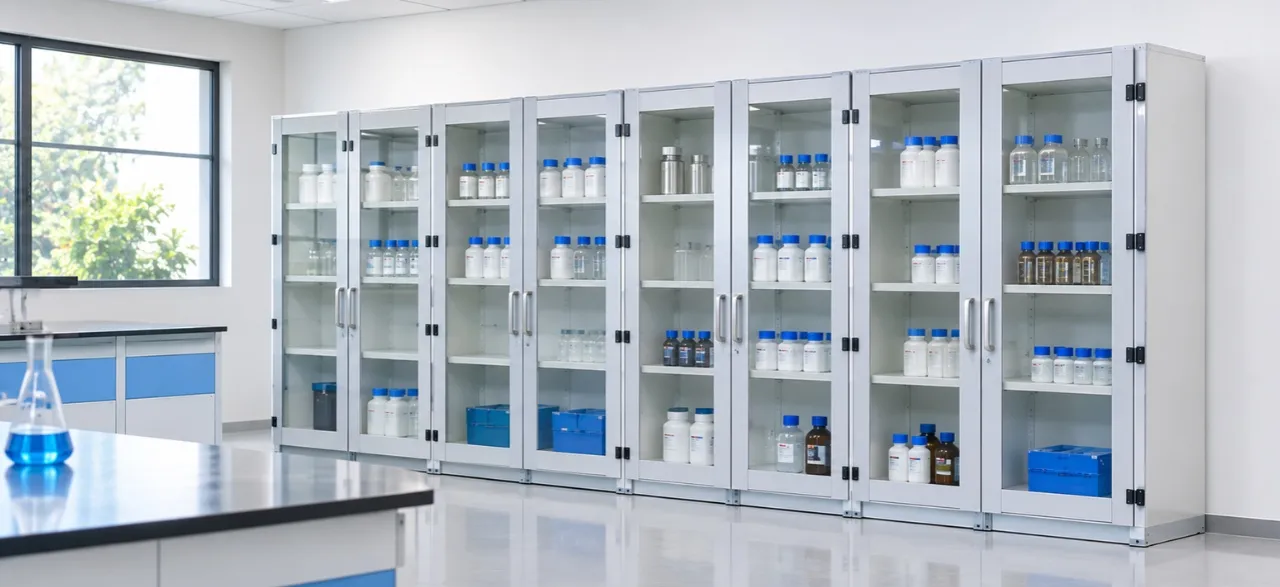
A chemical storage cabinet is a specialised laboratory storage unit designed to store chemicals according to their hazards, compatibility and storage requirements. Choosing the right cabinet involves evaluating chemical resistance, construction material, storage capacity, ventilation, spill containment and access control. The correct selection helps laboratories organise hazardous substances, minimise storage-related risks and maintain a safer working environment.
Laboratories handle different chemicals, including acids, alkalis, solvents, reagents and other hazardous substances. Since these materials have different storage requirements, a standard storage cabinet may not be suitable for every application.
Whether you are setting up a pharmaceutical laboratory, research facility, educational institution or testing centre, selecting an appropriate chemical storage cabinet is an important part of laboratory planning.
Why Is a Chemical Storage Cabinet Important in a Laboratory?
Proper chemical storage helps prevent accidental exposure, incompatible chemical interactions and unnecessary risks within laboratory workspaces.
A purpose-designed chemical storage cabinet provides a designated location for compatible chemicals while helping laboratory personnel maintain better storage practices.
Its key benefits include:
- Organised chemical storage: Keeps chemical containers arranged in designated storage areas.
- Reduced exposure risks: Appropriate cabinet construction helps protect chemicals from unsuitable storage conditions.
- Improved access control: Locking mechanisms help restrict unauthorised access.
- Better space utilisation: Dedicated storage reduces clutter around laboratory workbenches.
- Durable construction: Suitable materials and finishes help withstand the intended laboratory environment.
For additional guidance, read our guide to laboratory safety tips for practical ways to maintain safer laboratory operations.
What Factors Should You Consider When Choosing a Chemical Storage Cabinet?
Selecting the right cabinet requires evaluating the chemicals being stored and the laboratory’s operational requirements. Consider these seven important factors before making a purchase.
1. What Types of Chemicals Will You Store?
Start by identifying the chemicals that need to be stored. Different substances have different chemical properties and compatibility requirements.
Common categories include:
- Acids and alkalis: Often require corrosion-resistant storage materials, such as suitable polypropylene.
- Flammable liquids: Require purpose-designed flammable-liquid cabinets that meet applicable fire safety requirements.
- Toxic chemicals: May require restricted access and additional containment measures.
- Oxidising agents: Must be kept separate from incompatible combustible and reducing substances.
- Reactive chemicals: Require specific storage arrangements based on their individual hazards.
Always consult the Safety Data Sheet (SDS) before deciding where and how a chemical should be stored. Avoid storing incompatible substances together, even when they fit inside the same cabinet.
2. Which Material Is Best for a Chemical Storage Cabinet?
Material selection directly affects cabinet durability, chemical resistance and maintenance requirements.
The most suitable material depends on the substances being handled and the laboratory environment.
| Cabinet Material | Suitable Applications | Key Advantage |
|---|---|---|
| Mild Steel | General compatible chemical storage | Strong construction |
| Stainless Steel 304 | Selected laboratory storage applications | Durability and corrosion resistance |
| Polypropylene (PP) | Many acids and alkalis | High resistance to various corrosive chemicals |
Mild Steel: Powder-coated or epoxy-coated mild steel cabinets provide durable construction for suitable laboratory storage applications. However, protective coatings must be compatible with the chemicals involved.
Stainless Steel 304: Stainless steel offers durability and good corrosion resistance in many laboratory environments. Its suitability should still be checked against the specific chemical exposure.
Polypropylene: PP cabinets are particularly useful for storing many corrosive substances because polypropylene offers resistance to various acids, alkalis and moisture.
For laboratories handling aggressive chemicals, material compatibility should take priority over appearance and initial purchase price.
3. Does the Cabinet Require a Ventilation System?
Ventilation requirements depend on the chemicals being stored and the potential release of hazardous vapours.
Some substances may release fumes that can accumulate inside an enclosed storage space. In such situations, an appropriately designed ventilation arrangement may be necessary.
Before choosing a ventilated chemical storage cabinet, consider:
- The chemical vapour characteristics.
- The manufacturer’s ventilation recommendations.
- The laboratory’s existing exhaust arrangements.
- The potential impact on surrounding workspaces.
- Applicable safety and installation requirements.
Not every chemical storage cabinet requires mechanical ventilation. The decision should be based on a chemical-specific risk assessment.
4. What Storage Capacity and Cabinet Size Do You Need?
The cabinet should accommodate the required chemical containers without overcrowding. Before purchasing, measure the available laboratory space and estimate the quantity and dimensions of the containers.
Evaluate the following features:
- Adjustable shelves for different container sizes.
- Adequate shelf load capacity.
- Suitable internal dimensions.
- Single-door or double-door configurations.
- Spill containment provisions where required.
Also consider door clearance and accessibility. A properly positioned chemical storage cabinet should not obstruct laboratory walkways, emergency exits or access to safety equipment.
For broader storage planning, explore our guide to choosing the right science lab storage cabinets.
5. What Safety Features Should a Chemical Safety Cabinet Have?
Safety features should match the hazards associated with the stored substances.
Depending on the application, useful features may include:
- Integrated locking mechanisms.
- Chemical-resistant internal surfaces.
- Suitable spill containment arrangements.
- Durable door construction.
- Secure and stable shelving.
- Appropriate ventilation provisions.
Remember that a lockable cabinet is not automatically a fire-rated cabinet. Flammable liquids require specifically designed storage cabinets with the appropriate tested fire performance.
Similarly, spill containment and ventilation requirements should be selected according to the intended application.
6. Is the Cabinet Easy to Clean and Maintain?
Laboratory cabinets are exposed to regular handling, cleaning agents, moisture and occasional chemical splashes. Therefore, maintenance should be considered before selecting a product.
Look for smooth internal surfaces, durable finishes, accessible shelving and construction suitable for routine cleaning.
Regular inspections should include checking for:
- Corrosion or damaged surface coatings.
- Chemical leaks and damaged containers.
- Loose shelves or fittings.
- Defective locking mechanisms.
- Signs of material deterioration.
Following manufacturer maintenance instructions helps maintain the cabinet’s condition and supports long-term usability.
7. Can the Cabinet Be Customised for Your Laboratory?
Laboratories differ in their layouts, chemical inventories and storage requirements. Therefore, a standard cabinet size may not always provide the most practical solution.
Customisation options may include cabinet dimensions, shelf arrangements, mounting configurations, material selection and ventilation provisions.
An appropriately customised chemical storage cabinet can integrate more effectively with laboratory workbenches and existing storage areas.
Which Type of Chemical Storage Cabinet Is Suitable for Your Laboratory?
Different laboratory applications require different storage solutions. The following comparison can help you identify a suitable starting point.
| Cabinet Type | Typical Application |
|---|---|
| Mild Steel Chemical Cabinet | Compatible laboratory chemicals and reagents |
| Stainless Steel Cabinet | Selected laboratory storage environments |
| Polypropylene Cabinet | Many corrosive chemicals, acids and alkalis |
| Flammable Liquid Cabinet | Specialised storage of flammable liquids |
| Ventilated Chemical Cabinet | Applications requiring designed vapour extraction |
The final selection must be based on chemical compatibility, storage conditions, manufacturer specifications and applicable safety requirements.
How Can You Choose the Right Chemical Storage Cabinet Manufacturer?
Choosing an experienced manufacturer is as important as selecting the cabinet itself. A reliable laboratory furniture manufacturer should understand chemical storage requirements, material selection and laboratory space planning.
Before finalising your purchase, check:
- Material specifications: Confirm the materials and surface finishes used in construction.
- Chemical compatibility: Check whether the proposed cabinet is suitable for your intended substances.
- Product configuration: Evaluate dimensions, shelves, locking systems and storage capacity.
- Technical documentation: Request relevant specifications, test reports and applicable certifications.
- Customisation and support: Check installation assistance, maintenance guidance and after-sales service.
Conclusion
Choosing the right chemical storage cabinet starts with understanding the chemicals you handle, their compatibility and their specific storage requirements. Material selection, ventilation, capacity, spill containment and access control should all be evaluated before purchasing.
A suitable cabinet should support organised chemical management while fitting the laboratory’s layout and operational needs. Selecting the wrong material or storage configuration can create unnecessary maintenance problems and safety concerns.
Santech Labs, a laboratory furniture manufacturer, offers chemical storage solutions in mild steel and SS 304, along with polypropylene laboratory cabinets designed for applications involving corrosive chemicals. Its storage solutions can be configured according to laboratory space and project requirements.
Explore the Santech Labs Chemical Storage Cabinet and PP Laboratory Cabinets to understand the available material and configuration options.
Planning a new laboratory or upgrading your existing facility? Contact Santech Labs to discuss your laboratory storage requirements and request a suitable solution.