
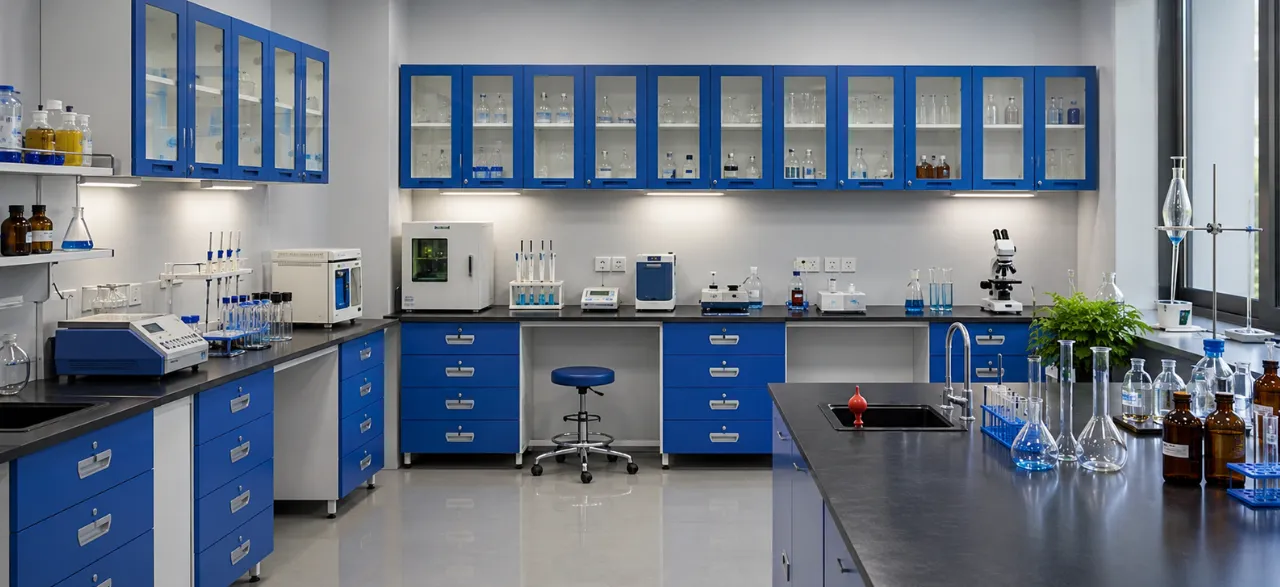
Choosing the right turnkey laboratory solutions provider in India requires more than comparing prices or laboratory furniture designs. The right provider should coordinate laboratory planning, workflow design, equipment requirements, utilities, laboratory furniture, safety systems, installation, testing, and final handover as one integrated project.
Before selecting a provider, evaluate their laboratory experience, technical capabilities, manufacturing quality, project management, customisation options, installation support, warranty, and after-sales service. The provider should also understand the specific requirements of your laboratory, whether it is pharmaceutical, medical research, clinical, educational, chemical, or industrial.
This guide explains how to choose a turnkey laboratory solutions provider in India, what services to evaluate, which questions to ask, and the key factors that can help you select a reliable partner for your laboratory setup or renovation.
What Makes a Good Turnkey Laboratory Solutions Provider?
A good turnkey laboratory solutions provider in India should manage the complete turnkey laboratory setup in India, from requirement analysis, space planning, workflow design, and equipment coordination to laboratory furniture, utilities, installation, testing, and final handover. Before choosing a provider, evaluate their relevant laboratory experience, technical expertise, manufacturing capability, project management, customisation, quality standards, warranty, and after-sales support. The provider should also understand your laboratory type, safety requirements, equipment needs, workflow, and future expansion plans.
What Should a Turnkey Laboratory Solutions Provider Actually Be Responsible For?
The term “turnkey” is used quite broadly. Some firms provide laboratory furniture and installation, while others manage the project from requirement planning through final handover.
A complete turnkey laboratory setup in India may include:
| Project Stage | What the Provider Should Address |
|---|---|
| Requirement study | Users, processes, equipment, storage and safety needs |
| Space planning | Workflow, zoning and movement |
| Technical coordination | Electrical, plumbing, gases, HVAC and exhaust requirements |
| Furniture planning | Benches, cabinets, fume hoods and specialist furniture |
| Manufacturing | Furniture produced to approved specifications |
| Installation | On-site fitting and service coordination |
| Testing and handover | Checks, documentation and final corrections |
When comparing lab solutions providers, check whether these activities are handled by one coordinated team or divided among multiple contractors.
Start With the Questions, Not the Presentation
An ideal turnkey provider should collect relevant information before offering lab solutions or preparing a quotation.
If the first conversation jumps immediately to bench colours and cabinet sizes, important groundwork may be missing.
The questions should include:
- What kind of tests, training, or research will be conducted?
- How many people will use the laboratory?
- What equipment is already known?
- What chemicals and biological agents will be used?
- What utilities will each machine require?
- Will the laboratory need to expand in the future?
All these factors influence laboratory planning. WHO guidelines on laboratory design consider layout, containment, equipment, maintenance, decontamination, and building services together.
Do They Understand Your Type of Laboratory?
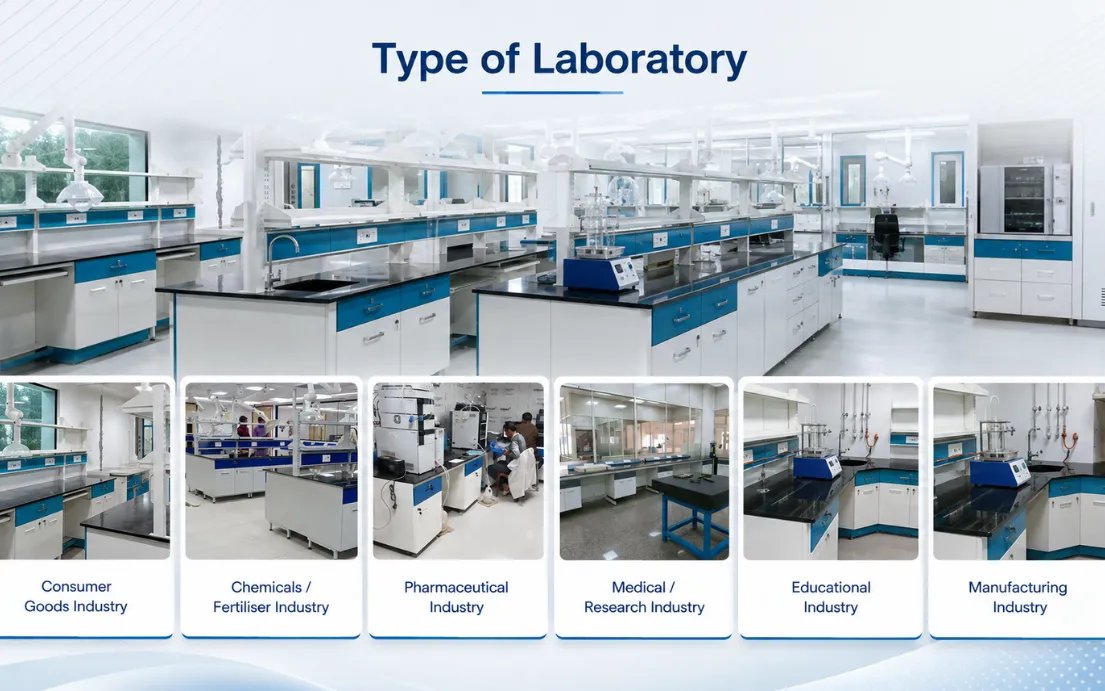
This is one of the fastest ways to narrow down your list of turnkey laboratory solutions providers.
Request project examples related to your specific industry. A company experienced in setting up school laboratories may not necessarily be the right fit for a pharmaceutical, biomedical, or industrial testing laboratory. For example, reviewing medical research laboratory design can help you assess whether a provider understands specialised workflows, equipment placement, safety requirements, and research-focused infrastructure.
For specialised biological containment laboratories, additional criteria may apply. ICMR, for instance, provides specific guidelines for establishing BSL-3 laboratories in India.
The provider should understand how these requirements influence the physical laboratory, while working alongside the relevant accreditation consultant, biosafety officer, architect, or authorised engineer where required.
Evaluate the Laboratory Furniture Design
The laboratory furniture design can reveal a great deal about the quality and practicality of the overall proposal. A good design should consider equipment, user comfort, chemical exposure, storage, utilities, maintenance and future changes—not simply the appearance of the furniture. Evolving laboratory furniture trends can also provide useful insights into how modern laboratories are adapting their furniture and workspace requirements.
Before approving the design, evaluate the following factors:
| Design Factor | What to Check |
|---|---|
| Equipment loading | Can the workbench safely support the weight and dimensions of the equipment? |
| Chemical resistance | Is the worktop material suitable for the chemicals and cleaning agents used? |
| Serviceability | Can electrical, plumbing and gas connections be accessed for maintenance? |
| Storage capacity | Does the cabinet configuration provide enough space for equipment, chemicals and supplies? |
| Ergonomics | Are bench heights, working positions and equipment placement suitable for users? |
| Workflow | Does the furniture layout support efficient movement between workstations, equipment and storage? |
| Flexibility | Can the furniture be modified or reconfigured when laboratory requirements change? |
The right laboratory furniture should support safe working practices while providing appropriate access to equipment, utilities, storage and maintenance points.
Why One Laboratory Drawing Is Not Enough
Request to view more than just a 2D plan.
For thorough turnkey laboratory solutions, sufficient information should be provided so that you can comprehend how the end result will turn out.
| Entry | → | Workstation | → | Equipment | → | Storage | → | Washing/Decontamination | → | Waste Path |
If the researchers keep crossing paths with the heavy traffic zones or moving around the room for frequently used items, then it is better to change this on the drawing than during installation.
What Does a Turnkey Laboratory Setup Cost in India?
The cost of a turnkey laboratory setup in India varies depending on the laboratory type, project size, furniture, utilities, equipment and level of customisation required. Rather than using a fixed price, it is better to assess each cost factor based on the laboratory’s specific requirements and project scope. For a detailed breakdown of pricing factors, explore our guide to turnkey lab setup cost in India.
| Cost Factor | What Influences the Cost? |
|---|---|
| Laboratory Type | Pharmaceutical, research, clinical, educational, chemical or industrial requirements |
| Laboratory Size | Floor area, number of workstations, storage and equipment zones |
| Laboratory Furniture | Worktops, benches, cabinets, fume hoods and specialised furniture |
| Utilities & Services | Electrical, plumbing, gas, HVAC, ventilation and exhaust requirements |
| Equipment | Type, quantity, specifications, installation and utility requirements |
| Customisation | Special layouts, materials, finishes, storage and workflow requirements |
| Installation & Handover | Site installation, coordination, testing, corrections and final handover |
How Long Does a Turnkey Laboratory Setup Take?
The timeline for a turnkey laboratory setup in India depends on the laboratory type, project size, design complexity, customisation, equipment requirements, site readiness and utility work. A complete project may take several weeks to several months, from initial planning to final handover.
A typical turnkey laboratory project follows these stages:
- Requirement study: Understanding laboratory activities, users, equipment, workflow and safety requirements.
- Planning and design: Developing layouts, laboratory furniture designs, equipment placement and utility coordination.
- Design approval: Finalising specifications, materials, finishes, drawings and project scope.
- Manufacturing: Producing laboratory workbenches, cabinets, fume hoods and customised furniture.
- Site preparation: Completing required electrical, plumbing, HVAC, ventilation and other services.
- Installation: Installing laboratory furniture and coordinating equipment and utility connections.
- Testing and handover: Conducting final checks, resolving snags, completing documentation and handing over the laboratory.
How Should Laboratory Customisation Be Evaluated?
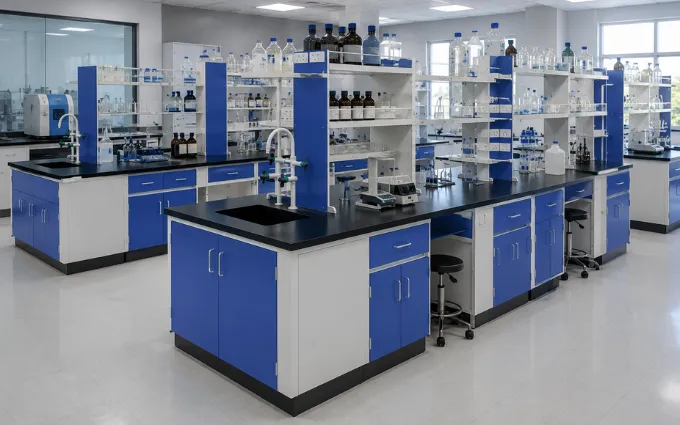
Even an excellent design will not help much without proper installation.
Before the contract is signed, clarify the site manager, discrepancy coordinator, snagging procedure, and what will happen in case of replacement in the future.
This is especially relevant in the case of ordering lab furniture manufacturers offering modular systems, fume hoods, cabinets, and special workstations within one project.
The company providing services in addition to manufacturing will create an opportunity for problem resolution once the laboratory equipment is installed.
What to Check When Choosing a Turnkey Laboratory Provider in India
| What to Check | Why It Matters |
|---|---|
| Relevant laboratory experience | Shows the provider understands different laboratory types, workflows and project requirements. |
| Laboratory planning & design | Ensures space, workflow, equipment, storage and safety requirements are properly coordinated. |
| Manufacturing capability | Helps maintain consistent quality, specifications and customisation across the project. |
| Equipment & utility coordination | Ensures electrical, plumbing, gas, HVAC and other services align with equipment requirements. |
| Laboratory furniture quality | Check materials, chemical resistance, load capacity, ergonomics, storage and durability. |
| Installation capability | Reduces coordination issues and helps ensure furniture and services are installed correctly. |
| Project scope & documentation | Clearly defines inclusions, exclusions, drawings, specifications, timelines and responsibilities. |
| Warranty & after-sales support | Provides support for repairs, replacements, maintenance and future requirements. |
| Customisation capability | Allows the laboratory to be designed around specific equipment, workflow and space requirements. |
| Previous project experience | Relevant completed projects provide evidence of practical project execution capability. |
A Quick Provider Selection Checklist
Before deciding which company to choose as a lab furniture supplier and laboratory equipment solutions provider, make sure that it is able to prove:
- Relevant laboratory business sector experience
- Need and workflow analysis
- Detailed laboratory furniture design
- Equipment and utilities coordination
- Correct materials selection
- Manufacturing ability
- Installation service
- Exclusions of the project
- Warranty and post-warranty service
Bottom Line
Choosing the right turnkey laboratory solutions provider is about more than selecting a company that supplies furniture. The right partner should integrate your workflow, equipment, utilities, safety requirements, furniture, and future expansion needs into one coordinated laboratory plan.
From laboratory furniture design and manufacturing to installation and project coordination, every stage can influence the performance and usability of the finished laboratory.
At Santech Labs, we assist with planning, designing, manufacturing, installing, and delivering customised laboratory solutions for different laboratory requirements.
If you are planning a turnkey laboratory setup or renovating an existing laboratory, contact Santech Labs to discuss your project requirements.