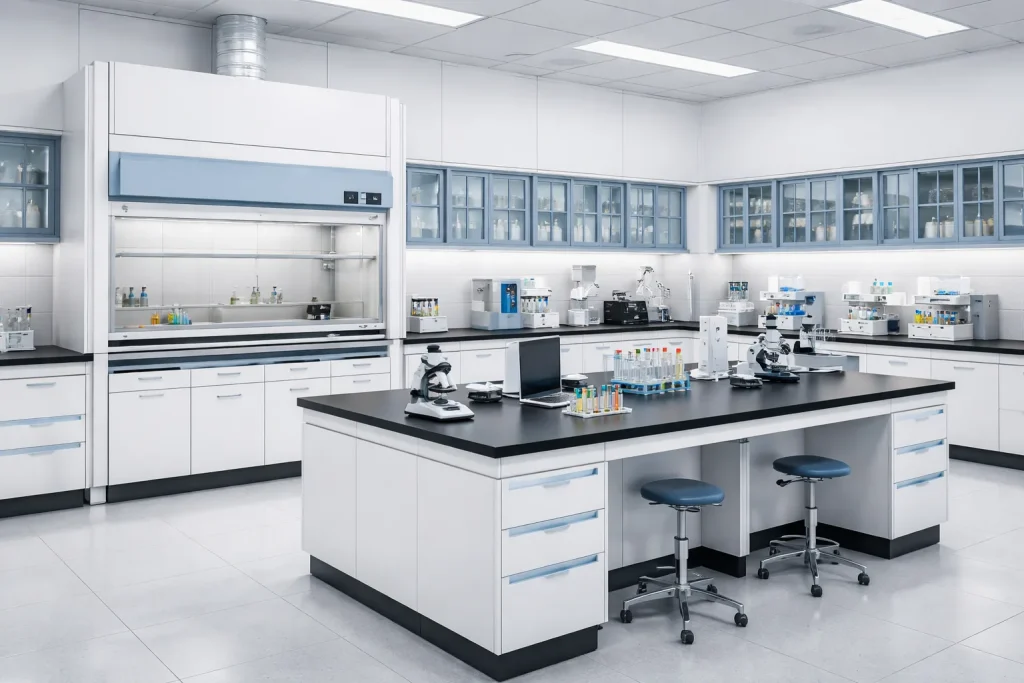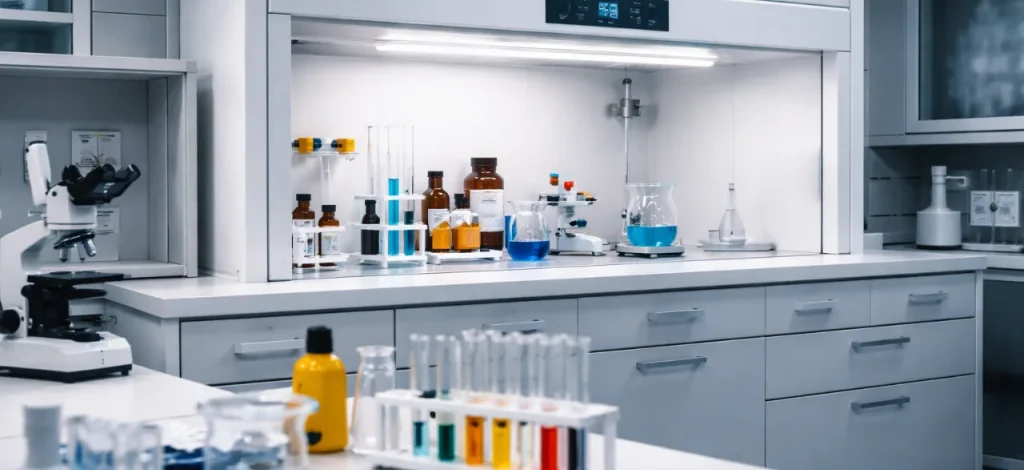

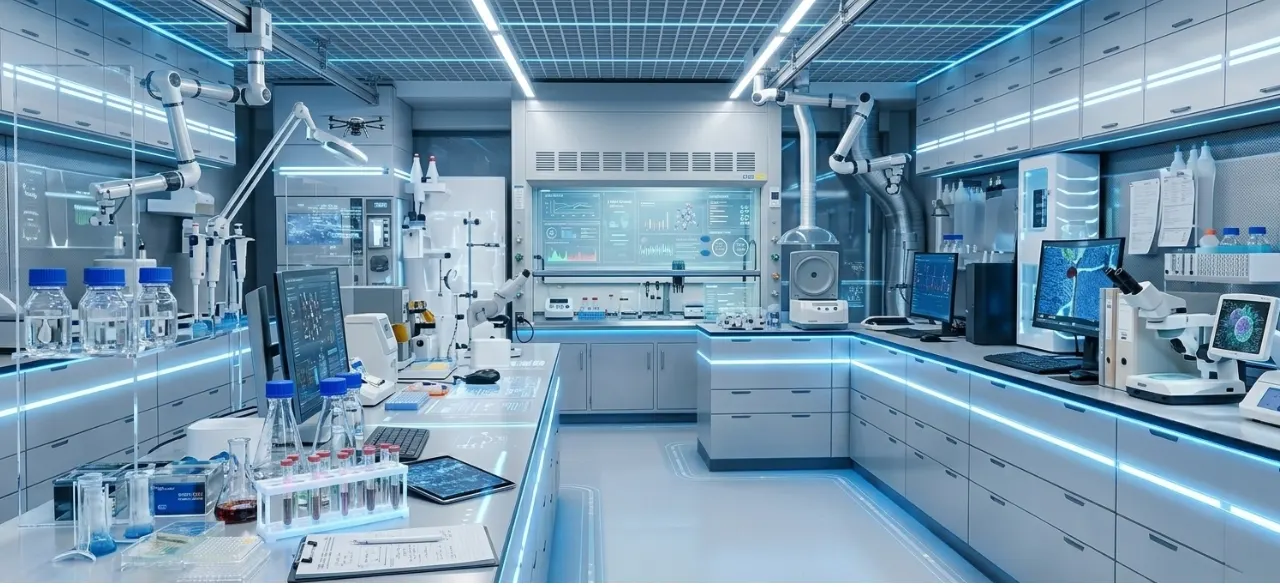
You can usually tell within five minutes if a lab has been planned properly. In a good lab, people move without bumping into each other. Tools have a place. Chemicals are stored where they should be. Worktops stay usable, not permanently buried under temporary clutter. In a poorly planned lab, the opposite happens: teams spend time adjusting, shifting, and working around the space.
That difference often comes down to laboratory furniture. Not the brochure version of it. The practical version: benches that fit the workflow, storage that matches what is actually used, and systems that can handle the wear and tear of real lab life. When we talk about transforming laboratory spaces, we are talking about building a lab that feels easy to use, safe to operate, and dependable over the long run.
Why Laboratory Furniture Is More Than Just Fixtures
A lot of people think of laboratory furniture as the fit-out phase: something you select after the lab is planned. But the truth is: furniture decisions shape how the lab works day to day.
Here is what laboratory furniture controls, whether anyone talks about it or not:
- How much elbow room users have at benches
- How often people cross paths while carrying samples
- How safely chemicals are stored and accessed
- How quickly the lab becomes messy when storage is inadequate
Step One: Understanding the Lab’s Purpose Before Designing It
As an experienced lab furniture manufacturer, before we talk layouts or systems, we start with what the lab is meant to do. This sounds obvious, but it is where many projects go wrong. People jump into designs before they understand how the lab will actually run.
So we get specific. Questions like:
- What kind of work happens here: teaching, research, testing, chemical handling
- How many people will use the lab at the same time
- What equipment needs fixed placement and what changes frequently
- What gets stored daily and what is used occasionally
- What utilities are required: gas, water, power, exhaust
Step Two: Translating Concepts Into Functional Lab Layouts
Once we know the lab’s purpose, we translate it into a layout that people can live with every day. This is where we stop thinking like designers and start thinking like users.
A functional lab layout is usually built around zones. Not fancy zones. Just sensible separation that prevents chaos later.
Common zones include:
- Work zones: benches and spaces where experiments, testing, and analysis happen
- Storage zones: chemical storage, sample storage, glassware, consumables
- Safety zones: emergency access, clear exits, fume hood areas
This is also where we pay attention to the details that make labs smoother:
- Are walkways wide enough when drawers are open
- Is storage close to where it is used
- Are utilities reachable without creating hazards
Step Three: Selecting the Right Laboratory Furniture Systems
This is the point where decisions become real. The systems chosen now decide how the lab will perform after six months, after two years, and after ten years.
Plinth System: Stability for Heavy Duty Lab Operations
The Plinth System is the kind of system you choose when you want solidity. It is not delicate. It is not lightweight modular for show. It is built for labs that run hard and run daily. In many industrial and pharmaceutical environments, the Plinth System becomes the backbone of the lab. It takes stress so the workspace stays consistent.
Why labs prefer a Plinth System:
- It handles heavy loads without flexing or loosening over time
- It reduces vibration, which helps sensitive equipment and measurements
- It stays stable even with frequent cleaning and daily use
PP Cabinets: Chemical Resistant Storage Solutions
Chemical storage is not the place for trial and error. If the wrong material is used, deterioration does not announce itself loudly. It creeps in. Discolouration, warping, weakening, then one day it becomes a safety risk.
That is why PP cabinets exist: for labs that handle corrosive chemicals and need storage that stands up to acids, alkalis, and moisture. When chemical handling is part of daily work, PP cabinets are not an upgrade. They are common sense.
PP cabinets are chosen because they:
- Resist chemical damage and moisture exposure
- Remain easy to clean and maintain
- Support safer storage practices in wet and chemical environments
Step Four: Integrating Safety Critical Components
Safety has to be built into the plan, not added later. When safety is considered late, compromises appear: awkward placements, blocked access, and users taking shortcuts because the setup is inconvenient.
Fume Hood Planning and Placement
A Fume Hood is one of the most important pieces of safety equipment in many labs. But its performance depends on how it is placed and how it is integrated with surrounding furniture. When fume hoods are planned alongside benches and storage, the lab feels safer and more usable. People are more likely to use the fume hood correctly when the space around it is designed properly.
Practical points that matter:
- Users need clear working space in front of the hood
- Airflow must not be disrupted by poor placement
- Surrounding laboratory furniture must support safe access to utilities
Step Five: Manufacturing With Precision, Not Assumptions
Design is one thing. Manufacturing is where the project becomes real. And labs are unforgiving: if a cabinet is off by even a small margin, installation becomes messy and time consuming.
A capable lab furniture manufacturer focuses on precision because precision saves pain later.
Precision manufacturing supports:
- Consistent sizing that fits approved layouts
- Reliable material quality and finishing
- Furniture that aligns properly during installation
Step Six: Installation, Coordination, and On Site Execution
Installation is where many lab projects either stay smooth or start slipping. It is not only about fitting furniture into a room. It is about coordinating with utilities, HVAC, and site progress. This stage also affects the lab’s final feel. A lab can have excellent furniture, but if installation is sloppy, the lab will never feel right. Proper installation helps laboratory furniture perform the way it was meant to.
Good installation means:
- Furniture placement matches the layout exactly
- Services align with bench positions and equipment needs
- Work happens in the right sequence so nothing is undone later
Step Seven: Final Testing, Handover, and Long Term Reliability
Before handover, we check details that users notice immediately. Not just whether something looks correct, but whether it works smoothly.
Handover includes:
- Checking drawers, shutters, hinges, and alignments
- Ensuring worktops are stable and properly finished
- Confirming that storage and access points make sense in use
- Sharing basic maintenance guidance so the lab stays in good shape
Conclusion: Building Laboratories That Support Real Work
A good laboratory does not demand attention. It supports the work quietly. People find what they need. Safety elements sit where they should. Storage works. Benches feel stable. The lab stays functional even when the workload increases.
That is what the right laboratory furniture enables: a lab that feels built for the people using it. With the right systems like the Plinth System, well planned Fume Hood integration, and durable PP cabinets, the space becomes safer, cleaner, and easier to run.
In the end, that is what transforming a laboratory space really means: turning an empty room into a place where real work can happen without constant adjustments.