
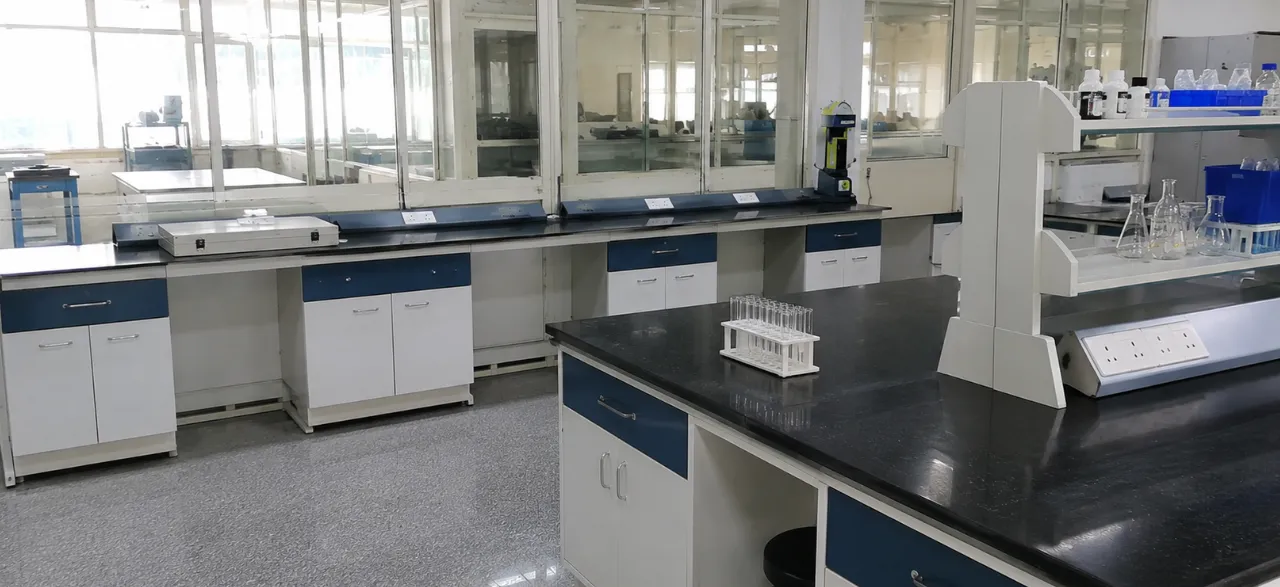
Quality control (QC) in a laboratory is a set of procedures used to monitor testing processes, detect errors and ensure laboratory results are accurate, consistent and reliable. It covers activities such as sample handling, equipment calibration, reagent and material checks, testing procedures, documentation and result monitoring.
Effective laboratory quality control helps identify problems early, reduce testing errors and maintain consistent performance. Quality control is not limited to checking the final test result; it also considers the equipment, people, processes, storage conditions and laboratory environment that can affect testing accuracy.
In this guide, we explain what quality control in a laboratory is, why it is important, the main types of laboratory QC, key quality control procedures, equipment requirements, applicable standards and practical best practices.
For laboratories planning a new facility or upgrading an existing one, understanding the turnkey laboratory setup cost in India can also help with budgeting for the infrastructure, equipment, utilities and working environment required to support reliable testing.
What Is Quality Control in a Laboratory?
So, what is quality control in laboratory practice?
Quality control (QC) is the set of methods and procedures used by laboratories to monitor testing processes and determine whether they are performing effectively. It involves checking equipment, materials, procedures and results to identify errors or deviations before they affect the final outcome.
In simple terms, quality control helps answer an important question:
Are the laboratory test results accurate, consistent and reliable?
Quality control is an important part of a laboratory quality management system. It focuses on detecting problems during testing, while quality assurance takes a broader approach to preventing problems by improving the overall laboratory process.
| Process | Purpose |
|---|---|
| Quality Control (QC) | Monitors testing accuracy and identifies errors |
| Quality Assurance (QA) | Maintains quality across the complete laboratory system |
| Quality Improvement | Focuses on improving laboratory processes over time |
For example, if laboratory equipment produces an unexpected result, quality control can help determine whether the problem is related to calibration, reagents, equipment performance or the testing procedure.
Without effective quality control in laboratory operations, problems may only become apparent after inaccurate results have already been produced.
Why Is Quality Control Important for Laboratories?
Laboratory results can influence important medical, scientific and operational decisions. Medical laboratory results can support diagnosis and treatment, while results from research and testing laboratories can influence scientific conclusions and product decisions.
Effective quality control also depends on a well-organised working environment. Appropriate laboratory furniture, storage systems, equipment placement and workflow planning can support safer and more efficient laboratory operations. Choosing reliable laboratory furniture suppliers in India can help laboratories select solutions suited to their equipment, workflow and operational requirements.
Effective quality control in laboratory operations helps laboratories achieve:
1. Accurate Results
One of the main purposes of quality control is maintaining testing accuracy. Regular monitoring can identify changes caused by equipment performance, environmental conditions, reagents, procedures or other factors.
2. Consistency of Testing
Quality control helps laboratories produce consistent results when testing is repeated and when different trained professionals perform the same procedure.
3. Reliable Medical and Scientific Results
Quality control in medical laboratory environments supports dependable diagnostic information. In scientific and testing laboratories, it helps improve the reliability of collected data and test results.
4. Better Compliance
A structured quality control system helps laboratories maintain records, follow procedures and prepare for inspections, audits and accreditation requirements.
What Are the Types of Quality Control in a Laboratory?

Understanding the types of quality control in laboratory operations helps teams determine how testing performance should be monitored.
The main approaches include internal quality control (IQC), external quality control (EQC) and proficiency testing.
1. Internal Quality Control (IQC)
Internal quality control (IQC) is performed within the laboratory to monitor testing accuracy and consistency on a routine basis. It helps identify errors or unexpected variations before laboratory results are reported.
2. External Quality Control (EQC)
External quality control provides an additional way to assess laboratory performance from outside the routine internal monitoring process.
It can help laboratories compare their performance with external expectations and identify areas where testing processes may need improvement.
3. Proficiency Testing
Proficiency testing evaluates laboratory performance by comparing results against established or external expectations.
It can help identify differences in testing performance and provide useful information for improving laboratory processes.
Together, internal and external quality control approaches provide a broader view of laboratory testing performance.
How Does Quality Control Work in a Laboratory?
Quality control in a laboratory follows a structured process to monitor testing performance, identify errors and take corrective action before unreliable results are reported. This process works best when the laboratory has a well-planned efficient laboratory layout that supports proper sample handling, equipment access, storage and testing activities.
A typical laboratory quality control process includes:
- Sample collection and handling – Ensure samples are correctly collected, labelled, stored and prepared.
- Equipment and reagent checks – Verify that instruments are calibrated and reagents or materials are suitable for testing.
- Testing and control checks – Run tests alongside appropriate quality control materials to monitor performance.
- Result monitoring – Compare control results with established acceptance criteria or expected ranges.
- Error identification – Investigate unexpected results, trends or deviations from acceptable limits.
- Corrective action – Identify the cause of the problem and take appropriate corrective measures.
- Documentation and review – Record QC results, corrective actions and observations for traceability and continuous improvement.
This process helps laboratories maintain accurate, consistent and reliable test results while identifying potential problems before they affect reported results.
What Is the Difference Between Quality Control and Quality Assurance?
Quality control and quality assurance are closely connected, but they are not the same.
Quality control focuses on detecting problems and monitoring testing performance, while quality assurance focuses on building processes that consistently prevent problems.
| Quality Control | Quality Assurance |
|---|---|
| Detects errors and deviations | Prevents errors through systematic processes |
| Monitors testing performance | Manages the wider quality system |
| Uses controls and checks | Uses procedures, policies and quality systems |
| Focuses strongly on testing activities | Covers the complete laboratory workflow |
| Identifies problems for corrective action | Supports continuous quality improvement |
For example, checking whether an analyser is producing an expected result is a quality control activity. Establishing documented procedures for equipment selection, operation, maintenance and staff competency forms part of the wider quality assurance approach.
Both are necessary for a reliable laboratory quality management system.
Major Elements of Laboratory Quality Control
Quality control in laboratory testing involves many procedures done collectively. It does not involve only the verification of the outcomes of tests.
1. Equipment Calibration and Maintenance
Laboratory equipment directly affects result accuracy. Even advanced instruments require regular checks, calibration and maintenance to perform reliably.
This is where suitable laboratory equipment and support systems become important. For precision instruments such as analytical balances, anti-vibration tables provide a stable working surface and help minimise the effects of external vibrations that can affect measurement accuracy. Understanding how anti-vibration tables improve accuracy in laboratories can help laboratories choose the right setup for precision testing and measurement.
| Equipment | QC Requirement |
|---|---|
| Analysers | Calibration and performance checks |
| Pipettes | Accuracy verification |
| Centrifuges | Speed and operational checks |
| Refrigerators and freezers | Temperature monitoring |
| Incubators | Temperature stability |
2. Standard Operating Procedures (SOPs)
Although the laboratory may have high-tech equipment, it does not necessarily guarantee quality if there are no standard processes in place.
SOPs give detailed guidelines for activities such as:
- Handling samples
- Operating the equipment
- Testing process
- Clean-up procedures
- Documentation
3. Training and Competencies
Quality control in laboratory is highly dependent on the people working within the laboratory.
Through training, lab personnel can become familiar with equipment operation, new processes, safety procedures, and documentation requirements.
4. Documentation and Traceability
Good documentation helps laboratories understand what happened during every stage of testing.
Important records include:
- Equipment maintenance logs
- Calibration reports
- Temperature records
- Test results
- Training documents
- Corrective action reports
These records support audits, but they are also valuable for identifying recurring problems and improving processes.
Role of Laboratory Equipment in Quality Control
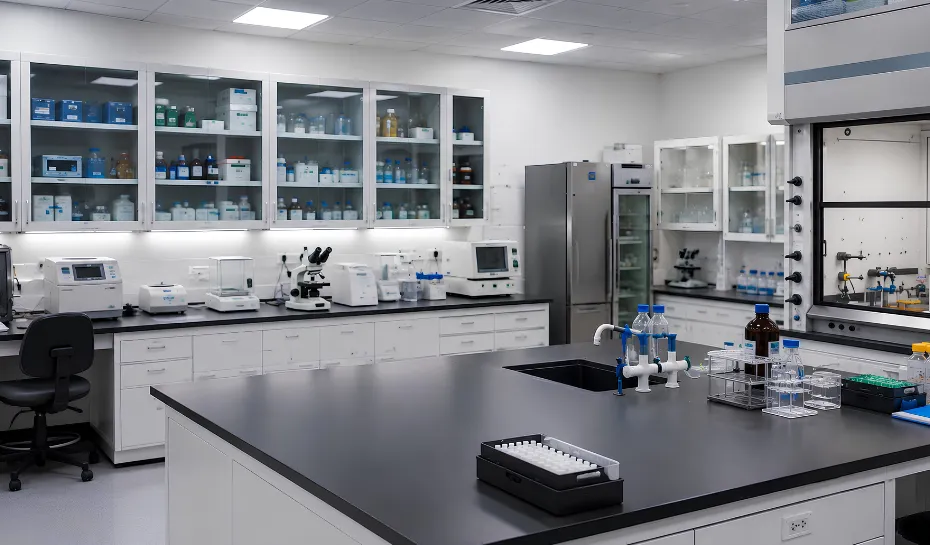
Quality control in laboratory is more than just choosing advanced equipment. It is necessary for the laboratory to provide an environment conducive to accurate and reliable operations.
Here are some aspects that may affect the day-to-day activities in laboratories:
- Placement of equipment
- Organisation of workspace
- Storage facilities
- Maintenance access
- Utility arrangements
For instance, improperly placed equipment may pose difficulty during maintenance. Similarly, poor storage facility design may cause issues related to reagents and samples. A poorly designed layout leads to unnecessary handling and movement.
A smartly designed laboratory integrates equipment, furniture, and workflow for quality operations.
International Laboratory Quality Control Standards
Laboratories follow different standards depending on their purpose and industry.
| Standard | Applies To | Focus |
|---|---|---|
| ISO 15189 | Medical laboratories | Quality and competence requirements |
| ISO/IEC 17025 | Testing and calibration laboratories | Technical accuracy and reliability |
| NABL Accreditation | Indian laboratories | Recognition of laboratory competence |
ISO 15189 provides requirements for medical laboratories to demonstrate quality and competence, while ISO/IEC 17025 focuses on testing and calibration laboratory performance.
In India, NABL accreditation helps laboratories demonstrate compliance with internationally recognised quality requirements.
Common Quality Control Problems in Laboratory Settings
Efficiently managed laboratories can still encounter some quality problems.
Problems With Equipment: Faulty calibration, lack of maintenance or old equipment can impact the testing process.
Inadequate Workflow: Poor arrangement of the workplace may result in extra movements and delays.
Problems With Storage: Lack of chemical storage cabinets, samples, or reagents may undermine reliability.
Lack of Documentation: Lack of proper documentation makes it hard to pinpoint the source of a problem.
A large number of quality control problems are associated not only with testing, but also with the laboratory setting in general.
How Laboratory Design Supports Quality Control
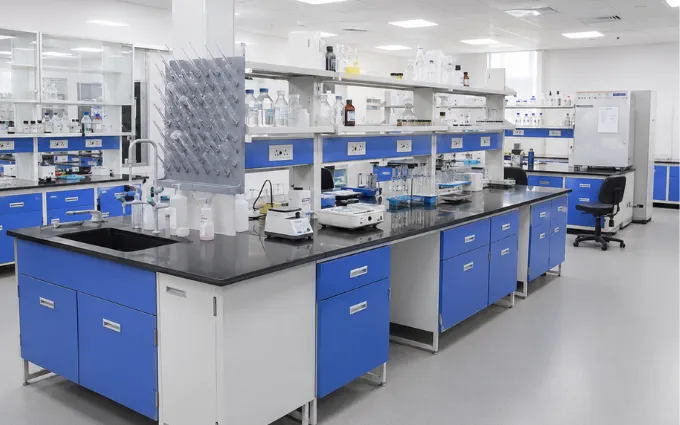
The physical design of a laboratory can influence how easily teams maintain quality standards.
A well-planned laboratory should support:
- Organised storage
- Easy equipment access
- Cleanable work surfaces
- Efficient workflow
- Safe movement
- Future flexibility
Experienced lab furniture manufacturers help create workspaces where equipment, storage and daily processes work together. A well-planned medical research laboratory design can support efficient workflows, proper equipment placement and organised laboratory operations.
At Santech Labs, we design and manufacture laboratory furniture, storage systems, workstations and customised solutions that help laboratories create organised and efficient working environments.
Laboratory Quality Control Checklist
| Area | Check |
|---|---|
| Equipment | Calibration and maintenance records available |
| Staff | Training and competency verified |
| Documentation | SOPs and records updated |
| Storage | Required conditions maintained |
| Samples | Handling procedures followed |
| Workspace | Layout supports safe workflow |
| Compliance | Standards reviewed regularly |
Conclusion
Quality control in a laboratory is essential for maintaining accurate, consistent and reliable test results. From internal quality control and proficiency testing to equipment calibration, SOPs, staff competency and proper documentation, every part of the laboratory workflow contributes to quality.
Effective laboratory quality control also depends on a well-organised working environment. Appropriate laboratory furniture, storage systems, equipment placement and workflow planning can support safer and more efficient laboratory operations.
For laboratories planning a new setup or upgrading an existing facility, Santech Labs is a trusted Lab Furniture Manufacturer in India, providing customised laboratory furniture and turnkey laboratory solutions designed around equipment, workflow, storage and operational requirements. Contact Santech Labs to discuss your laboratory setup requirements and get a customised solution.