
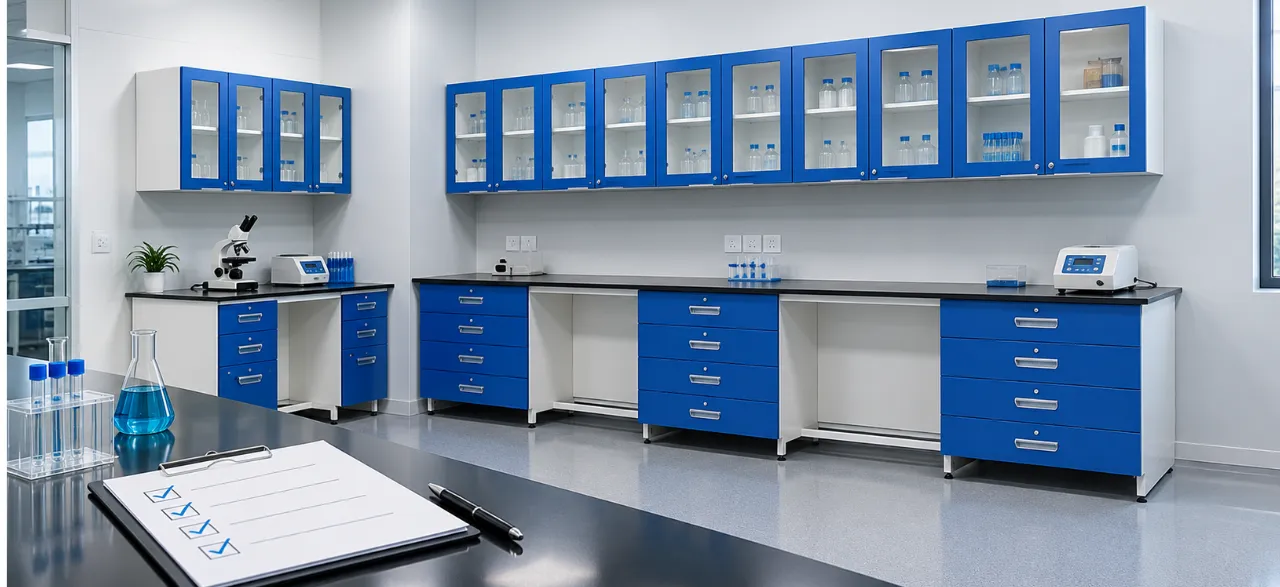
A laboratory furniture buying guide helps laboratories select suitable workbenches, worktops, storage cabinets and workstations based on their applications, safety requirements, available space and budget. The right furniture should support efficient workflows, withstand the conditions of laboratory work and accommodate essential equipment and storage needs.
Before purchasing laboratory furniture, evaluate 10 key factors: laboratory requirements, furniture types, worktop materials, storage, layout design, ergonomics, utility connections, safety, modularity and total cost of ownership.
Whether you are setting up a school science laboratory, pharmaceutical facility, research centre or diagnostic laboratory, these considerations will help you compare suppliers, avoid costly purchasing mistakes and make informed decisions. This guide also includes a practical buying checklist, workbench system comparisons and supplier evaluation criteria to help you plan your laboratory furniture investment.
Why Is Choosing the Right Laboratory Furniture Important?
Laboratories have different operating conditions from conventional offices. Furniture may need to support heavy instruments, withstand frequent cleaning, accommodate utility connections and provide suitable surfaces for specific laboratory procedures.
Well-planned laboratory furniture can help you:
- Organise equipment, materials and laboratory supplies.
- Improve workflow and use available floor space efficiently.
- Select work surfaces suited to the intended application.
- Maintain accessible storage and working areas.
- Simplify routine cleaning and maintenance.
- Plan for equipment changes and future expansion.
The best choice depends on the laboratory’s purpose, not simply its appearance. A school science laboratory, for example, may prioritise student workstations and shared storage, while a pharmaceutical facility may require application-specific materials, specialist storage and carefully coordinated services.
Laboratory furniture cost also varies according to the materials, dimensions, workbench configuration, storage requirements and installation scope. To plan your budget more effectively, read our guide to laboratory setup cost in India, which explains the key expenses involved in setting up a laboratory.
10 Factors to Consider in a Laboratory Furniture Buying Guide
A laboratory furniture buying guide helps you evaluate the key factors that influence laboratory safety, durability, functionality and long-term value. Before purchasing, consider material quality, worktop resistance, workbench design, storage capacity, space utilisation, safety requirements, maintenance, customisation, supplier experience and overall cost.
1. Define Your Laboratory's Functional Requirements
comparing products on equivalent specifications rather than relying on catalogue images or general descriptions.
Identify the following requirements:
- Laboratory type and activities performed.
- Number of users and workstations.
- Dimensions and weight of equipment.
- Required worktop materials.
- Storage for glassware, samples and supplies.
- Exposure to chemicals, moisture, heat and cleaning agents.
- Electrical, water, drainage and other service connections.
- Expected changes in equipment or capacity.
For example, a teaching laboratory may require multiple student workstations, accessible sinks and general-purpose storage. An instrument laboratory may need dedicated equipment surfaces, suitable load capacity and convenient access to electrical services.
Practical buying tip: Prepare a room plan and equipment list before requesting quotations. This gives suppliers a clearer understanding of your project and makes it easier to identify differences between their proposals.
2. Compare Laboratory Furniture Types and Workbench Systems
Different laboratory furniture types serve different purposes. Selecting the right combination depends on the available space, workflow, equipment and maintenance requirements.
| Furniture Type | Typical Application | What to Evaluate |
|---|---|---|
| Wall Benches | Work areas along laboratory walls | Wall access, utilities and available clearance |
| Island Benches | Shared workstations and practical activities | Access from multiple sides and circulation space |
| Laboratory Workbenches | General laboratory work and equipment placement | Load capacity, worktop material and frame construction |
| Storage Cabinets | Equipment, supplies and glassware | Dimensions, accessibility and intended contents |
| Chemical Storage Cabinets | Storage of chemicals according to their hazards | Chemical compatibility and applicable safety requirements |
| Sink Units | Washing and cleaning activities | Water supply, drainage and splash management |
| Equipment Cabinets | Instruments and laboratory accessories | Equipment dimensions, ventilation needs and load limits |
| Laboratory Stools | Seated laboratory work | Height, stability and user comfort |
The supporting frame is another important consideration when comparing workbenches. Santech Labs offers three workbench framework options: C-Frame, D-Frame and Plinth systems.
- C-Frame system: Consider this configuration when assessing workstation access, support structure and the available space beneath the bench.
- D-Frame system: Evaluate its frame arrangement, equipment requirements and compatibility with the planned laboratory layout.
- Plinth system: Assess the base configuration, cleaning access and suitability for the intended workstation design.
The correct option depends on the actual product specifications, equipment loads, cleaning procedures and project requirements. Do not select a frame solely by appearance.
Explore the C-Frame laboratory furniture system, D-Frame system and Plinth system to compare the available configurations.
3. Select Worktop Materials According to Laboratory Activities
Worktop selection directly affects furniture suitability, cleaning routines and long-term maintenance. Different materials perform differently under chemical, thermal and mechanical exposure.
Common options include compact laminate, epoxy resin, stainless steel and ceramic surfaces. Their suitability depends on the substances handled, operating temperatures and cleaning procedures.
| Selection Factor | Question to Ask Your Supplier |
|---|---|
| Chemical Resistance | Is the surface compatible with the specific chemicals used? |
| Heat Resistance | What temperatures can it withstand under the intended conditions? |
| Moisture Resistance | Is it suitable for the expected exposure to water and humidity? |
| Mechanical Performance | What are its resistance and load limitations? |
| Cleaning | Which cleaning agents and procedures are compatible? |
| Maintenance | What routine care and repairs may be required? |
Expert buying tip: Ask for written material specifications and compatibility information instead of accepting a general claim that a worktop is chemical-resistant. The required performance should be matched to the actual substances and working conditions. For further guidance, read our article on chemical-resistant vs regular lab furniture to understand how material selection affects laboratory furniture suitability.
A material suitable for routine school experiments may not be appropriate for aggressive chemicals or high-temperature applications. Review the manufacturer’s documentation before finalising your selection.
4. Plan Laboratory Storage Before Ordering Furniture
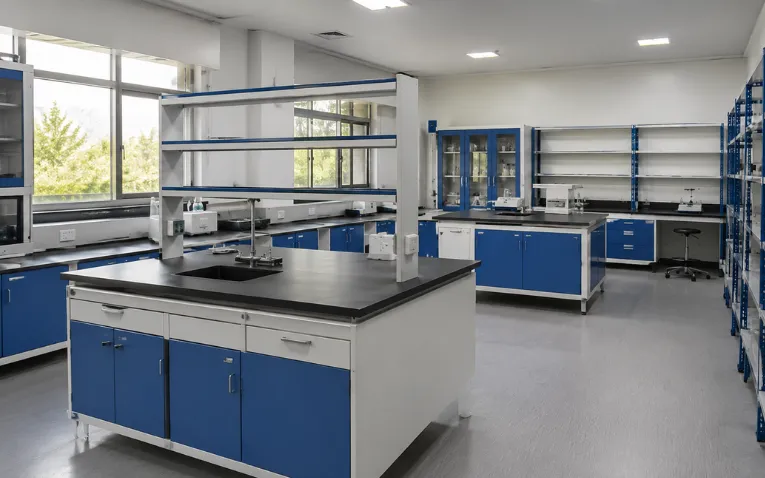
Inadequate storage can reduce usable workbench space, make equipment difficult to locate and complicate cleaning. Storage planning should therefore be completed alongside workstation planning.
Separate storage requirements into practical categories:
- Everyday equipment and laboratory supplies.
- Glassware and smaller instruments.
- Samples and materials requiring designated conditions.
- Chemicals requiring compatible specialist storage.
- Personal protective equipment.
- Laboratory waste awaiting appropriate handling.
Match each category to a suitable storage solution. Under-bench cabinets may be useful for general supplies, while larger equipment may need dedicated cabinets with appropriate dimensions and load capacity.
Chemical storage requires additional care. The cabinet must be appropriate for the hazards and compatibility of the substances stored; a standard storage cabinet is not automatically suitable for hazardous chemicals.
Explore Santech Labs storage cabinets when planning your laboratory’s storage requirements.
Conversion tip: Before requesting a quotation, prepare a storage schedule that lists the type, approximate quantity and dimensions of the items to be stored. This helps suppliers recommend suitable configurations.
5. Evaluate Laboratory Furniture Design and Workflow
Good laboratory furniture design supports the movement of people, materials and equipment without unnecessary obstruction.
Map the main stages of laboratory work, such as receiving materials, storage, preparation, testing, cleaning and waste handling. Consider where each activity takes place and which equipment users need to access most frequently.
Review these layout considerations:
- Bench positions and circulation routes.
- Doorways, windows and access points.
- Equipment dimensions and service requirements.
- Storage locations and frequently used supplies.
- Cleaning and maintenance access.
- Space needed for future equipment.
For example, placing frequently used supplies close to the relevant workstation can reduce unnecessary movement. However, equipment and furniture must not obstruct access routes or required safety systems.
For new facilities, coordinate the furniture plan with architectural layouts, utility drawings and equipment specifications before manufacturing or installation begins. Effective laboratory design should also support reliable testing procedures, organised work areas and consistent documentation. Read our guide on quality control in a laboratory to understand how laboratory processes and quality management work together.
6. Prioritise Ergonomics and User Comfort
Laboratory users may spend extended periods standing, sitting, reaching and handling equipment. Poorly selected furniture can make routine tasks uncomfortable and difficult to perform efficiently.
Evaluate:
- Workbench height relative to the tasks performed.
- Suitable seating for seated activities.
- Legroom and movement space.
- Reach distance for frequently used equipment.
- Task lighting and workstation visibility.
- Adjustable features where appropriate.
The right arrangement depends on the work being performed. A workstation used for precision instrument operation may have different ergonomic requirements from a bench used for standing practical demonstrations.
Include representative users in the planning process when possible. Their feedback can reveal practical issues with reach, access and working positions before the furniture is installed.
7. Coordinate Electrical, Plumbing and Other Laboratory Services
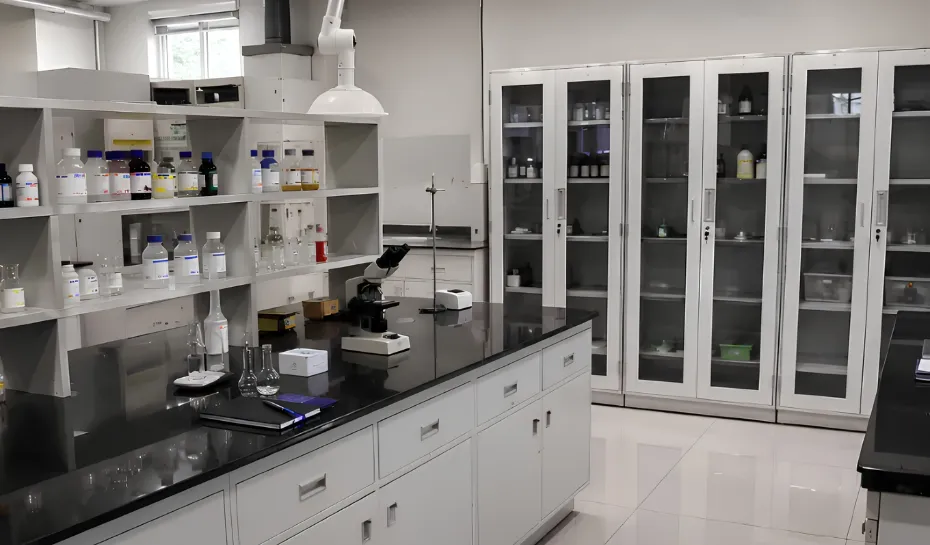
Some laboratory furniture must accommodate electricity, water, drainage, gas or data connections. These services should be considered before dimensions, manufacturing details and installation positions are finalised.
Confirm:
- Electrical socket locations and equipment requirements.
- Water supply and drainage positions.
- Gas connections, where applicable.
- Data and communication points.
- Instrument-specific connections.
- Access needed for inspection and maintenance.
Coordinate furniture drawings with the relevant technical teams. Changes to fixed benches and island workstations can become costly if service connections have already been installed.
Purchasing safeguard: Request dimensioned furniture drawings and confirm the location of utility connections before approving production. Clarify which services are included in the supplier’s scope and which require separate contractors.
8. Check Safety, Cleaning and Maintenance Requirements
Laboratory furniture must be suitable for the intended work and maintainable under the laboratory’s cleaning procedures. Review construction stability, surface finishes, joints, edges and access for routine cleaning.
For each proposed product, ask:
- Is the construction suitable for the intended equipment and loads?
- Are the surfaces compatible with the substances and cleaning agents used?
- Can the furniture be inspected and maintained easily?
- Are replacement components or repair services available?
- Are specialist storage or ventilation systems required for the application?
Laboratories handling hazardous substances may need specialist storage, local exhaust ventilation or other engineering controls. These requirements should be assessed by qualified professionals in line with the intended use and applicable regulations.
Furniture alone does not establish laboratory safety or regulatory compliance. Ventilation, containment, fire protection and other safety systems require separate consideration.
9. Consider Modular Laboratory Furniture and Future Expansion
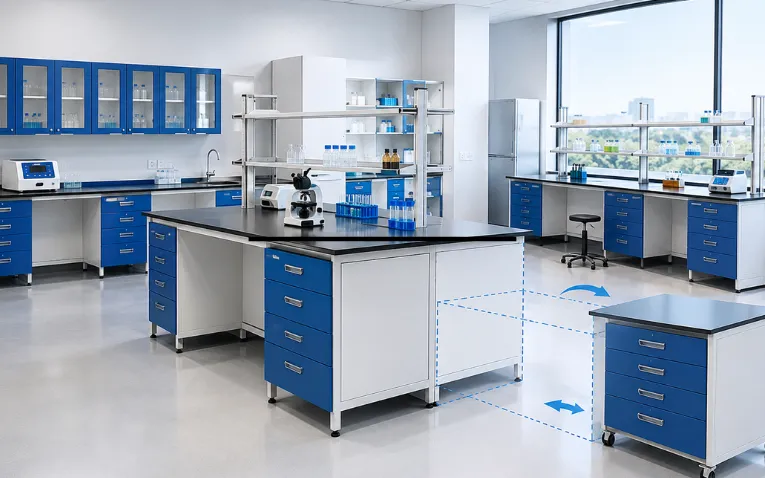
Laboratory requirements can change as new instruments are purchased, activities expand or the number of users increases. Modular laboratory furniture may offer flexibility where compatible components can be reconfigured or additional units incorporated.
When evaluating a modular system, ask:
- Which components can be changed or relocated?
- Can the layout accommodate planned equipment upgrades?
- Are additional units compatible with the original configuration?
- Can utilities be accessed if the arrangement changes?
- What modifications would require specialist installation?
The answers depend on the system’s design and specifications. Do not assume every modular workstation can be moved or expanded without changes to utilities or the room layout.
Plan for realistic future requirements rather than purchasing unnecessary capacity. A clear expansion plan helps balance flexibility with the initial budget.
10. Compare Supplier Quality, Total Cost and After-Sales Support
A lower purchase price does not always represent better long-term value. Furniture that is unsuitable for the application or difficult to maintain may create additional costs later.
Compare suppliers using the same requirements and specifications. For projects that involve furniture, equipment and wider laboratory planning, read our guide on how to choose a turnkey laboratory solutions provider in India to understand the key factors to evaluate before selecting a provider.
| Evaluation Criterion | Evidence to Request |
|---|---|
| Product Suitability | Technical specifications and material details |
| Dimensions and Capacity | Dimensioned drawings and load information |
| Worktop Performance | Material documentation and compatibility details |
| Configuration | Product drawings and available options |
| Warranty | Written coverage, exclusions and duration |
| Installation | Defined scope, responsibilities and schedule |
| Maintenance | Care instructions and maintenance requirements |
| Replacement Parts | Availability and support arrangements |
| Total Price | Itemised quotation with inclusions and exclusions |
| After-Sales Service | Written support arrangements and contact details |
How to Choose the Best Laboratory Furniture for Your Specific Needs?
Choosing the best laboratory furniture starts with matching the furniture configuration to your laboratory’s purpose, equipment, workflow and budget. School laboratories may prioritise student workstations and shared storage, while pharmaceutical and research facilities may require application-specific worktops, specialist storage and integrated utility connections.
Before making a purchase, evaluate these essential requirements:
-
Laboratory application: Identify the activities and working conditions the furniture must support.
-
Material suitability: Select worktops and finishes according to chemical exposure, temperature and cleaning requirements.
-
Space and layout: Ensure workstations, cabinets and equipment fit without obstructing access or workflow.
-
Workbench configuration: Compare C-Frame, D-Frame and Plinth systems according to your layout and functional requirements.
-
Long-term value: Consider durability, maintenance, installation and future expansion alongside the initial price.
For reliable results, compare technical specifications and request a detailed quotation based on your laboratory layout. Santech Labs, a laboratory furniture manufacturer in India, offers furniture solutions for educational, research and professional environments.
Conclusion
Choosing the right laboratory furniture requires careful evaluation of worktop materials, storage, ergonomics, laboratory layout, safety requirements and long-term costs. This laboratory furniture buying guide helps you compare essential factors, assess supplier specifications and select furniture that supports your laboratory’s operational needs.
As experienced lab furniture manufacturers in India, Santech Labs offers laboratory furniture solutions for educational, research and professional environments. Explore our laboratory furniture range to compare C-Frame, D-Frame and Plinth workbench systems for your project requirements.
Planning a new laboratory or upgrading an existing facility? Contact Santech Labs to discuss your requirements and explore suitable laboratory furniture options for your workspace.