
In a working lab, problems with accuracy rarely announce themselves. They arrive quietly. A balance takes longer to stabilise. An image needs one more repeat than expected. Someone double-checks a value that normally feels reliable.
Most teams start by looking at the instrument. That makes sense. Calibration, servicing, method review. But very often, the instrument is doing exactly what it is supposed to do. What’s changing is the environment around it.
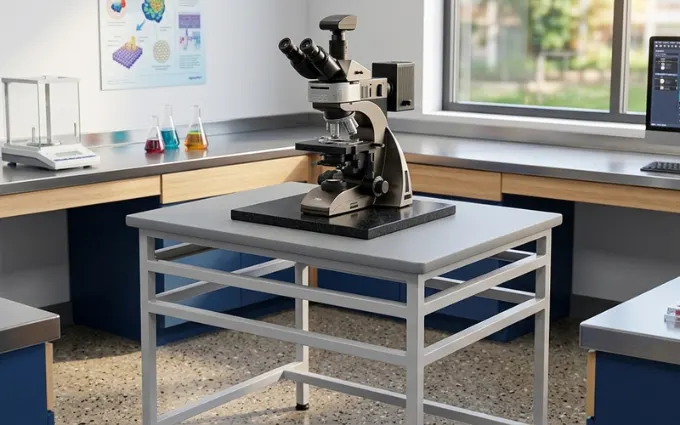
Most labs today operate inside busy buildings. People move constantly. Equipment runs in the background. Air systems cycle without warning. None of this feels disruptive, but all of it creates movement. An anti vibration table for laboratory use exists because this kind of movement is normal, not exceptional. Ignoring it doesn’t save time. It only postpones the consequences.
Why Vibration Is a Serious Problem in Laboratories
Vibration is difficult to take seriously because it’s hard to see. Floors don’t shake. Benches don’t wobble. Yet motion is still present.
A door closing down the corridor. A lift stopping one level above. Even traffic outside the building. These are small forces, but they travel easily through concrete and steel. Sensitive instruments feel them long before people do.
What complicates things further in a lab setup is that vibration isn’t consistent. It changes throughout the day. That’s why results can look fine at one moment and questionable the next. Without isolation, labs end up compensating without realising it. Extra repeats. Longer settling times. Quiet adjustments that slowly become routine.
Instruments That Depend on Vibration Control
As instruments become more precise, tolerance for movement drops sharply. Equipment that once worked well enough on general benches starts to show its limits.
Analytical balances, optical systems, and surface measurement tools are common examples. These instruments are designed to detect very small changes. That sensitivity works against them when the environment is unstable.
A standard bench can feel solid and still be unsuitable. It holds weight well, but it also transfers movement very efficiently. For precision equipment, that transfer is the problem. The instrument isn’t failing. It’s reacting exactly as it should.
What an Anti-Vibration Table Does Differently
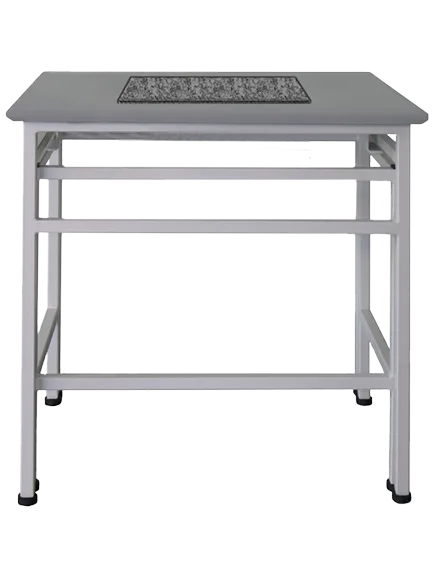
The real difference between a regular bench and an anti vibration table for laboratory applications isn’t how they look or how much they carry. It’s how they respond to energy.
A standard bench resists load. An anti-vibration table manages motion.
Instead of passing vibration straight through, the table absorbs, dampens, or counteracts it before it reaches the working surface. The aim isn’t perfection. Complete stillness isn’t realistic in a live building. The aim is control.
When vibration is managed properly, instruments behave more predictably. Readings stabilise faster. Operators spend less time waiting and less time second-guessing results.
Anti-Vibration Tables as Part of a Proper Lab Setup
Vibration control works best when it’s planned early, as part of the overall lab setup. Retrofitting almost always involves compromise.
When planned from the start, tables can be positioned thoughtfully. Away from heavy foot traffic. Clear of mechanical rooms. Supported by appropriate flooring. Services can be routed cleanly, without interfering with isolation systems.
When added later, space often dictates placement rather than suitability. The table may be correct, but the surroundings work against it. Early decisions make later work easier. Late decisions tend to create permanent workarounds.
Types of Anti-Vibration Tables Used in Laboratories
Not every lab setup needs the same level of vibration control. That’s often overlooked. Here are the common types of Anti-Vibration tables in Laboratories use:
- Passive vibration isolation tables
Passive isolation tables rely on mass and damping. They are simple, reliable, and effective for many applications. For a large number of labs, this level of control is enough.
- Active vibration isolation systems
Active systems take a different approach. They sense vibration and respond in real time. These systems deliver higher performance, but they also bring added complexity, cost, and maintenance considerations.
Choosing between them is about understanding the work being done, not about choosing the most advanced option available.
Role of Lab Furniture Manufacturers in Stability Planning
Vibration control doesn’t come only from isolation technology. It comes from how the table is built and how it behaves over time.
Experienced lab furniture manufacturers think about rigidity, load distribution, and material behaviour. A poorly designed structure can flex, resonate, or degrade with use. When that happens, isolation systems lose effectiveness.
A well-built table stays predictable. It supports the instrument without introducing new variables. That consistency matters far more than specifications on paper.
Common Mistakes When Selecting Anti-Vibration Tables
Many selection issues come from treating anti-vibration tables as furniture rather than precision equipment.
- Choosing tables based only on size or price
- Ignoring the sensitivity level of the instrument
- Overlooking future equipment upgrades
- Treating vibration control as optional
Selecting the right table requires understanding both the equipment and the environment. Skipping this step often leads to ongoing adjustment and frustration.
Long-Term Benefits of Using Anti-Vibration Tables
The value of vibration control shows up slowly. That’s why it’s often underestimated.
Over time, labs notice fewer unexplained variations. Calibration intervals extend. Instruments experience less mechanical stress. Operators trust their results more and hesitate less before signing off data.
These improvements don’t feel dramatic, but they compound. Less rework. Fewer delays. A calmer workflow overall.
Planning for Growth and Changing Lab Requirements
Labs rarely stay the same. Precision requirements increase. New equipment arrives. Existing systems are upgraded.
Vibration planning should allow for that change. Tables chosen today should support tomorrow’s needs where possible. Layouts should leave room for adjustment without forcing major disruption.
When vibration control grows with the lab setup, expansion feels planned instead of reactive.
Bottom Line
Accuracy depends on more than good instruments and trained people. It depends on a physical environment that supports precision rather than quietly undermines it.
An anti vibration table for laboratory use isn’t an accessory. It’s part of the measurement system. When vibration control is integrated into the lab setup and supported by knowledgeable lab furniture manufacturers, results become dependable instead of fragile.
Stable foundations don’t draw attention. But without them, even the best equipment struggles to perform at its true capability.