

When you are setting up a laboratory, there are several things involved. Design, interior, material, electricity, HVAC, lab furniture, and many more. It becomes intractable to manage different vendors and service providers for all the tasks at the same time.
A turnkey laboratory setup is the easiest and fastest method of transitioning from concept to delivery without extending the process for an excessive number of months.
Turnkey laboratory solutions are increasingly becoming not just convenient but also essential for research labs, universities, and facilities in the pharmaceutical and chemical sectors.
What is a Turnkey Laboratory Setup
A turnkey laboratory setup in India involves bringing together different aspects of creating a lab into a single, streamlined process. The client does not have to coordinate multiple contractors and wait to see how things will match up in terms of timing.
This is significant because laboratory work is different from other interior projects. A laboratory needs to be designed in a way that allows movement, safety, storage, cleaning, and the processes involved in operating the laboratory. Each of these factors, when left to itself, can reveal tiny inconsistencies.
What Do Turnkey Laboratory Solutions in India Include?
Turnkey laboratory solutions in India cover the planning, design, coordination and implementation of a laboratory from the initial concept through to completion. Instead of managing separate vendors for different requirements, the major project elements can be coordinated through one integrated solution.
A typical turnkey laboratory project may include:
- Design a Successful Laboratory
- Laboratory furniture selection and installation
- Electrical, plumbing and utility planning
- HVAC and ventilation requirements
- Laboratory equipment positioning
- Storage and workflow planning
- Installation, inspection and project handover
The exact scope depends on the laboratory type, available space, equipment, workflow and project requirements. Integrating these elements during the planning stage can help create a more organised, functional and efficient laboratory.
Benefits of Turnkey Projects in B2B Purchase
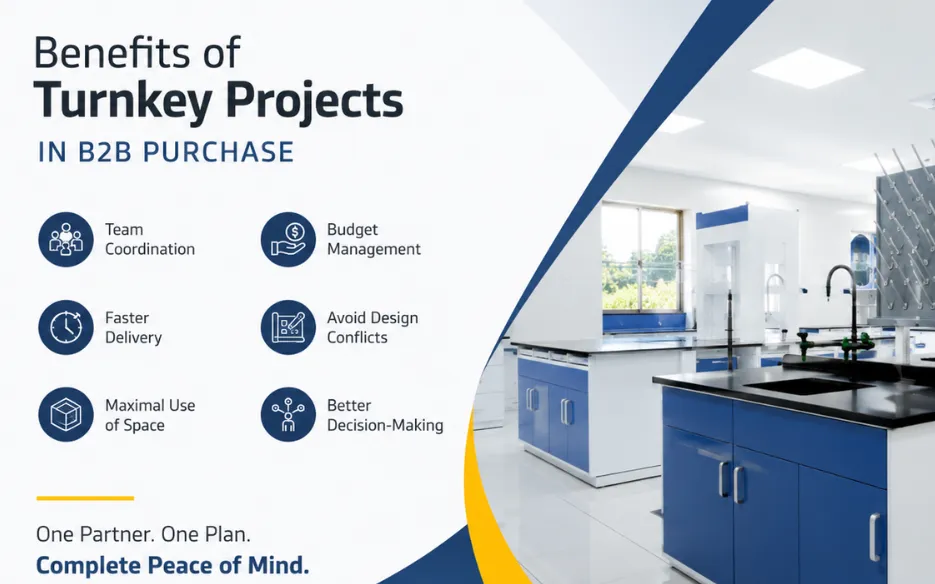
Turnkey lab projects are more beneficial for B2B models as they cover all the stages and processes involved in setting up a research lab. A single process will simplify coordination and avoid complications. It will help the clients to have better time and budget management.
The following are some advantages of a good turnkey laboratory project:
- Coordination of the teams
- Budget management
- Delivery of the project within a shorter period of time
- Avoidance of design conflicts
- Maximal use of space
- Better decision-making
Instead of working with many suppliers with different schedules and agendas, you manage everything under one streamlined plan.
Components of an Ideal Turnkey Laboratory Setup
An ideal laboratory project involves more than just furnishing. It includes proper planning for the smooth running of operations. That is why the most effective turnkey laboratory projects include planning of the entire laboratory from space planning to furniture, installation, and other room-specific features.
Key Components of a Turnkey Laboratory Project:
- Site survey and layout design
- Selection of a modular laboratory furniture system
- Utilities: electricity, plumbing, and gas
- HVAC system
- Equipment positioning and installation
- Delivery and final inspection
It becomes much easier to perform operations inside the laboratory when all these elements are integrated into one. This is among the top reasons why the turnkey approach is highly beneficial for customers.
Why Modular Planning is Important for Labs
Modern laboratories do not remain static for long. Methods will change, technology will need to be upgraded, and there might even be changes in lab equipment. That is why the use of how laboratory furniture is evolving has become such a key consideration in modern lab planning.
The ability to modify plans means that one does not have to start from scratch if any modifications are required. This becomes even more crucial in a technical environment where research activities keep changing.
It is also important because a modular design ensures that its utility is sustained over time, which is always a positive sign for any lab planning project.
Choosing The Right System For The Job
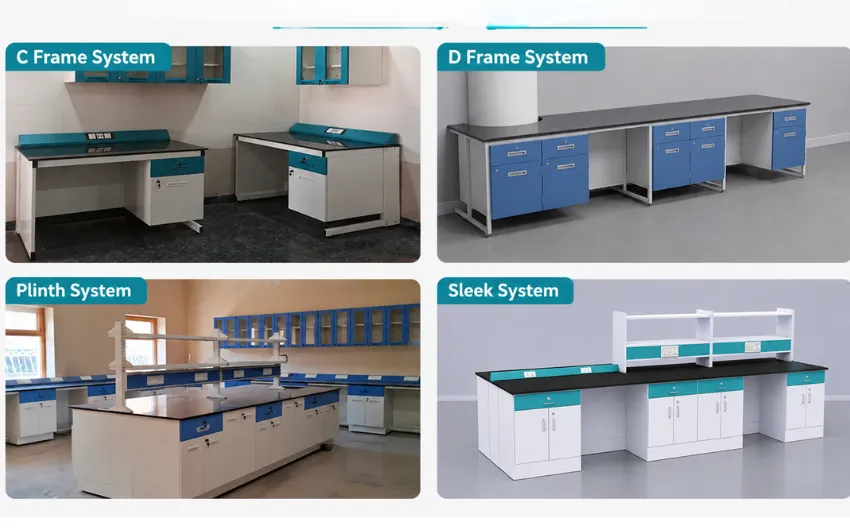
The best furniture system depends on how the lab will actually be used. Different structures suit different needs, and that is where thoughtful planning starts to pay off.
-
C Frame System
The C Frame System is often a good choice when a lab needs openness, easy access, and a clean working feel. It supports day-to-day use without making the room feel heavy or crowded. For buyers who want flexibility with strength, it can work very well.
-
D Frame System
The D Frame System is generally more suitable for heavier use and stronger load support. It works well where equipment is substantial and the furniture needs to stay rigid under pressure. In more demanding laboratory settings, that stability matters a lot.
-
Sleek System
The Sleek System is a useful option when the room needs a lighter visual profile and a neat finish. It is often preferred in spaces where easy cleaning and a tidy appearance are important. In smaller labs, it can help the room feel less congested.
-
Plinth System
The Plinth System is ideal where strength and a grounded structure are priorities. It gives dependable support and is often chosen for work areas that need a firm, stable base. For many buyers, that sense of solidity is reassuring.
How To Evaluate A Furniture Manufacturer
The right lab furniture manufacturer should do more than supply products. They should understand how a laboratory actually works. That means thinking about workflow, layout, safety, cleanability, and long-term use together, not just how the furniture looks on paper.
A strong manufacturer should be able to help with:
- Matching the right system to the lab type
- Planning for utilities and equipment
- Choosing furniture that suits the workload
- Supporting installation properly
- Allowing for future changes if needed
That difference matters more than it may first appear. A supplier who understands the whole project can help prevent awkward changes later.
At Santech Labs, this is the kind of approach we value. The aim is not only to place furniture in a room. The aim is to build a laboratory that works properly and stays useful as the work evolves. This is what you should expect from a Turnkey Laboratory Solutions Provider in India.
What B2B Buyers Should Check Before Starting
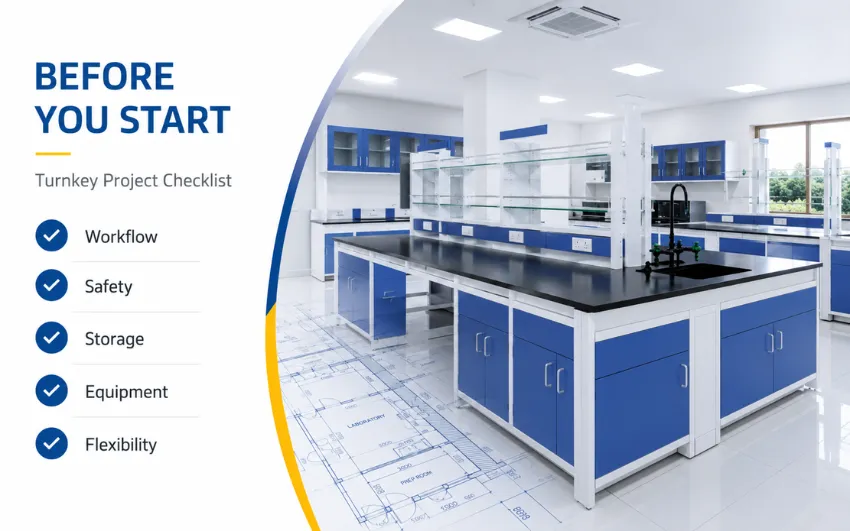
Before signing off on a turnkey project, it helps to step back and look at the space as a whole. The furniture is important, but it should never be chosen in isolation.
A useful checklist includes:
- Is the workflow clear?
- Does the room support safe movement?
- Is there enough storage?
- Will the furniture suit the equipment load?
- Can the layout be adjusted later if needed?
These questions keep the project grounded in practical use. They also help the buyer choose a setup that feels right in daily work, not just on a drawing. To understand the financial side of the project, you can also learn about the turnkey lab setup cost in India, including the major factors that influence the overall budget.
How to Plan a Turnkey Laboratory Project
Planning a turnkey laboratory project starts with understanding how the laboratory will operate. Before finalising the design or furniture, buyers should consider the activities performed in the lab, equipment requirements, workflow, utilities, storage and future expansion.
A practical planning process includes:
- Define laboratory requirements – Identify the laboratory type, activities, equipment and operational needs.
- Plan the laboratory layout – Allocate suitable areas for workstations, equipment, storage and circulation.
- Coordinate utilities and services – Plan electrical, plumbing, gas, HVAC and other requirements alongside the layout.
- Select suitable laboratory furniture – Choose a furniture system based on workload, equipment and available space.
- Review the complete project – Check the design, installation requirements, safety considerations and future flexibility before implementation.
Early coordination helps reduce design conflicts and allows the furniture, utilities and equipment to work together as part of the overall laboratory setup.
Why Turnkey Delivery Is The Better Option for Lab Projects
Many B2B customers find turnkey delivery useful since it connects the entire project together. The design, furnishing, utility services, and installation all come under the same process. This normally results in fewer delays and fewer chances of surprises.
In a busy project environment, that kind of coordination is hard to ignore. It minimises any potential confusion, facilitates transfer, and ensures the laboratory is operational sooner. This is particularly beneficial within industries where timelines are tighter, and the lab needs to be ready without unnecessary disruption.
Conclusion
A well-planned laboratory should be built around how the space will actually be used, not simply how it looks on paper. From workflow and storage to equipment placement, safety and future changes, every part of the setup needs to work together.
Choosing the right modular lab furniture can make this easier by giving laboratories the flexibility to adapt as equipment, processes and requirements change. It also allows the space to remain practical and efficient for longer, rather than requiring major changes every time the laboratory evolves.
At Santech Labs, we take a complete approach to laboratory planning, combining practical design, reliable furniture and turnkey solutions to create spaces that are built for everyday use and future requirements. If you are planning a new laboratory or upgrading an existing one, our team can help you develop a solution that fits your space, workflow and project goals.