
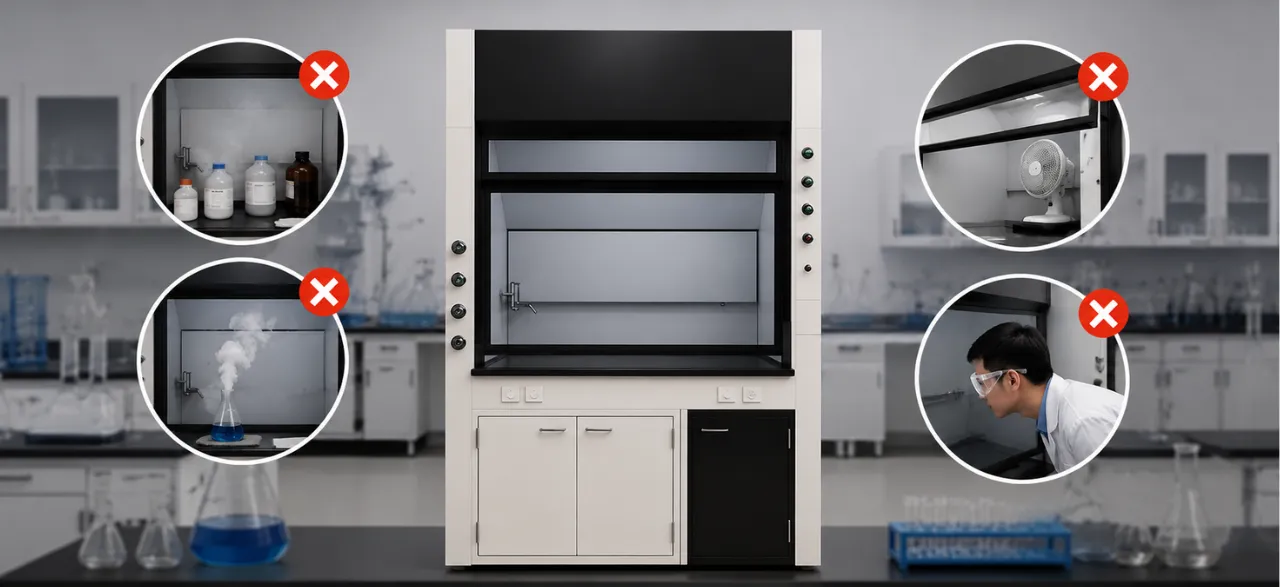
A fume hood is one of the most important safety systems in any laboratory, but even the best equipment cannot provide full protection if it is used incorrectly. Common fume hood safety mistakes such as blocking airflow, storing chemicals inside the hood, working too close to the sash, or skipping routine maintenance can significantly reduce its effectiveness and increase the risk of chemical exposure. This guide explains the most frequent mistakes, best practices for safe operation, and what to look for when selecting a reliable fume hood in laboratory environments. If you’re searching for trusted laboratory fume hood manufacturers in India, explore how Santech Labs delivers high-performance, standards-compliant fume hoods designed to improve laboratory safety and efficiency. Contact our experts today for a free consultation and customized solution.
Why Fume Hood Safety Matters
A fume hood is not just another bench unit. It is part of the lab’s protection system. When the airflow is disturbed, the sash is set incorrectly, or the hood is used carelessly, it cannot perform as intended. Correct placement, airflow awareness, and proper work habits are essential because even small changes can reduce containment. Understanding the key design features of fume hoods for safer laboratories can also help laboratories improve safety, compliance, and day-to-day performance. In other words, good equipment matters, but good habits matter just as much.
The Most Common Fume Hood Safety Mistakes
| Common Fume Hood Safety Mistake | Why It Is Dangerous | Best Practice |
|---|---|---|
| Using the Fume Hood as Storage | Stored chemicals, bottles, and equipment block airflow, reduce containment, and increase the risk of hazardous exposure. | Use the hood only for active experiments and remove chemicals after use. |
| Working Too Close to the Sash | Leaning into the hood increases direct exposure to hazardous fumes and vapours. | Keep your face outside the sash opening and work at least 6 inches inside the hood. |
| Leaving the Sash Open | An open sash reduces containment efficiency and increases energy consumption. | Keep the sash at the recommended operating height and close it when not in use. |
| Blocking Airflow with Equipment | Obstructed baffles or exhaust slots disturb airflow and reduce contaminant capture. | Keep vents clear and elevate large equipment to maintain proper airflow. |
| Using the Wrong Hood Type | An unsuitable hood may not safely contain the chemicals or processes being used. | Choose a ducted or ductless fume hood based on your laboratory application. |
| Ignoring Maintenance & Inspection | Poor maintenance can lead to reduced airflow, equipment failure, and unsafe working conditions. | Schedule routine inspections and resolve airflow alarms immediately. |
| Poor User Positioning | Standing too close or reaching into the hood disrupts airflow and reduces protection. | Maintain proper posture and avoid unnecessary movements inside the hood. |
| Skipping PPE | A fume hood reduces exposure but does not eliminate all laboratory hazards. | Always wear appropriate gloves, eye protection, and laboratory clothing. |
| Not Training Laboratory Staff | Incorrect operation caused by inadequate training increases the risk of accidents. | Provide regular fume hood safety training and refresher sessions. |
| Working with Rapid Movements | Fast movements create turbulence that allows contaminants to escape the hood. | Move hands and equipment slowly while working. |
| Ignoring Airflow Alarms | Airflow alarms indicate reduced containment and possible equipment failure. | Stop work immediately and inspect the hood before continuing. |
| Operating Near Fans or Open Windows | Cross-drafts interfere with airflow and reduce the hood’s containment performance. | Keep the hood away from strong air currents and open windows. |
| Overloading the Hood | Too much equipment restricts airflow and limits safe operation. | Keep only essential equipment and materials inside the hood. |
| Using Open Flames Unnecessarily | Open flames can ignite flammable vapours and disturb airflow patterns. | Use flame-free heating methods whenever practical. |
| Failing to Check Airflow Before Use | Using a hood without verifying airflow may expose users to hazardous chemicals. | Confirm airflow indicators are functioning before every experiment. |
A laboratory fume hood should never be used for long-term chemical storage. Keeping the hood free of unnecessary bottles and equipment helps maintain proper airflow and improves user safety. Store hazardous chemicals in dedicated chemical storage cabinets to support safer laboratory operations and ensure the fume hood performs effectively during active work.
What Proper Fume Hood Use Looks Like
Good practice is simple, but it has to be followed every time.
- Keep reactions and hazardous chemicals at least 6 inches behind the sash plane.
- Keep your face outside the hood opening.
- Close the sash when you are not working.
- Keep the hood free of clutter and storage.
- Move slowly and avoid disturbing airflow with quick motions or nearby fans.
These small habits make a real difference to how well the hood protects the user.
Why the Right Hood Design Still Matters
Behaviour matters, but design matters too. A fume hood in laboratory settings should support controlled airflow, chemical resistance, durability, and comfortable day-to-day use. Look for the features, including stainless steel 304, FRP inner coating, Z-black granite, and optimised airflow, all of which matter in a safety-first lab environment. When the hood is built well, it is easier to use correctly.
How to Choose a Reliable Fume Hood Supplier
When choosing among laboratory fume hood manufacturers in India, focus on more than just the product’s appearance or price. Look for a supplier with proven expertise in airflow performance, durable materials, regulatory compliance, and customization capabilities. Working with experienced lab furniture manufacturers is an added advantage, as they can deliver integrated laboratory solutions that improve safety, functionality, and workflow. Santech Labs combines high-quality laboratory fume hoods with complete lab furniture solutions, ensuring every product is designed to meet ASHRAE 110, SEFA, and ISO standards while addressing your laboratory’s specific requirements.
Conclusion
Most fume hood safety mistakes are avoidable with the right equipment, proper operating practices, and regular training. Keeping the hood free of clutter, maintaining the correct sash position, preserving unobstructed airflow, and ensuring staff follow safe laboratory procedures are essential for effective containment. While user behaviour plays a critical role, choosing a high-quality laboratory fume hood is equally important. As a trusted Laboratory Fume Hood Manufacturer, Santech Labs designs and manufactures high-performance fume hoods that meet stringent safety and quality standards, helping laboratories improve protection, compliance, and operational efficiency. Contact Santech Labs today for a free consultation and discover the right laboratory fume hood solution for your facility.