
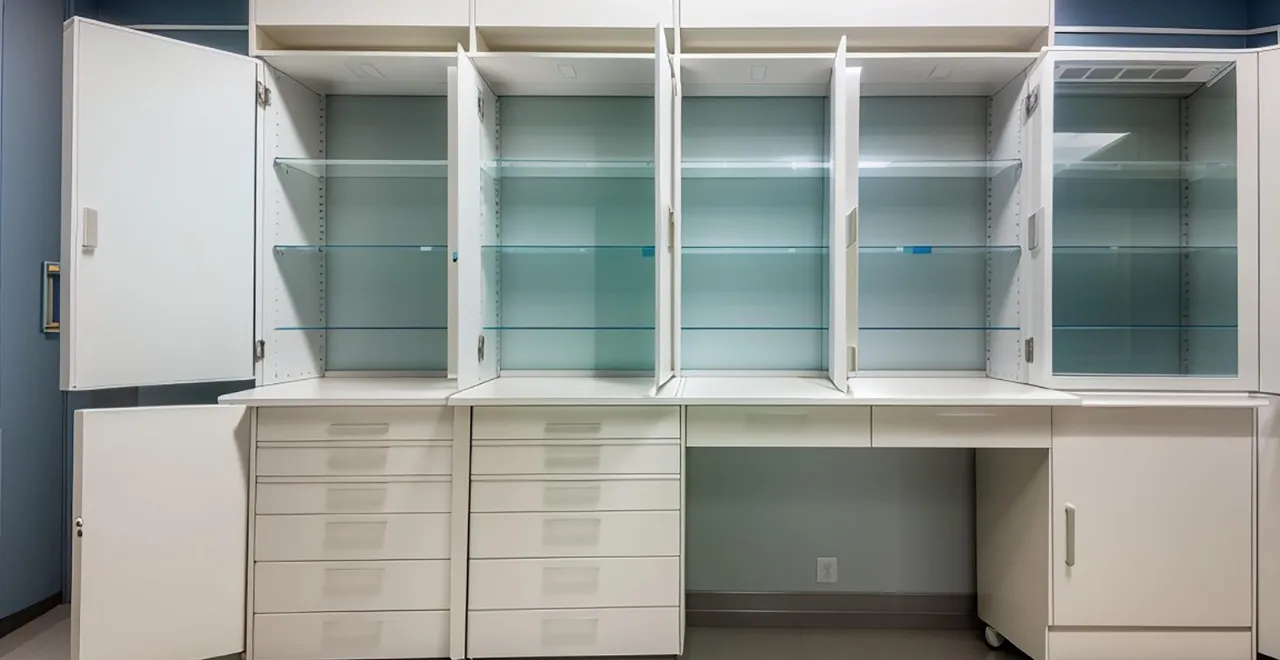
Science laboratories need storage that keeps equipment, glassware, consumables and other materials organised without taking away valuable working space. Science lab storage cabinets provide dedicated storage while helping laboratories maintain a cleaner, more accessible and efficient workspace.
However, choosing the right cabinet is not simply about size or price. The ideal storage solution depends on what you need to store, the available space, cabinet material, storage capacity, accessibility and the specific requirements of your laboratory.
This guide explains what science lab storage cabinets are, the types available, what to consider before buying and how to select a cabinet that fits your laboratory’s needs.
What Are Science Lab Storage Cabinets?
Science lab storage cabinets are purpose-designed storage units used to organise laboratory equipment, glassware, consumables, supplies, records and other materials. They can be installed below workbenches, mounted on walls or used as standalone storage, depending on the laboratory layout.
Unlike standard office cabinets, laboratory storage cabinets are selected according to the working environment, the materials being stored, required capacity and accessibility. Features such as durable construction, adjustable shelving, lockable doors and different cabinet configurations can make storage more practical for laboratory use.
For specialised materials such as chemicals, a dedicated storage cabinet should be selected according to the properties of the substances and applicable storage requirements.
Types of Science Lab Storage Cabinets
Different laboratories need different storage configurations. Common options include:
1. Chemical Storage Cabinets
Chemical storage Cabinet requires additional consideration because the appropriate cabinet depends on the properties of the substances being stored. Compatibility, segregation, ventilation and access requirements should be assessed where applicable.
2. Custom Laboratory Storage Cabinet
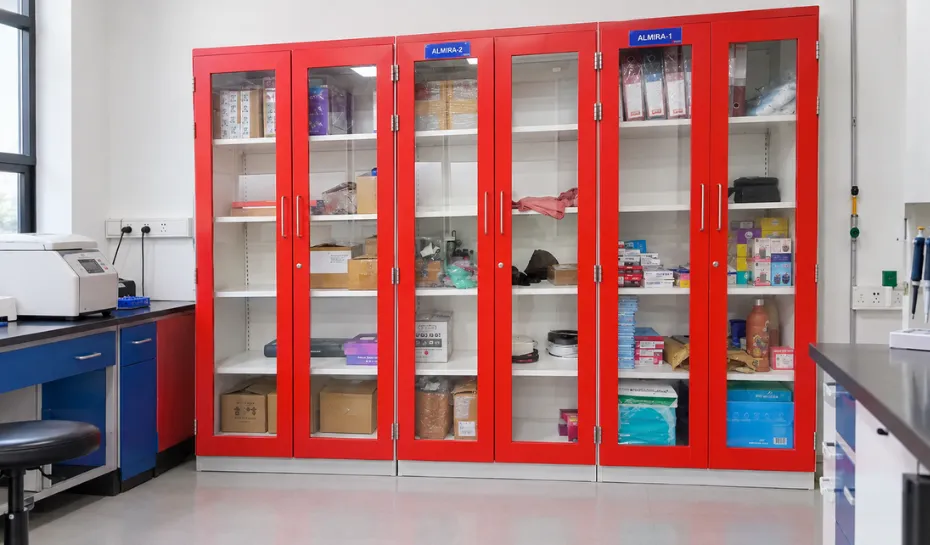
Custom cabinets are useful when standard dimensions do not suit the room, equipment or storage requirements. For a detailed comparison of different storage approaches, see our guide to custom vs standard laboratory storage cabinets
3. Under-Bench Storage Cabinets
Installed below laboratory worktops, these cabinets make use of available space while keeping frequently used equipment, glassware and consumables within easy reach.
4. Wall-Mounted Storage Cabinets
Wall-mounted cabinets use vertical space and can be useful when floor space is limited. They are suitable for smaller laboratory supplies and items that need convenient access.
5. Tall Laboratory Storage Cabinets
Tall laboratory storage cabinets provide greater vertical capacity and are useful for laboratories that need to store larger quantities of equipment, glassware, consumables or records without taking up excessive floor space.
6. Mobile Storage Cabinets
Mobile storage cabinets provide flexibility where laboratory layouts or storage requirements may change. They can be repositioned when needed, making them useful for teaching laboratories, flexible workspaces and laboratories with changing workflows.
Factors to Consider When Choosing Science Lab Storage Cabinets
Before purchasing a science lab storage cabinet, consider these important factors.
1. What Will You Store?
Start by making a list of the items the cabinet needs to accommodate. This may include glassware, laboratory equipment, consumables, samples, PPE, records, reagents or other supplies.
The size and weight of these items will influence the required cabinet dimensions, shelving and load capacity.
If you are planning a complete laboratory and want to understand the wider investment involved, see our guide to turnkey lab setup cost in India for a breakdown of furniture, equipment, infrastructure and other major cost factors.
2. Material and Durability
The cabinet material affects its durability, maintenance and suitability for the laboratory environment.
Depending on the application, laboratory storage cabinets may use coated steel, stainless steel or other suitable materials. Consider exposure to moisture, cleaning agents, chemicals and the expected frequency of use before selecting a material.
3. Size and Laboratory Layout
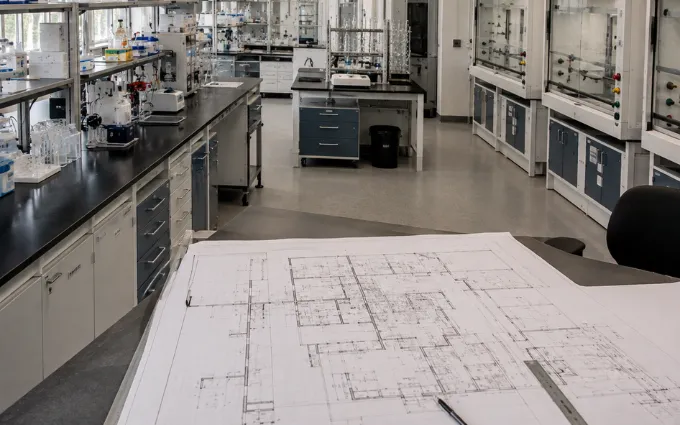
Measure the available width, depth and height before selecting a cabinet. Also consider door clearance, walkways, workbenches, equipment and other fixed installations.
Storage should also be planned alongside the laboratory workstations and workbenches. Our laboratory workbench guide explains how workbench configuration, dimensions, equipment and storage can be considered together when planning a laboratory layout.
The objective is to add storage without creating an obstruction or interfering with laboratory activities.
4. Shelving and Internal Configuration
Look beyond the external dimensions of the cabinet. Check the number of shelves, adjustable shelf positions, compartments, drawers and available load capacity.
Adjustable shelving is particularly useful when the size of stored equipment or supplies varies.
5. Safety and Access Requirements
The cabinet should match the materials being stored and the activities carried out in the laboratory.
Depending on the application, you may need lockable storage, secure shelving, controlled access or specialised chemical storage. Requirements can differ between educational, research, pharmaceutical, testing and industrial laboratories.
6. Accessibility
Frequently used items should be positioned where laboratory personnel can reach them easily. Less frequently used materials can be stored in areas that are accessed less often.
Good cabinet placement can reduce unnecessary movement and make everyday laboratory work more convenient.
Science Lab Storage Cabinet Selection Guide
Use this quick comparison when deciding which storage solution may suit your laboratory:
| Laboratory Requirement | Suitable Storage Option |
|---|---|
| Frequently used equipment | Under-bench storage cabinet |
| Limited floor space | Wall-mounted cabinet |
| Large quantity of supplies | Tall laboratory storage cabinet |
| Flexible laboratory layout | Mobile storage cabinet |
| Chemicals requiring specialised storage | Chemical storage cabinet |
| Unusual room dimensions | Custom laboratory storage cabinet |
| Restricted access | Lockable storage cabinet |
| Different-sized equipment | Adjustable shelving |
| Heavy stored items | Shelving with suitable load capacity |
| Future expansion | Adaptable or additional storage capacity |
The final choice should always be based on the laboratory’s actual layout, materials, workflow and storage requirements rather than cabinet appearance alone.
Benefits of Science Lab Storage Cabinets
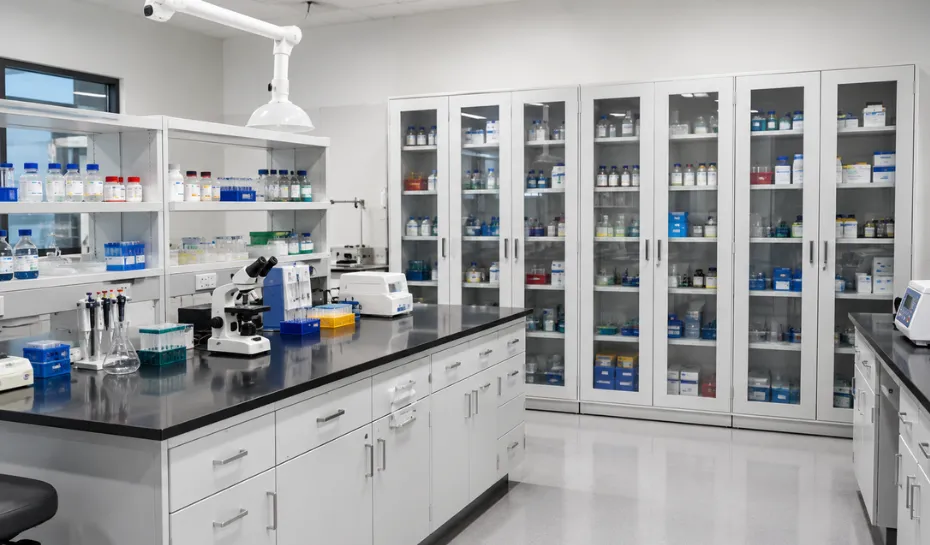
Proper storage is also an important part of overall laboratory planning. See our guide on how to build a safe and efficient laboratory environment for practical considerations around storage, furniture, movement and laboratory layout.
Well-planned storage can make a noticeable difference to everyday laboratory operations.
- Better organisation: Designated storage locations make it easier to identify, use and return laboratory equipment and supplies.
- Efficient space utilisation: Under-bench, wall-mounted and vertical storage can help make better use of available laboratory space.
- Easier access: Properly positioned cabinets keep frequently used materials close to the areas where they are needed.
- Reduced clutter: Storing equipment and supplies when they are not in use helps keep work surfaces more organised.
- Improved workflow: A logical storage layout can reduce unnecessary movement and make routine laboratory activities easier to manage.
How to Choose the Right Science Lab Storage Cabinet
The right cabinet should match what you store, where you store it and how often you use it. Start by identifying your storage requirements, then measure the available space and determine the required cabinet type, material, shelving and access control.
For specialised materials such as chemicals, select storage based on the substances involved and applicable safety requirements. For laboratories with unusual layouts or changing requirements, custom or adaptable configurations may provide greater flexibility.
A practical approach is to prioritise function, durability, accessibility and suitability for the laboratory environment rather than choosing a cabinet based only on appearance or initial cost.
Why Choose Santech Labs for Science Lab Storage Cabinets?
A well-designed laboratory needs storage that works seamlessly with its workstations, equipment and available space. Rather than treating storage as a separate element, it is important to plan cabinets as part of the complete laboratory furniture layout.
Santech Labs provides science lab storage cabinets and complete laboratory furniture solutions for different laboratory applications. As experienced modular lab furniture manufacturers, Santech Labs can help plan storage configurations around cabinet dimensions, shelving, accessibility, workflow and the overall laboratory design.
Whether you are developing a new laboratory or upgrading an existing facility, a coordinated approach to laboratory furniture can help make better use of available space while keeping equipment and supplies organised and accessible.
Conclusion
Choosing the right science lab storage cabinets depends on what you need to store, the available laboratory space, cabinet material, storage capacity, accessibility and specific safety requirements. The right configuration can help keep equipment and supplies organised while making better use of the laboratory’s available space.
From under-bench and wall-mounted cabinets to tall, mobile, chemical and customised storage solutions, the best option is one that fits your laboratory’s workflow and storage needs.
Santech Labs provides laboratory storage cabinets and complete laboratory furniture solutions for different laboratory applications. As experienced laboratory furniture suppliers, Santech Labs can help laboratories plan practical storage solutions that complement their workstations, equipment and overall laboratory layout.
If you are setting up a new laboratory or upgrading an existing facility, choosing the right storage configuration at the planning stage can help create a more organised, accessible and efficient laboratory environment.