
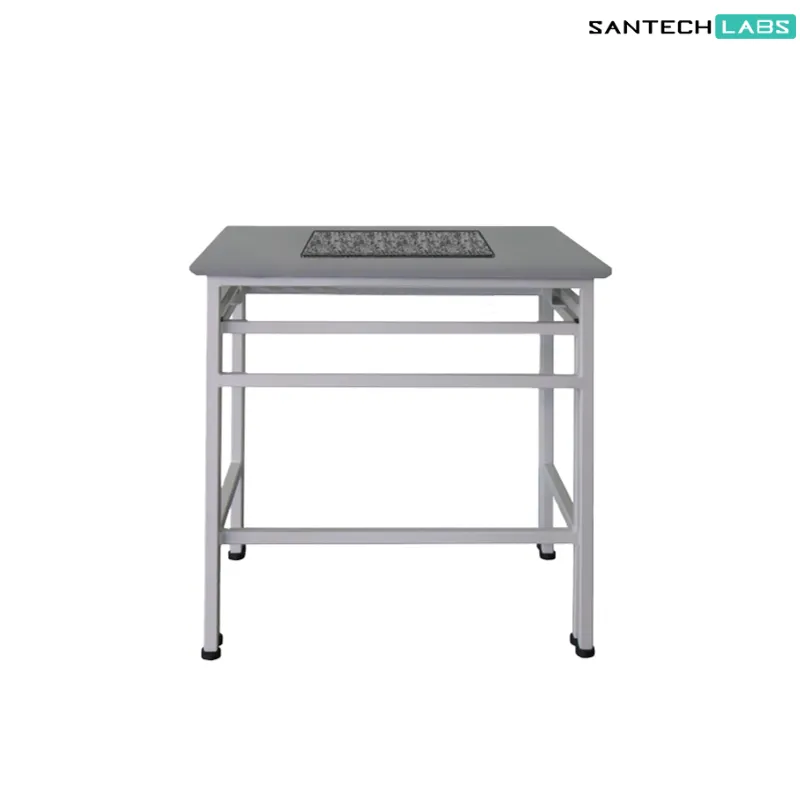
Sensitive laboratory instruments can be affected by vibrations from people, equipment, building movement and ventilation systems. Anti-vibration tables improve accuracy in laboratories by reducing the unwanted movement that reaches instruments, helping provide a more stable platform for precise measurements and imaging.
This is particularly important for equipment such as analytical balances, microscopes and other vibration-sensitive instruments, where even small movements can cause fluctuating readings, image movement or inconsistent results.
The level of vibration control required depends on the instrument, source of vibration, table design, equipment weight and laboratory environment. Simply choosing a heavier or more rigid work surface does not necessarily provide the isolation a sensitive instrument needs.
In this guide, we explain how anti-vibration tables work, which laboratory instruments can benefit from vibration isolation, how to choose the right table and why proper equipment placement also matters for laboratory accuracy.
Why Are Anti-Vibration Tables Important in Laboratories?
Many laboratory instruments are sensitive to movement and vibration. Even low-level vibrations can interfere with measurements, imaging or instrument stability.
For example, vibrations may cause an analytical balance to fluctuate instead of settling on a stable reading. Similarly, vibration can affect microscope images or interfere with measurements made using sensitive analytical equipment. An anti-vibration table for laboratory applications provides a more stable support surface for such vibration-sensitive instruments.
Common sources of laboratory vibration include:
-
Foot traffic and movement around the laboratory
-
Building equipment and nearby machinery
-
HVAC and ventilation systems
-
Pumps, compressors and centrifuges
-
Nearby construction or road traffic
-
Vibrations transmitted through floors, walls or laboratory furniture
An anti-vibration table helps reduce the effect of these disturbances by providing a more stable surface for sensitive equipment.
How Do Anti-Vibration Tables Work?
An anti-vibration table is designed to reduce the transmission of vibration from the surrounding environment to the instrument placed on it.
The exact mechanism depends on the table design, but vibration isolation generally involves mass, damping and isolation.
1. Vibration Isolation
The isolation system separates the instrument support surface from some of the movement reaching it from the surrounding structure.
Depending on the design, this may involve pneumatic isolators, elastomeric components or other specialised isolation systems.
The aim is to reduce the amount of external vibration transferred to the instrument.
2. Damping
Damping helps reduce unwanted oscillations after vibration reaches the table.
Materials and components designed for damping dissipate vibration energy, helping the work surface settle more quickly and remain stable.
3. Stable Work Surface
The table’s rigid and stable construction provides a suitable platform for sensitive instruments.
A properly selected anti-vibration table should support the equipment securely without introducing unnecessary movement or instability during operation.
How Do Anti-Vibration Tables Improve Accuracy?

The main benefit of an anti-vibration table is improved stability for equipment that can be affected by environmental movement.
1. More Stable Analytical Balance Readings
Analytical balances measure very small differences in mass, making them particularly sensitive to vibration.
Movement can cause the balance reading to fluctuate, making it difficult to obtain a stable measurement. A suitable anti-vibration table can reduce these disturbances and provide a more stable platform for weighing.
2. Better Microscopy and Imaging
Microscopes and imaging systems can be affected by even small movements.
Vibration may cause image movement, blurring or other unwanted artefacts during observation or image capture. Providing a stable support surface can help reduce these effects and improve image consistency.
3. Improved Repeatability
Reliable laboratory work requires measurements that can be repeated under similar conditions.
By reducing unwanted movement around sensitive equipment, an anti-vibration table can help create more consistent measurement conditions and support better repeatability.
4. Reduced Interference From the Laboratory Environment
A laboratory cannot always eliminate every source of vibration. Equipment, people, building services and external activity may continue to create movement.
Vibration isolation provides an additional layer of protection for sensitive instruments without requiring the entire laboratory environment to remain completely vibration-free.
5. Better Support for Sensitive Equipment
A properly designed anti-vibration table provides a dedicated support surface for equipment that requires greater stability than a standard laboratory workbench can provide.
This is particularly useful where sensitive instruments need to be separated from routine laboratory activities and movement.
What Should You Consider When Choosing an Anti-Vibration Table?
Selecting an anti-vibration table should be based on the instrument and laboratory environment rather than price or table size alone.
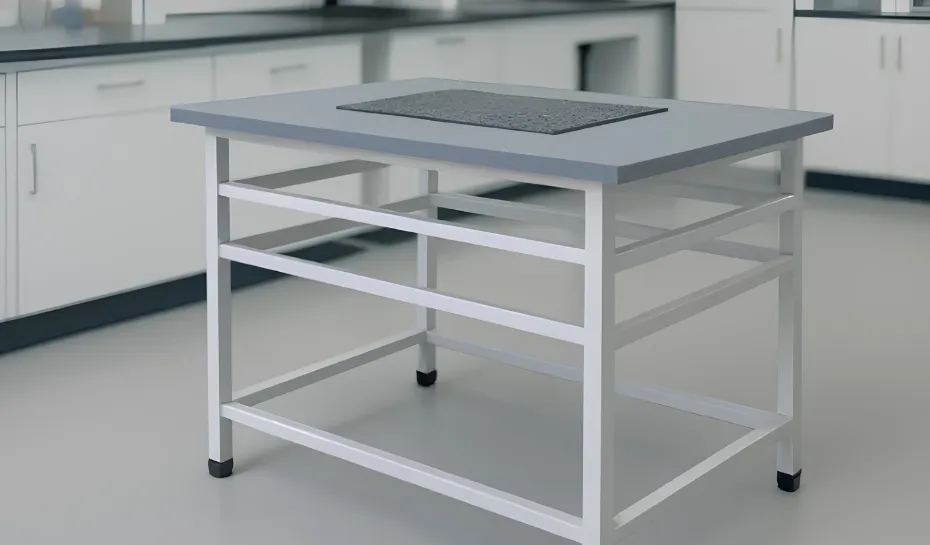
1. Equipment Weight
Check the total weight of the instrument and any accessories that will sit on the table.
The table and isolation system should have an appropriate load capacity. Avoid selecting a table that is only just capable of supporting the equipment.
2. Table Size
The work surface should accommodate the instrument comfortably while leaving enough room for normal operation.
Measure the equipment before ordering and consider cable connections, controls and required working clearance.
3. Isolation System
Different tables use different isolation technologies.
Depending on the application, you may encounter pneumatic, elastomeric or other isolation systems. The appropriate choice depends on the equipment, vibration frequency and laboratory environment.
4. Laboratory Vibration Conditions
Identify where the vibration is coming from before selecting an isolation solution.
Nearby machinery, pumps, HVAC equipment, heavy foot traffic and structural vibration can create different conditions. Understanding the source helps determine the type of isolation required.
5. Construction and Stability
The table should provide a rigid, stable platform suitable for the instrument.
Consider the construction materials, support structure, surface finish and overall stability when comparing options.
6. Installation Requirements
The table should be positioned where it can perform effectively.
Avoid placing sensitive equipment unnecessarily close to major vibration sources. Follow the instrument and table manufacturer’s installation recommendations for levelling, positioning and isolation.
Anti-Vibration Table vs Standard Laboratory Workbench
A standard laboratory workbench is intended for routine laboratory activities, whereas an anti-vibration table is designed to provide a more stable support platform for instruments that can be affected by vibration. The main difference is the level of vibration control provided by each setup.
For sensitive instruments, an anti-vibration table can provide a more suitable support platform than a conventional laboratory workbench, particularly where even minor movement can affect measurements or imaging.
| Feature | Standard Laboratory Workbench | Anti-Vibration Table |
|---|---|---|
| Primary purpose | General laboratory work | Supporting vibration-sensitive equipment |
| Vibration isolation | Limited | Designed to reduce vibration transmission |
| Typical use | Routine laboratory activities | Precision measurements and sensitive instruments |
| Construction | General laboratory furniture | Rigid, stability-focused construction |
| Sensitive balances | May not provide sufficient stability | Commonly used for precision balances |
| Equipment support | General-purpose | Designed for vibration-sensitive applications |
If you are also comparing options for general laboratory workstations, see our laboratory workbench guide for an overview of workbench types, materials and key selection considerations.
Why Laboratory Design Matters for Vibration Control
Selecting an anti-vibration table is only one part of managing vibration in a laboratory. Equipment location, nearby machinery, floor conditions, laboratory furniture and overall workflow can also affect the operating environment of sensitive instruments.
For example, positioning a precision balance close to a centrifuge, pump or other vibration-producing equipment may expose it to unnecessary disturbances. During laboratory planning, sensitive instruments should therefore be located away from significant vibration sources wherever practical.
The table should also be positioned with sufficient working space, access to utilities and clearance for operation and maintenance. Considering these requirements during the design stage can help create a more suitable environment for precision equipment.
For guidance on equipment placement, workflow and laboratory space planning, see our guide on how to design a successful laboratory.
How Can Lab Furniture Manufacturers Help?
The right anti-vibration table should work with the rest of the laboratory rather than being selected as a standalone product. Experienced laboratory furniture suppliers can help assess the table’s dimensions, equipment requirements, positioning and integration with surrounding workstations and storage. Choosing a supplier with experience in laboratory planning can also make it easier to coordinate equipment support with the overall laboratory setup.
When evaluating a supplier, look for:
- Understanding of laboratory applications and workflows
- Suitable table construction and load capacity
- Appropriate sizes and configurations
- Compatibility with the intended instruments
- Installation and positioning guidance
- After-sales support and maintenance assistance
- Ability to coordinate the table with laboratory workstations and storage
Working with a supplier that understands laboratory furniture and equipment requirements can make it easier to incorporate vibration-sensitive equipment into an efficient and practical laboratory setup.
Improve Instrument Stability With the Right Anti-Vibration Table
Understanding how anti-vibration tables improve accuracy in laboratories is important when selecting equipment support for sensitive instruments. By reducing the effect of unwanted vibration, an anti-vibration table can support more consistent measurements, clearer imaging and improved repeatability.
Choosing the right solution requires consideration of the instrument, vibration source, load capacity, table dimensions and isolation requirements. It should also be planned alongside the laboratory’s workstations, storage, equipment positioning and available space.
At Santech Labs, we understand that equipment support is an important part of effective laboratory planning. As experienced lab furniture manufacturers and modular lab furniture manufacturers, we can help integrate anti-vibration tables with laboratory workstations and other furniture solutions according to your application, equipment and space requirements.
Planning a laboratory or upgrading an existing setup? Contact Santech Labs to discuss your anti-vibration table and laboratory furniture requirements.