
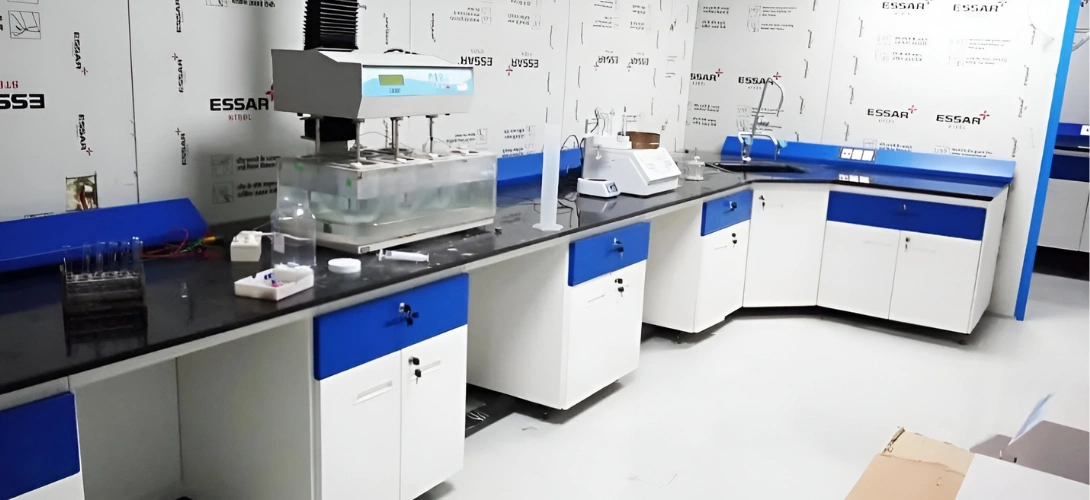
A laboratory needs more than worktops and storage. The right laboratory furniture should support safe working practices, efficient workflows, equipment placement, chemical handling and long-term usability. The furniture you choose can also affect how easily a laboratory can be organised, maintained and adapted as requirements change.
But what are the different types of laboratory furniture available for modern laboratories?
The answer depends on the type of work being carried out, available space, equipment requirements, storage needs and the level of chemical or corrosion resistance required. Modern laboratories commonly use modular workstation systems, storage cabinets, specialised chemical-resistant furniture, stainless steel furniture and equipment-support solutions.
This guide explains the different types of laboratory furniture, their typical applications and what to consider when selecting them for a new or existing laboratory.
What Is Laboratory Furniture?
Laboratory furniture refers to purpose-designed workstations, cabinets, storage systems and equipment-support solutions used to create a functional laboratory environment.
Unlike conventional office furniture, laboratory furniture is designed around practical laboratory requirements such as:
- Resistance to chemicals and moisture
- Easy cleaning and maintenance
- Equipment support
- Safe and efficient workflows
- Utility integration
- Laboratory storage
- Ergonomic working positions
- Space optimisation
- Future layout changes
A well-planned laboratory furniture system should work together with laboratory equipment, utilities, ventilation and storage rather than being treated as separate components.
1. Plinth System
A plinth system is a floor-supported laboratory workstation system designed to provide a stable and enclosed base for laboratory work areas.
The support structure can accommodate different laboratory worktop materials and can be configured with storage, drawers and utility provisions according to project requirements.
Key features
- Floor-supported workstation structure
- Suitable for modular laboratory layouts
- Utility integration for services such as water, gas and electricity
- Compatible with different laboratory worktops
- Provision for cabinets and drawers
- Available in suitable metal finishes for laboratory environments
Where is a plinth system used?
Plinth systems can be suitable for laboratories where stability, organised storage and an enclosed workstation appearance are important.
They can be considered for educational, research, testing, pharmaceutical and industrial laboratory environments depending on the project requirements.
2. D-Frame Laboratory Furniture
The D-Frame system is a laboratory workstation solution designed around a structured support frame. It can be used to create organised work areas while allowing laboratory furniture to be configured according to available space and workflow.
D-frame workstations can be combined with laboratory worktops, storage units and utility services to create a practical working environment.
Key benefits
- Modular workstation configuration
- Suitable for different laboratory layouts
- Supports organised equipment placement
- Can be combined with storage solutions
- Suitable for customised laboratory planning
The right D-frame configuration will depend on the laboratory’s dimensions, equipment, services and working requirements.
3. C-Frame Laboratory Furniture
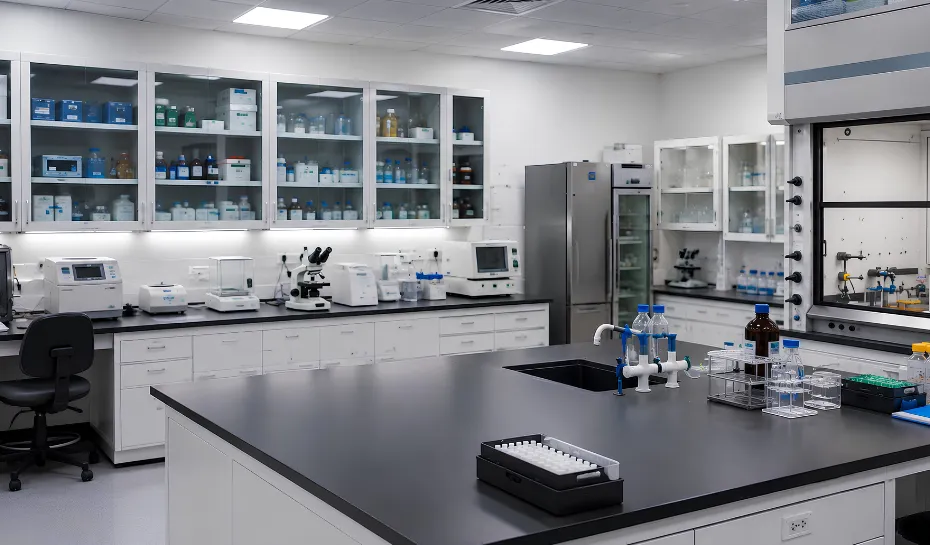
The C-frame system uses an open C-shaped support structure to create a flexible laboratory workstation.
One of its practical advantages is the open space beneath the worktop, which can make access to utilities, storage and equipment easier.
Key features
- Open C-frame workstation design
- Modular configuration
- Suitable for changing laboratory layouts
- Utility integration
- Compatible with different laboratory worktop materials
- Can accommodate under-bench storage
- Open access beneath the workstation
When should you consider a C-frame system?
C-frame laboratory furniture can be useful when flexibility and accessibility are priorities. It can work particularly well in laboratories where equipment layouts or working arrangements may change over time.
4. Pedestal System
A pedestal system provides under-bench storage and support for laboratory workstations. It can incorporate drawers and storage compartments without requiring a separate full-height cabinet.
Pedestals can be configured as fixed or mobile units depending on the laboratory’s requirements.
Common features
- Under-bench storage
- Multiple drawers and compartments
- Locking options
- Fixed or mobile configurations
- Compatible with modular laboratory workstations
- Helps keep frequently used materials organised
Pedestal units are particularly useful when laboratory users need convenient access to tools, consumables and frequently used materials close to the workstation.
5. Laboratory Storage Cabinets
Storage is an important part of laboratory planning. Laboratory storage cabinets provide dedicated space for equipment, glassware, consumables, samples and other laboratory materials.
Instead of relying on general-purpose cupboards, purpose-designed laboratory storage can help organise materials according to the workflow of the laboratory.
Types of laboratory storage configurations
Depending on the laboratory layout, storage cabinets may include:
- Under-bench cabinets
- Wall-mounted cabinets
- Tall storage cabinets
- Floor-standing cabinets
- Adjustable shelving systems
Important features to consider
When choosing laboratory storage cabinets, consider:
- Storage capacity
- Shelf adjustability
- Locking requirements
- Cabinet dimensions
- Material and finish
- Ventilation requirements
- Ease of cleaning
- Accessibility
The storage system should be planned around the materials and equipment that laboratory users actually need to store.
6. Chemical Storage Cabinets
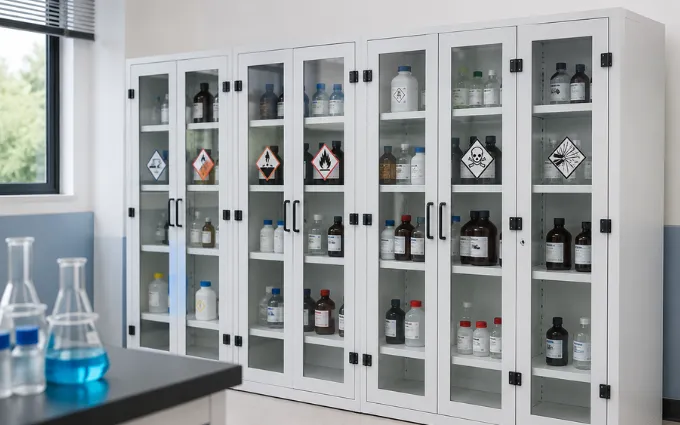
Chemical storage cabinets are designed for organised storage of laboratory chemicals and reagents.
Chemical storage requires more consideration than general laboratory storage because the cabinet material, internal finish, ventilation and spill-management features may need to match the substances being stored.
Key features to look for
- Chemical-resistant internal surfaces
- Adjustable shelves
- Locking provision
- Spill protection
- Suitable ventilation options
- Durable construction
- Easy-to-clean surfaces
Chemical storage cabinets can be used in research, pharmaceutical, educational and industrial laboratories where controlled storage of laboratory chemicals is required.
The cabinet should always be selected according to the chemicals being stored and the applicable safety requirements.
7. SS 304 Laboratory Furniture
SS 304 laboratory furniture is manufactured from stainless steel grade 304 and is commonly considered where hygiene, durability and corrosion resistance are important.
The smooth stainless steel surface can also make cleaning easier, which is valuable in environments where maintaining a controlled and hygienic workspace is important.
Key characteristics
- Stainless steel 304 construction
- Corrosion resistance
- Hygienic surface
- Easy cleaning and maintenance
- Durable construction
- Suitable for demanding laboratory environments
- Can be configured as workstations and storage solutions
Where is SS 304 laboratory furniture used?
SS 304 furniture can be suitable for applications such as:
- Pharmaceutical laboratories
- Healthcare environments
- Research laboratories
- Food-related laboratories
- Cleanroom environments
- Testing facilities
The appropriate stainless steel grade and finish should be selected according to the specific environmental and operational requirements.
8. Laboratory Fume Hoods
A laboratory fume hood is a specialised enclosure designed to help control exposure to hazardous fumes, vapours and airborne contaminants generated during certain laboratory procedures.
Unlike standard laboratory furniture, a fume hood is part of the laboratory’s safety and ventilation infrastructure.
Common fume hood features
Depending on the configuration, laboratory fume hoods may include:
- Chemical-resistant internal lining
- Toughened glass sash
- Laboratory work surface
- LED lighting
- Electrical provisions
- Ducted or ductless configurations
- Chemical-resistant construction materials
The selection of a fume hood should consider the chemicals used, application, airflow requirements, laboratory layout and relevant standards.
For applications involving hazardous substances, fume hood design and installation should be handled by qualified professionals.
9. Anti-Vibration Tables
An anti-vibration table is specialised laboratory furniture designed to provide a stable platform for sensitive instruments.
Even small vibrations from nearby equipment, movement or building activity can affect certain precision measurements. An anti-vibration table helps reduce the impact of these vibrations on sensitive instruments.
Typical applications
Anti-vibration tables can be used to support equipment such as:
- Laboratory balances
- Microscopes
- Precision measurement instruments
- Analytical equipment
- Other vibration-sensitive laboratory instruments
A typical anti-vibration table may use a heavy, stable work surface combined with an isolated support structure to improve stability.
The table should be selected according to the instrument, required stability and laboratory environment.
How Do You Choose the Right Type of Laboratory Furniture?
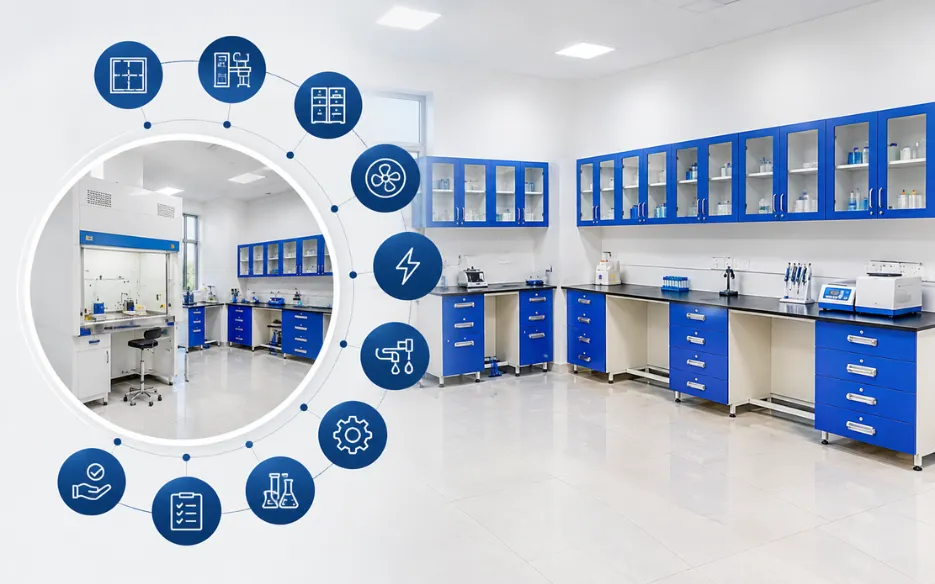
Choosing laboratory furniture should start with the laboratory’s actual requirements rather than simply selecting the most visually appealing system. Furniture decisions can also influence the overall turnkey lab setup cost in India, particularly when workstation systems, storage, utilities and specialised equipment need to be planned together.
1. Laboratory workflow
Start by understanding how people, samples, equipment and materials move through the laboratory.
A good furniture layout should minimise unnecessary movement and support the sequence of laboratory activities.
2. Available space
Measure the laboratory carefully before selecting furniture.
Consider:
- Room dimensions
- Door and window positions
- Emergency access
- Walkways
- Equipment clearances
- Utility points
- Future expansion
3. Type of work being performed
The type of work carried out in a laboratory plays an important role in selecting the right furniture. Pharmaceutical and testing laboratories may require furniture that supports hygiene, chemical resistance, equipment integration and efficient workflows.
If you are planning furniture for a pharmaceutical or testing laboratory, our guide on how to choose pharmaceutical laboratory furniture explains the key factors to consider before making a selection.
4. Chemical exposure
If the laboratory handles corrosive or aggressive chemicals, material selection becomes especially important.
Options such as PP laboratory cabinets, chemical storage cabinets or stainless steel furniture may be considered depending on the application.
5. Equipment requirements
Large or sensitive laboratory equipment needs appropriate support.
For precision instruments, an anti-vibration table may be more appropriate than a standard workstation.
Similarly, equipment generating hazardous fumes may require a suitable laboratory fume hood.
6. Storage requirements
Think about what needs to be stored and where it should be located.
Frequently used items should be easily accessible, while chemicals and sensitive materials may require dedicated storage.
7. Future flexibility
Laboratory requirements can change as equipment, processes and staff requirements evolve.
Modular laboratory furniture can provide greater flexibility when future reconfiguration is likely.
Laboratory Furniture Types: Which One Is Right for Your Lab?
This table provides a starting point. Final selection should be based on the laboratory’s processes, equipment, materials, space and safety requirements.
| Laboratory Requirement | Suitable Furniture Type |
|---|---|
| General laboratory workstations | Plinth, D-Frame or C-Frame systems |
| Flexible workstation layouts | C-Frame or D-Frame systems |
| Enclosed, floor-supported workstations | Plinth system |
| Under-bench storage | Pedestal system |
| General laboratory storage | Storage cabinets |
| Chemical and reagent storage | Chemical storage cabinets |
| Highly chemical-resistant storage | PP laboratory cabinets |
| Hygienic and corrosion-resistant applications | SS 304 laboratory furniture |
| Work involving hazardous fumes | Laboratory fume hood |
| Precision and vibration-sensitive instruments | Anti-vibration table |
Why Is Modular Laboratory Furniture a Practical Choice?
Laboratories are rarely static environments. Equipment may be replaced, additional workstations may be required and workflows can change over time.
This is why modular laboratory furniture can be a practical option for many modern laboratories. Modular systems allow workstations, storage units and other furniture components to be configured according to the available space and changing laboratory requirements.
When comparing modular lab furniture manufacturers, look beyond the appearance of the furniture. Consider the manufacturer’s experience with laboratory layouts, equipment integration, utility planning, storage requirements and future expansion.
A well-planned modular laboratory furniture system can make it easier to reconfigure work areas, accommodate new equipment and adapt the laboratory as requirements change.
Modular systems can help with:
- Efficient use of available space
- Flexible workstation configurations
- Equipment integration
- Storage planning
- Utility integration
- Future modifications
- Consistent laboratory design
However, modular does not mean that every laboratory should use the same configuration. The furniture layout should still be designed around the specific laboratory workflow.
Laboratory Furniture Should Be Planned as a Complete System
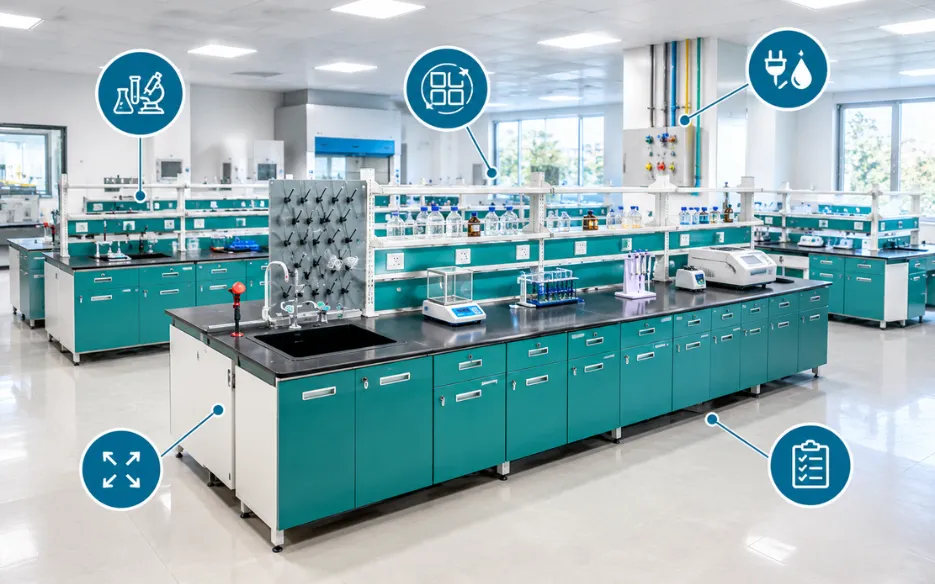
Choosing individual laboratory furniture products without considering the complete laboratory layout can lead to inefficient use of space, poor workflow and difficulties with equipment placement.
A better approach is to plan the laboratory as a complete system, considering the relationship between:
For example, a laboratory may combine C-frame workstations with pedestal storage, chemical storage cabinets and a laboratory fume hood. A pharmaceutical or cleanroom environment may require greater emphasis on SS 304 laboratory furniture, corrosion resistance and hygienic surfaces.
The final configuration should create a laboratory that is practical to use, safe to operate and flexible enough to support future requirements. For a broader understanding of laboratory planning, layout and workflow, read our detailed guide to designing a successful laboratory.
Why Choose Santech Labs for Laboratory Furniture?
Selecting the right laboratory furniture manufacturer is an important part of planning a functional and reliable laboratory. Furniture should not only fit the available space but also support the laboratory’s workflow, equipment, storage, utilities and safety requirements.
Santech Labs provides laboratory furniture solutions designed for different laboratory environments, including educational, pharmaceutical, research, testing and industrial applications. The focus is on creating practical furniture systems that can be configured according to the specific requirements of each laboratory.
What Does Santech Labs Offer?
Santech Labs provides a range of laboratory furniture and specialised solutions, including:
- Modular laboratory workstation systems
- Plinth, D-Frame and C-Frame systems
- Pedestal and under-bench storage solutions
- Laboratory storage cabinets
- Chemical storage cabinets
- PP laboratory cabinets for chemical-resistant applications
- SS 304 laboratory furniture
- Laboratory fume hoods
- Anti-vibration tables
- Customised laboratory furniture configurations
This range allows different furniture components to be planned together rather than selecting individual products without considering the overall laboratory layout.
Final Thoughts
The types of laboratory furniture you choose should match your laboratory’s workflow, equipment, storage requirements, safety needs and working environment. From modular workstation systems and storage solutions to chemical-resistant furniture, SS 304 furniture, fume hoods and anti-vibration tables, each type serves a specific laboratory requirement.
Choosing the right furniture is not only about individual products. It is about creating a well-planned laboratory where workstations, storage, equipment, utilities, safety and workflow work together efficiently. This approach can improve usability, support future expansion and help control overall laboratory setup costs.
When comparing laboratory furniture suppliers, consider their manufacturing experience, material quality, customisation capabilities, installation support and ability to plan furniture around your laboratory requirements.
Santech Labs provides modular laboratory furniture and complete laboratory solutions designed around different laboratory applications. With the right planning and furniture system, your laboratory can be safer, more efficient and better prepared for future requirements.