
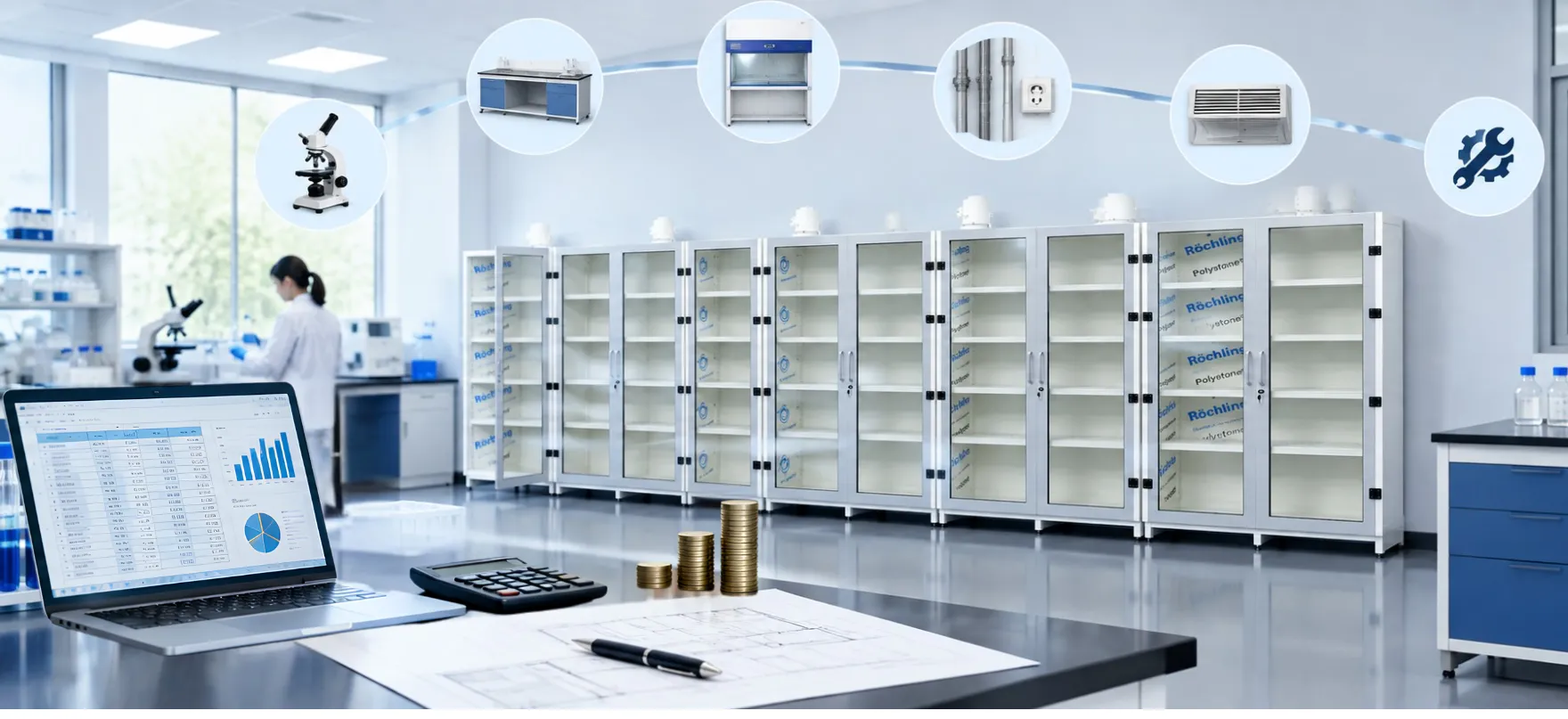
Setting up a laboratory in India is not a one-size-fits-all investment. A small pathology lab, diagnostic centre, pharmaceutical laboratory, research facility or food testing laboratory can have very different requirements for equipment, furniture, utilities, safety systems and infrastructure.
So, when estimating the turnkey lab setup cost, there is no single figure that applies to every project. A better approach is to start with the laboratory’s purpose, equipment requirements, available space and technical needs, and then build the budget around them.
In general, a basic laboratory setup may start at around ₹8 lakh, while specialised laboratories can require ₹1 crore to ₹2 crore or more. The final lab setup cost in India depends largely on the type of laboratory, equipment, furniture, infrastructure, utilities, installation, compliance requirements and level of customisation.
This guide explains the major costs involved in a Turnkey Laboratory Setup in India, what can increase your budget and what to consider before requesting a project quotation.
Turnkey Lab Setup Cost in India: Estimated Budget by Laboratory Type
There is no standard market rate for setting up a laboratory because every project has different technical and operational requirements. The following figures can be used as broad planning estimates when preparing an initial budget.
| Laboratory Type | Indicative Setup Cost |
|---|---|
| Basic Pathology Laboratory | ₹8–20 lakh |
| Diagnostic Centre | ₹20–80 lakh |
| Molecular Biology Laboratory | ₹30 lakh–₹1.2 crore |
| Research Laboratory | ₹50 lakh–₹2 crore+ |
| Food & Water Testing Laboratory | ₹15–60 lakh |
These ranges can change considerably depending on the equipment selected, laboratory size, furniture specifications, infrastructure requirements and site conditions.
For example, a 1,000 sq. ft. research laboratory may cost considerably more than a 1,000 sq. ft. teaching laboratory because the equipment, environmental controls and infrastructure requirements can be very different.
The same principle applies to pathology and diagnostic laboratories. A basic pathology facility may require a relatively straightforward equipment and furniture package, while a larger diagnostic centre with automated analysers, additional testing capabilities, cold storage and specialised infrastructure can require a much higher investment.
Important:
These are indicative planning ranges only. Actual project costs should be calculated after assessing the equipment list, laboratory layout, furniture requirements, utilities, safety systems, site conditions and project scope.
What Is Included in a Turnkey Laboratory Setup?
A turnkey laboratory setup generally covers much more than laboratory benches and cabinets.
Depending on the project scope, a turnkey laboratory project may include:
- Laboratory planning and space utilisation
- Laboratory layout and workflow planning
- Laboratory furniture and workstations
- Storage cabinets and specialised storage
- Fume hoods and specialty furniture
- Electrical and plumbing coordination
- HVAC and ventilation
- Utility connections
- Equipment installation and coordination
- Furniture manufacturing and installation
- Testing and commissioning
- Project handover
The exact scope depends on the laboratory type, project requirements and the turnkey laboratory solutions provider you choose. Before comparing quotations, always check what is included and excluded in the proposed scope.
A quotation that looks cheaper may not actually be more cost-effective if important requirements such as installation, ventilation, electrical work, HVAC or utility coordination are excluded. Comparing the complete project scope, rather than only the quoted price, can help you make a more informed decision when planning a turnkey laboratory setup.
What Are the Major Costs in a Turnkey Lab Setup?
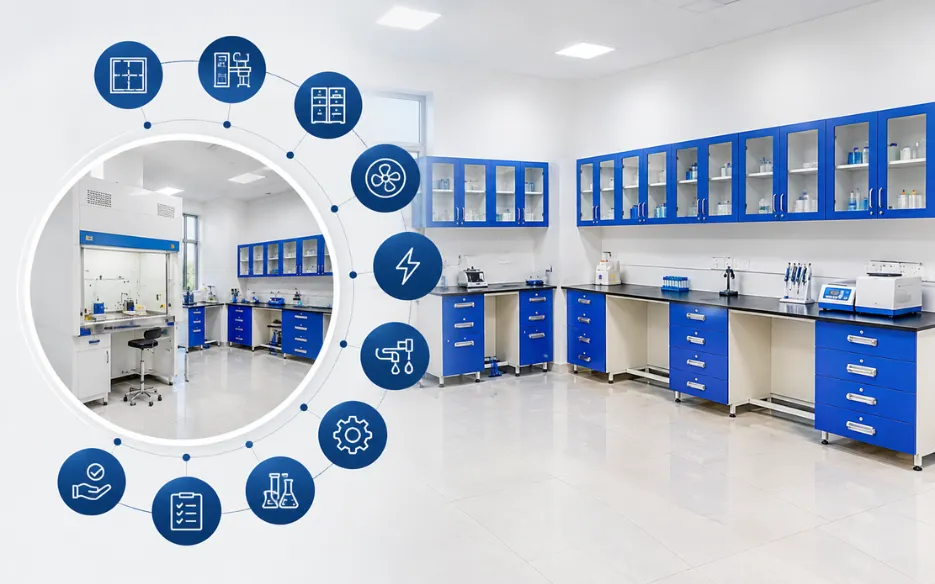
The total turnkey lab setup cost usually comes from several different areas rather than one single expense.
The main cost components typically include:
- Laboratory furniture and workstations
- Laboratory equipment
- Electrical and plumbing infrastructure
- HVAC and ventilation
- Storage and safety systems
- Installation and commissioning
- Site-specific civil or infrastructure work
- Project management and coordination
Understanding each component makes it easier to prepare a realistic laboratory budget.Laboratory fume hoods can also be an important cost component for laboratories that handle chemicals, fumes or other hazardous substances. When evaluating laboratory fume hood manufacturers, consider factors such as hood type, materials, airflow requirements, exhaust arrangements, dimensions, installation and the specific application of the laboratory.
1. Laboratory Furniture and Workstations
Laboratory furniture is one of the most visible parts of a laboratory project, but its cost depends on much more than the number of benches.
The final price can be influenced by:
- Bench-top material
- Cabinet configuration
- Hardware and accessories
- Number of workstations
- Storage requirements
- Fume hoods
- Specialised furniture
- Material selection
- Custom dimensions
- Equipment integration
- Installation requirements
A standard teaching laboratory may require straightforward modular workstations, while a laboratory handling corrosive chemicals may require more specialised materials and storage solutions.
At Santech Labs, laboratory furniture is planned around the work being performed in the laboratory. Our solutions include laboratory workstations, storage systems, fume hoods and specialised furniture designed around project requirements. As experienced laboratory furniture suppliers, we focus on providing practical solutions that support efficient workflows, safe operations and effective use of laboratory space.
2. Laboratory Equipment
For many laboratories, equipment can represent one of the largest parts of the overall investment.
The cost can vary significantly depending on the equipment’s brand, model, automation level, capacity and specifications.
Some broad indicative equipment ranges include:
| Equipment | Indicative Cost |
|---|---|
| Haematology Analyser | ₹2–5 lakh |
| Biochemistry Analyser | ₹3–8 lakh |
| PCR Machine | ₹5–25 lakh |
| Centrifuge | ₹50,000–₹2 lakh |
| Microscope | ₹40,000–₹5 lakh |
| Refrigerator/Freezer | ₹30,000–₹1.5 lakh |
These figures should be treated as planning estimates rather than current quotations. Actual equipment prices can vary significantly by manufacturer, model, configuration, accessories, warranty and service requirements.
This is also why the equipment list should be prepared before finalising the laboratory furniture layout.
Large instruments can affect:
- Floor loading
- Power requirements
- Heat generation
- Service clearance
- Water connections
- Drainage
- Gas connections
- Ventilation
- Workflow around the equipment
Planning these requirements early can prevent expensive modifications later.
How Infrastructure Affects Lab Setup Cost in India
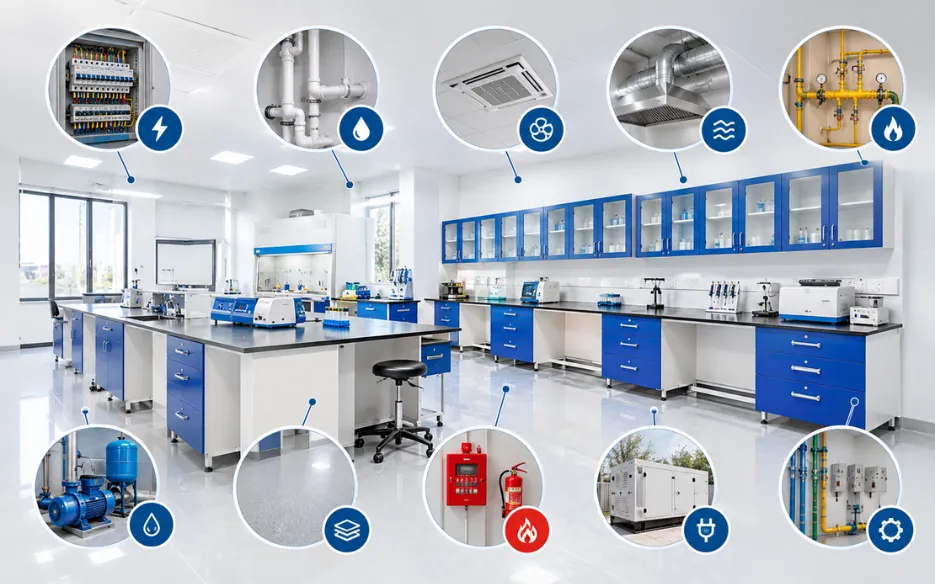
Specifically where you discuss laboratory furniture and workstations.
For this infrastructure section, a better internal link would be a blog about laboratory design/planning.
If you still want to use the workbench link, use it later like:
Laboratory furniture and workstations can also form a significant part of the overall budget. The choice of workbench type, material and configuration can affect both initial cost and long-term usability. See our Lab Workbench Guide: Types, Materials & Selection Tips for more guidance.
How Does Laboratory Type Affect the Setup Cost?
The type of laboratory can have a greater impact on cost than the floor area.
A pathology laboratory does not have the same requirements as a pharmaceutical, molecular biology or research laboratory.
For example, pharmaceutical laboratories may require laboratory chemical storage cabinets, extraction systems and specialised work areas. Molecular biology laboratories may need PCR systems and controlled workflows, while research laboratories may require advanced instruments and adaptable infrastructure.
| Laboratory Type | Factors That Can Increase Cost |
|---|---|
| Pathology | Analysers, sample processing and cold storage |
| Diagnostic | Automated analysers, sample processing and additional testing systems |
| Pharmaceutical | Chemical handling, extraction and specialist equipment |
| Molecular Biology | PCR systems, containment and specialised workflows |
| Research | Advanced instruments and adaptable infrastructure |
| Food and Water Testing | Multiple testing systems and sample preparation |
This is why using another laboratory’s budget as a direct comparison can be misleading. Two facilities may have similar floor areas but completely different technical requirements.
What Other Costs Should You Consider When Planning a Laboratory?
The main setup budget is not always the complete project budget.
Depending on the laboratory type and project scope, additional costs may include:
- Site preparation or building modifications
- Licences and approvals
- Accreditation-related requirements
- Equipment calibration
- Validation and testing
- Initial consumables
- Software or laboratory information systems
- Staff training
- Waste management arrangements
- Annual maintenance contracts
These costs may not apply to every laboratory, so they should be assessed according to the intended operation and regulatory requirements.
Keeping these potential expenses separate from the core capital expenditure can make the overall business plan more realistic.
What Factors Can Increase Turnkey Laboratory Setup Costs?
Some expenses are easy to identify during the initial planning stage. Others become apparent only after the project has started.
1. Specialised Equipment
Advanced analytical, molecular or automated equipment can significantly increase the total investment.
2. HVAC and Ventilation Requirements
Laboratories requiring temperature control, controlled environments or specialised exhaust systems may need additional HVAC infrastructure.
3. Custom Laboratory Furniture
Custom dimensions, specialised materials, equipment integration and unusual room configurations can increase manufacturing costs.
4. Higher Containment Requirements
Certain laboratory activities may require additional engineering controls, containment measures or specialised ventilation.
5. Increased Storage Requirements
Chemical storage, sample storage, cold storage and specialised materials can require additional cabinets and dedicated spaces.
6. Building Modifications
Existing electrical, plumbing, flooring, ventilation or structural conditions may require upgrades before the laboratory can be installed.
The goal is not to remove every high-cost component. Instead, the focus should be on understanding which costs are necessary for the laboratory to operate safely and efficiently.
How Can You Reduce Lab Setup Costs Without Compromising Quality?
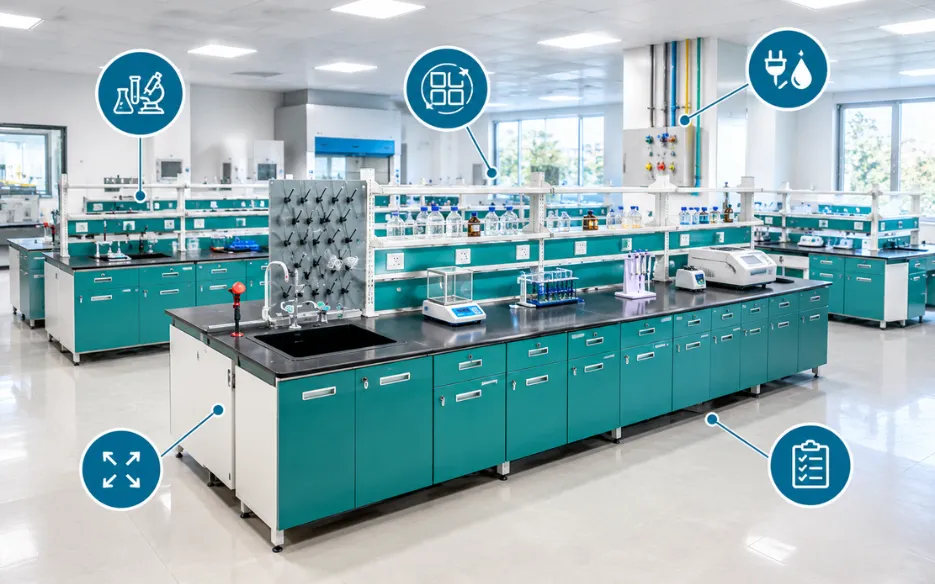
The most effective way to control laboratory setup costs is to make the major planning decisions before manufacturing and installation begin.
1. Start With the Actual Equipment List
Avoid designing the laboratory around assumptions. Identify the equipment required for current operations and consider equipment planned for future expansion.
2. Separate Current Requirements From Future Requirements
You may not need to purchase every planned instrument immediately. However, future equipment can still be considered during the layout stage so that the laboratory is ready when expansion becomes necessary.
3. Use Modular Laboratory Furniture Where Appropriate
Modular laboratory furniture can help control both initial and future laboratory setup costs. It makes it easier to modify, reconfigure or expand laboratory work areas when equipment, workflows or space requirements change.
The benefits of modular laboratory furniture include greater flexibility, easier reconfiguration, efficient use of available space and reduced disruption when laboratory requirements change. Instead of replacing an entire workstation, individual components can often be adjusted or added as the laboratory expands.
For laboratories expecting future changes in equipment or processes, modular furniture can therefore provide a more cost-effective and adaptable solution than fixed layouts.
4. Plan Utilities Before Furniture Installation
Electrical points, water connections, drainage and other utilities should be coordinated with the furniture and equipment layout before installation.
Changing these connections after furniture installation can increase both cost and project time.
5. Avoid Unnecessary Customisation
Custom furniture can be valuable where equipment integration, room dimensions or safety requirements demand it. However, standard or modular components may be more cost-effective for routine applications.
The choice of furniture material can also affect long-term laboratory costs, particularly in environments exposed to chemicals or corrosive substances. Before selecting a material, it is useful to understand the difference between chemical-resistant and regular lab furniture and where each option is most appropriate.
6. Compare the Complete Project Scope
Do not compare quotations based only on the headline price.
Check whether the quotation includes:
- Furniture
- Equipment
- Installation
- Electrical work
- Plumbing
- HVAC
- Ventilation
- Utility connections
- Testing and commissioning
- Transportation
- Project management
A lower initial quotation may become more expensive if important project components are excluded.
How to Get an Accurate Turnkey Laboratory Setup Quote?
Getting an accurate turnkey laboratory setup quote requires more than providing the laboratory size and asking for a total price. A reliable quotation should be based on the laboratory type, equipment requirements, layout, furniture, utilities, safety systems and site conditions.
Before requesting a laboratory setup quotation, prepare the following information:
| Information Required | Why It Matters for the Quotation |
|---|---|
| Laboratory Type | Pathology, diagnostic, pharmaceutical, research and testing laboratories have different equipment, workflows and infrastructure requirements. |
| Laboratory Area & Layout | Room dimensions, doors, windows, columns and existing utility points affect furniture placement and space planning. |
| Equipment List | Equipment specifications help determine workstation requirements, floor loading, power, water, drainage, ventilation and service clearances. |
| Furniture & Storage Requirements | The number of workstations, cabinets, storage units, sinks, fume hoods and specialised furniture affects the overall lab setup cost in India. |
| Infrastructure Requirements | Electrical load, plumbing, drainage, HVAC, ventilation, gas lines and water supply need to be considered before finalising the quotation. |
| Safety Requirements | Chemical storage, fire safety, ventilation, containment and other safety provisions can influence the project scope and cost. |
| Installation & Commissioning | Transportation, furniture installation, equipment coordination, testing and commissioning should be clearly included or excluded. |
| Site Conditions | Existing building conditions can affect electrical, plumbing, ventilation, flooring and structural requirements. |
| Future Expansion | Planned equipment or additional work areas can be considered during the initial layout to reduce costly modifications later. |
Request a Detailed Scope of Work
When comparing a turnkey laboratory quotation, do not focus only on the final price. Ask the provider for a clear breakdown of what is included and excluded.
The quotation should specify, where applicable:
- Laboratory furniture and workstations
- Laboratory equipment
- Electrical and plumbing work
- HVAC and ventilation
- Storage and safety systems
- Transportation
- Installation
- Testing and commissioning
- Project management
- Civil or building modifications
A detailed scope makes it easier to compare quotations on a like-for-like basis and reduces the risk of unexpected costs during installation.
For an existing building, a site assessment can further improve quotation accuracy by identifying infrastructure limitations before manufacturing and installation begin.
At Santech Labs, turnkey laboratory planning can be developed around the laboratory type, available space, equipment, workflow, furniture and infrastructure requirements. A project-specific assessment helps establish the appropriate scope before the final laboratory setup quotation is prepared.
Custom vs Standard Laboratory Furniture: Where Should You Spend More?
Not every laboratory component needs to be customised.
Standard furniture can be a practical choice for repetitive layouts, common storage requirements and applications where quick replacement is important. For a deeper comparison of storage options, see our guide on custom vs standard laboratory storage cabinets.
Custom furniture becomes more useful when the laboratory has unusual dimensions, specialist equipment or specific workflow requirements.
| Requirement | Recommended Option |
|---|---|
| Repetitive layouts | Standard cabinets |
| Common storage requirements | Standard cabinets |
| Faster procurement and replacement | Standard cabinets |
| Irregular room dimensions | Custom cabinets |
| Specialist equipment integration | Custom cabinets |
| Specific material or safety requirements | Custom cabinets |
| Future layout changes | Modular cabinets |
The sensible approach is to customise where there is a genuine functional reason.
For example, designing a cabinet around a particular analyser can improve workflow and accessibility. Creating a completely customised cabinet for standard glassware may provide little additional value.
At Santech Labs, custom laboratory furniture can be developed around room dimensions, workflow, equipment, materials and utility requirements.
What Are the Costs After Laboratory Installation?
The initial setup is only part of the overall investment.
Once the laboratory becomes operational, ongoing expenses may include:
- Staff and labour
- Reagents and consumables
- Equipment maintenance
- Calibration
- Electricity and water
- Software and LIMS
- Waste disposal
- Quality assurance
- Equipment servicing
This distinction is important when preparing a laboratory business plan.
Capital costs establish the laboratory. Operating costs keep it running.
Both should be considered separately when calculating the long-term financial requirements of the facility.
Conclusion
The cost of a turnkey laboratory setup in India depends on more than the size of the laboratory. Equipment, laboratory furniture, utilities, safety systems, installation, site conditions and future expansion requirements can all influence the final project investment. Therefore, the most accurate way to estimate your laboratory setup cost is to assess the complete project scope before preparing a quotation.
Choosing experienced lab furniture manufacturers can also help ensure that workstations, storage, services and laboratory workflows are planned together rather than treated as separate requirements. A well-planned laboratory can improve space utilisation, safety, workflow efficiency and long-term value.
At Santech Labs, we provide laboratory furniture and turnkey laboratory solutions tailored to different laboratory requirements. If you are planning a new laboratory or upgrading an existing facility, contact Santech Labs to discuss your requirements and get a project-specific quotation.